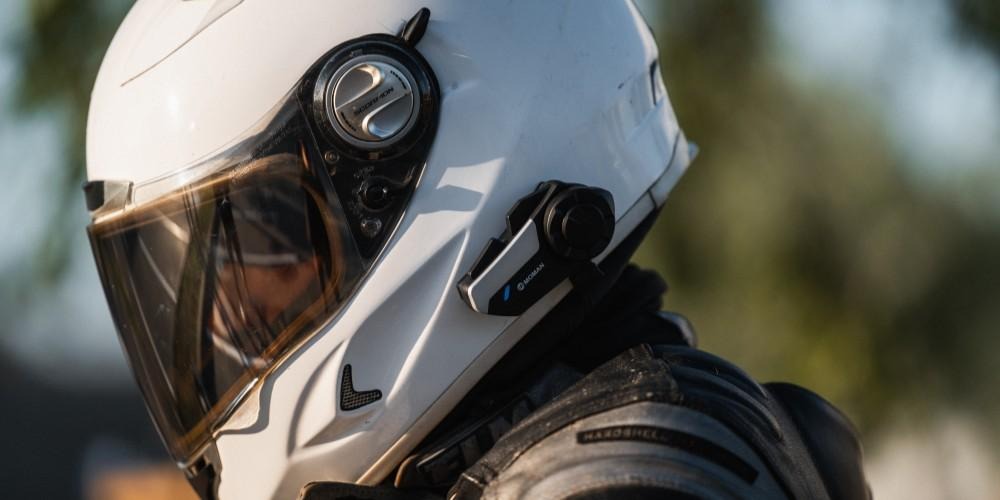
Riding with other people can be more enjoyable when you can talk while you ride. You may need to tell another rider about a turn, warn them about traffic, or simply have a conversation during a long trip. A motorcycle intercom makes this possible without using a phone or stopping the motorcycle.
But not all intercoms work in the same way. Some are mainly designed for phone calls and music. Others are made for direct communication between riders. A 2 way motorcycle intercom is designed for the second purpose. It allows two people to speak and listen to each other through a wireless connection.
What is a 2 way motorcycle intercom?
A 2 way motorcycle intercom is a wireless communication system that allows two riders to talk with each other while riding. Both riders can speak and hear the other person through a headset installed on their helmets.
Unlike a one-way communication system, both users can send and receive audio. This makes the conversation more natural. One rider does not need to wait for the other person to finish before responding.
A typical system includes speakers, microphones, wireless communication units, and mounting accessories. The speakers are placed inside the helmet near the rider’s ears. The microphone is positioned near the mouth to pick up the rider’s voice.
The wireless units connect the two riders. Once the connection is established, they can communicate without a cable between the motorcycles.
A motorcycle intercom can also offer other functions, depending on the model. Some systems can connect to a smartphone for calls, music, or navigation. However, the main purpose of a 2-way model is direct voice communication between two users.
This makes it useful for riders who travel with a passenger or another motorcycle rider.
How is it different from a phone call?
A phone call and an intercom may seem similar because both allow two people to talk. However, they work differently.
A phone call usually requires a cellular network. An intercom can communicate directly between the connected units, so riders do not need to make a phone call.
This can be more convenient during a ride. Riders do not need to take out their phones or start a call before talking.
An intercom can also be easier for frequent communication. If two riders need to talk many times during a trip, they can stay connected instead of making separate calls.
How does a 2 way motorcycle intercom work?
The basic process is simple. Each rider wears a communication unit connected to a helmet headset. The two units establish a wireless connection. Once connected, the microphone captures each rider’s voice and sends it to the other unit.
The other rider hears the voice through the helmet speakers.
The exact wireless technology depends on the product. Some systems use Bluetooth, while others use different wireless technologies designed for rider communication.
How do two riders connect?
Before the ride, the two intercom units need to be connected. The setup process depends on the model.
With a basic Bluetooth system, the riders may need to pair the two devices. After pairing, they can start the intercom function.
Some newer systems are designed to make this process faster. The exact steps can vary, so users should follow the instructions provided with their intercom.
Once the connection is active, the riders can talk without holding any device.
What happens when riders move apart?
Communication range is an important part of any intercom system.
If the two motorcycles stay close together, communication is usually easier. As they move farther apart, the wireless signal can become weaker.
The actual range depends on the product and the riding environment. Buildings, trees, hills, vehicles, and other obstacles can affect the signal.
For this reason, the advertised range should not be treated as a guaranteed distance in every situation.
If two riders usually stay close together, a short-range system may be enough. Riders who travel on long roads or often become separated may need a system with a longer communication range.
Can it work with a passenger?
Yes. Two-way communication is particularly useful for a rider and passenger.
The rider can talk to the passenger without turning around or using hand signals. The passenger can also respond immediately.
For example, the passenger can ask about the next stop or tell the rider about something they noticed. The rider can answer without taking their hands off the handlebars.
This can make long trips more comfortable and convenient for both people.
Can it be used with other devices?
Many intercoms offer more than rider-to-rider communication.
Depending on the model, the system may connect to a smartphone. This can allow the rider to listen to music, receive navigation instructions, or answer calls.
Some products also support connections with other audio devices.
However, these functions are additional features. When choosing an intercom, start with the communication function you actually need.
If direct conversation is your main goal, make sure the intercom provides reliable two-person communication before focusing on music or phone functions.
Why use a 2 way motorcycle intercom?
A 2 way motorcycle intercom can make communication easier, safer, and more convenient during group or passenger rides.
Talk without stopping
The biggest benefit is that riders can communicate while moving.
Without an intercom, riders may need to stop the motorcycles to discuss directions or plans. They may also rely on hand signals, which cannot communicate detailed information.
With an intercom, they can simply speak.
This is useful when discussing turns, rest stops, fuel, traffic, or changes in the riding plan.
Keep your hands on the handlebars
A wireless system lets riders communicate without holding a phone or other device.
This means riders can keep both hands where they need them while riding. They can also avoid reaching into a pocket to answer a call or send a message.
The controls should still be easy to use. Buttons that are difficult to find or operate with gloves can be inconvenient.
Stay connected with a riding partner
A two-person intercom is a good choice for riders who often travel with one other person.
The two users can stay connected throughout the ride and communicate whenever necessary. This can be especially useful during touring, road trips, and regular passenger rides.
For example, the lead rider can tell the other rider about an upcoming turn. The second rider can confirm that they heard the message.
This simple exchange can help the ride run more smoothly.
Improve communication in noisy environments
Motorcycles can be loud. Wind, engines, traffic, and road noise can make normal conversation difficult.
A good intercom uses speakers and microphones designed for helmet use. Some models also include noise reduction to make voices easier to understand.
Audio quality matters even more at higher speeds. A microphone that picks up too much wind noise may make the other rider difficult to understand.
When comparing systems, look at both the speaker and microphone performance.
Choose the right setup for your ride
Not every rider needs the same type of intercom.
If you usually ride with a passenger, a simple two-person system may be enough. If you ride with several motorcycles, you may need a system designed for larger groups.
A motorcycle helmet intercom 2 way headset can be useful when direct communication between two users is the main goal. Riders who need larger group communication may want to consider other types of systems.
You should also think about battery life. Short rides may not require a large battery, while long-distance touring calls for longer operating time.
Helmet fit is another important factor. Speakers and microphones should fit comfortably inside the helmet. A bulky system can become uncomfortable after several hours.
Finally, consider how easy the system is to control. The main functions should be simple to operate with gloves and without taking your attention away from the road.
Conclusion
A 2 way motorcycle intercom is a wireless communication system that lets two riders talk and listen to each other while riding. It can be used between two motorcycles or between a rider and passenger.
Its main advantage is simple communication without phones, cables, or frequent stops. Riders can discuss directions, traffic, road conditions, and other information while keeping their hands on the handlebars.
When choosing a system, consider communication range, battery life, audio quality, helmet fit, connection method, and ease of use. For riders who mainly need to communicate with one other person, a 2-way system can provide a simple and practical way to stay connected on the road.