A fast e-bike is not created by motor wattage alone. Real-world performance comes from the way the motor, battery, controller, gearing, tyres, bike weight and rider all work together.
That is why two e-bikes with similar motor ratings can feel very different on the road. One may accelerate harder from a stop, another may hold speed more comfortably on a hill, while a third may sacrifice some responsiveness for longer range.
For buyers, the useful question is not simply, “How many watts does the motor have?” It is, “How does the complete system perform on the roads and terrain I actually ride?”
Does a Bigger Motor Automatically Make an E-Bike Faster?
Motor power affects acceleration, climbing support and the amount of assistance available when the bike is under load. But it does not determine top speed on its own.
A heavier rider, steep hill, headwind or loaded cargo rack can all change how quickly an e-bike accelerates and how easily it maintains speed. Wheel size, gearing and the way the electrical system is configured also influence how that power feels during a ride.
This is one reason buyers should distinguish between rated and peak motor power. Rated power provides a more useful reference for the motor’s normal operating level, while peak output describes the higher power available under demanding conditions.
A large peak-power number can look impressive in a specification list, but it should be viewed alongside the rest of the bike.
If the battery cannot supply sufficient energy, the brakes are basic or the frame is poorly matched to the rider, a larger motor does not automatically create a better performance e-bike.
Why Does the Battery Affect More Than Range?
Most people look at an e-bike battery and immediately think about distance. Battery capacity is important for range, but it also supports the electrical system that powers the motor.
A fast e-bike needs enough stored energy to support repeated acceleration, climbing and higher assistance levels. Riders who regularly use stronger assistance generally consume battery capacity faster than those riding steadily at moderate levels.
This is why maximum range and maximum performance rarely happen at the same time.
Advertised range should be treated as a reference rather than a guaranteed result. Rider weight, cargo, hills, wind, tyre pressure, temperature and assistance level all affect how far a battery can take the bike.
A rider may therefore benefit more from a well-matched battery than from chasing the largest motor specification available. If the normal journey is 15 or 20 miles, the priority should be enough battery capacity to complete that route comfortably with some reserve rather than a theoretical maximum that depends on ideal conditions.
What Role Does the Controller Play?
The controller works between the battery and motor, regulating how electrical power is delivered.
From a rider’s perspective, this affects how quickly assistance arrives and how manageable the bike feels when accelerating. Strong motor output is useful, but power that arrives too abruptly can make starts, low-speed turns and loose surfaces harder to control.
A more balanced setup delivers enough assistance when it is needed without making the bike feel unpredictable.
This is also why motor wattage should never be analysed in isolation. An e-bike is a system. Battery output, controller settings and motor behaviour have to work together.
For everyday riders, smooth acceleration may be more useful than an aggressive launch that looks impressive in a short test video.
How Do Throttle Speed and Pedal-Assist Speed Differ?
Some e-bikes have different limits depending on how the motor is activated.
The throttle allows the motor to provide assistance without the rider continuously pedalling, while pedal assist adds motor support as the rider turns the cranks. A bike may therefore have one maximum throttle speed and a different maximum pedal-assist speed.
This distinction matters when comparing fast e-bikes.
For example, an advertised 28 mph figure may refer specifically to pedal assistance rather than throttle operation. Buyers should read the complete speed specification instead of assuming every operating mode reaches the same maximum.
Local regulations can also affect where different motor modes and assisted speeds are permitted, so riders should check the rules for the roads, paths and trails they intend to use.
Why Do Rider Weight and Terrain Change Real-World Speed?
Performance measured on flat pavement does not tell the whole story.
A motor needs to work harder when the bike is climbing, carrying more weight or moving across a soft surface. Headwinds create another source of resistance, particularly as speed increases.
This explains why an e-bike that feels quick on a flat urban road may respond differently on a gravel climb.
Riders comparing models should think about the most demanding part of their normal route. Someone who lives in a hilly area may place greater value on climbing support and controlled acceleration. A rider travelling mostly on flat streets may care more about efficiency and comfortable cruising.
Real-world performance is always connected to the environment in which the bike is used.
Can Tyres Make a Fast E-Bike Feel More Capable?
Tyres do not create motor power, but they have a major influence on how that power reaches the ground.
A fat tire electric bike uses wider tyres that can provide a planted feel on gravel, rough pavement and packed dirt. For riders moving between city streets and less consistent surfaces, that additional stability can make the bike feel easier to control.
There is a trade-off. Wide tyres add weight and rolling resistance, so they are not automatically the best choice for every rider. Someone riding almost entirely on smooth pavement may prefer a lighter and narrower setup.
A fast e-bike should therefore be matched to its intended surface. More power is of limited value if the tyres do not provide the handling characteristics the route requires.
Why Do Brakes Become More Important as Performance Increases?
Acceleration gets attention, but stopping deserves equal consideration.
E-bikes are generally heavier than conventional bicycles because they carry a motor, battery and additional electrical components. Fat tyres, suspension and cargo can add further weight.
As speed and total mass increase, riders need a braking system that provides predictable control.
Hydraulic disc brakes are commonly found on higher-spec e-bikes because they can provide strong braking with relatively light lever pressure. Tyre grip and surface conditions still matter. Wet pavement, loose gravel and dirt can reduce available traction regardless of the brake hardware.
A good performance bike should feel controlled when slowing down, not just powerful when accelerating.
Does Frame Design Affect Performance?
Frame design changes how easily a rider can control and use the bike, even when it does not directly increase motor speed.
This is particularly relevant as performance e-bikes become heavier. A traditional high-step frame may work well for some riders, but frequent starts and stops can make easier frame access more valuable.
A step through electric bike lowers the entry point, allowing the rider to mount without swinging a leg over a high top tube. For buyers comparing an electric bike for adults, this can be especially useful when rider height, flexibility, frequent stops and overall bike weight are part of the decision. Step-through frames can make larger e-bikes easier to handle during urban riding and mixed recreational routes without requiring riders to give up performance-oriented components.
Step-through design is no longer limited to lightweight city bikes. It can now be combined with larger motors, wide tyres and suspension, giving buyers more choice in how a performance-oriented e-bike fits their body and riding habits.
What Does a Balanced Performance Setup Look Like?
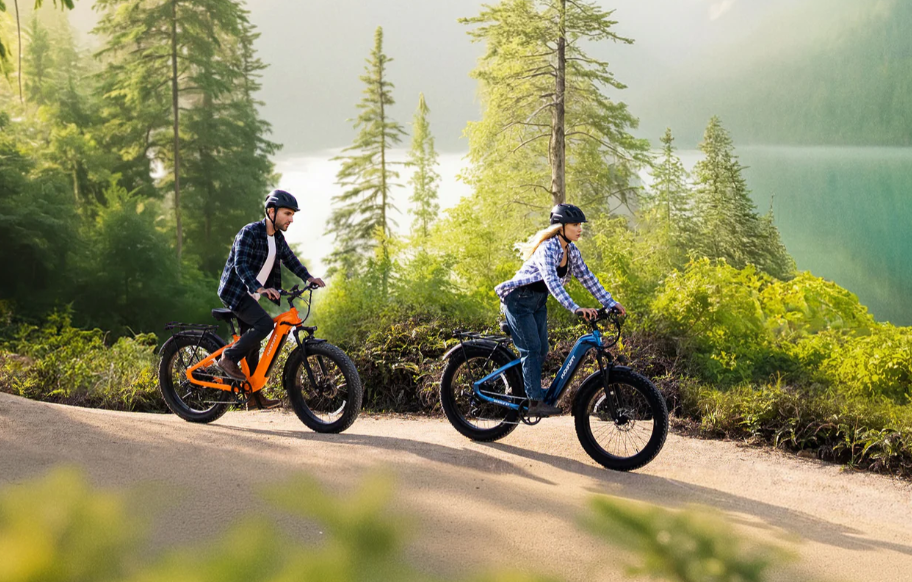
A useful example is the Puckipuppy Beagle 2 ST. Instead of relying on one oversized performance figure, it combines a 750W motor with 960W peak output and a removable 48V 15Ah battery. Throttle assistance reaches up to 20 mph, while pedal assistance can reach up to 28 mph, with a stated range of 40 to 60 miles depending on riding conditions. Its 26-by-4-inch fat tyres and 110mm adjustable front suspension are intended to handle both city streets and rougher surfaces, while hydraulic disc brakes provide the stopping system needed for a 76-pound bike with a maximum load capacity of 400 pounds. The step-through 6061 aluminium frame also shows how easier access can be combined with performance-oriented components rather than being limited to basic commuter bikes. The Beagle 2 ST is listed as certified to UL 2271 and UL 2849 by SGS.
The important point is not that every fast e-bike should use the same configuration. It is that motor power becomes more useful when the battery, brakes, tyres and frame are selected to support it.
Does More Speed Always Mean Better Performance?
No. Performance depends on the job the bike needs to do.
A rider travelling a few miles through congested city streets may gain very little from paying for additional speed. A heavier battery or larger motor may actually make storage and transportation less convenient.
Someone covering longer suburban roads, hills or mixed surfaces may reach a different conclusion.
Bike weight deserves particular attention. Larger batteries, fat tyres and suspension systems can improve capability while making the bike harder to lift onto a vehicle rack or carry upstairs.
That is why buyers should compare practical trade-offs instead of treating every larger specification as an upgrade.
The fastest e-bike on paper may not be the fastest, easiest or most useful option for a particular journey.
Look at the System, Not One Number
Motor power matters, but it is only the beginning of e-bike performance.
Battery capacity determines how long strong assistance can remain useful. The controller affects how that assistance reaches the motor. Rider weight, terrain and wind influence real-world results, while tyres, suspension and brakes determine how confidently the bike handles the speed it can produce.
Frame design and total bike weight then decide how practical the bike is once the ride is over.
When comparing fast e-bikes, start with the routes you actually ride. Look at hills, distance, surface conditions, storage and local regulations before concentrating on the largest wattage or top-speed figure.
Then compare the complete system. That is the best way to find an e-bike that is not only fast on a specification sheet, but performs well where it matters.