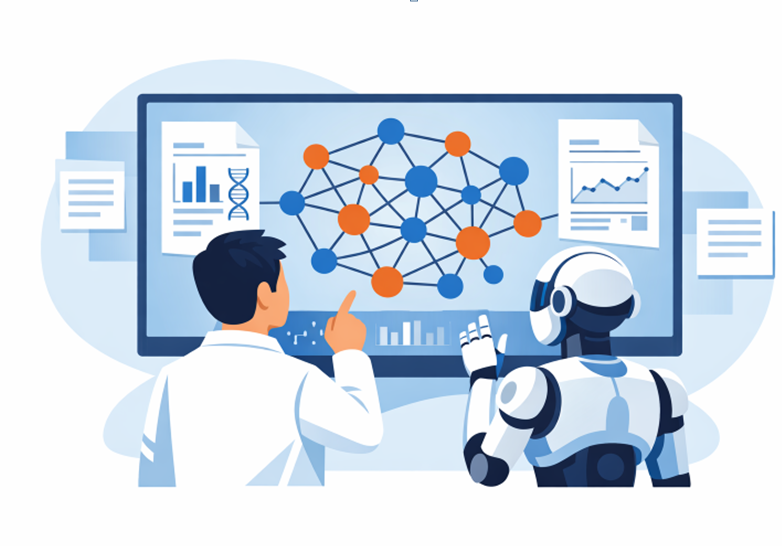
In a time when scientific advancement depends on managing ever-growing quantities of data, advanced AI search technologies are reshaping the research landscape. Artificial intelligence allows scientists to discover critical insights faster and efficiently navigate the vast volumes of scientific literature and data. By leveraging Exa.ai and similar AI-driven tools, researchers are finding that discoveries once considered years away are now within reach due to the sheer speed and accuracy of machine-assisted data analysis.
The integration of AI into the scientific workflow goes beyond simple automation of searches. AI models can process patterns, generate hypotheses, and connect seemingly unrelated findings, ushering in new possibilities for cross-disciplinary research. As scientists harness these capabilities, breakthroughs in health, engineering, and fundamental science are accelerating, ushering in an era of innovation where humans and machines collaborate closely at the frontiers of knowledge.
Accelerating Drug Development
One of the most prominent impacts of AI in research has been the transformation of drug development. The process of taking a novel compound from discovery to regulatory approval is lengthy, costly, and high-risk. However, AI algorithms are shortening timelines dramatically. According to industry research, leading biopharma companies report up to a 70 percent reduction in preclinical research costs and timelines because of AI-powered modeling and automation. These technologies can quickly screen vast libraries of compounds, predict molecular interactions, and identify the most promising candidates for further testing. AI is not just enhancing productivity but also providing deeper insights that human researchers alone may overlook.
Despite these advancements, the promise of AI in drug discovery comes with caveats. Still, AI-driven efficiencies are projected to increase the number of new drug development programs by over 10 percent in the next few years, demonstrating momentum that is difficult to ignore.
Enhancing Materials Discovery
AI is also revolutionizing how scientists approach materials science. In the past, searching for new materials was largely experimental and time-consuming. Today, AI models and megalibraries can simulate and test countless material combinations in the digital realm before a single experiment is conducted in the lab. For example, researchers at Northwestern University have shown that megalibraries significantly accelerate the pace of materials discovery, enabling the design of materials for specific uses instead of relying on serendipity. Scientists are now equipped to “design to order” for industries ranging from renewable energy to medical devices, drastically improving both the creativity and precision of their work.
Streamlining Biological Research
In biological research, AI breakthroughs are broadening scientific horizons, particularly with tools like Google’s AlphaFold2. By predicting the structure of millions of proteins, AlphaFold2 has unveiled unprecedented insights that were inaccessible just a few years ago. As a study from the UC Berkeley Haas School of Business reveals, this leap in protein structure prediction provides foundational knowledge for everything from understanding disease mechanisms to engineering novel enzymes. Yet, translating these insights into real-world therapies faces obstacles further down the scientific pipeline, such as regulatory approvals and the need for extensive experimental validation. AI accelerates the journey, but some steps still demand time-consuming, human-led efforts.
AI in Scientific Discovery Tools
Major technology companies are also investing heavily in AI platforms designed specifically for scientific research. Microsoft Discovery is an example of an enterprise platform that focuses on integrating agentic AI into the research process, from hypothesis formulation to simulation and analysis. These platforms are designed to break down silos in research workflows, streamlining collaboration and knowledge discovery across disciplines. By uniting data reasoning, automated literature review, and experimental design in a unified environment, AI tools are helping research teams leapfrog traditional obstacles.
Challenges and Considerations
While the transformative potential of AI in science is unquestionable, it comes with new sets of challenges. One major concern is the sheer volume of hypotheses generated by AI models. Without robust systems for verification, the risk of propagating false positives or drawing incorrect conclusions increases. Trust in AI within the scientific community depends on accountability, repeatable results, and human oversight at each crucial stage.
Future Prospects
The future of AI-powered research promises even greater advancements as technology matures. OpenAI’s Prism, for example, is streamlining the research workflow by consolidating reference management, scientific writing, and collaboration into a single intuitive application. As these AI tools continue to evolve, they will increasingly serve as central hubs for scientific activity, freeing researchers from repetitive tasks and focusing attention on high-value, creative, and collaborative work. The long-term outlook is one where AI makes research more accessible, more connected, and ultimately more impactful, enabling discoveries that benefit society at large.
Advanced AI search technologies are transforming research across every major scientific domain. From accelerating drug development to streamlining biological studies and accelerating materials science, AI is pushing the boundaries of what is possible. As researchers learn to harness these technologies responsibly and transparently, the pace of scientific progress will only continue to accelerate.