By a landscape design industry contributor. You have the vision: an outdoor kitchen, a stone patio with a fire feature, and gardens that thrive in the Colorado sun. But there’s often a big gap between the dream and the final price. The biggest budget problems in a landscape project don’t usually come from one expensive item. Instead, they add up from questions you didn’t ask and details you missed early on.
This is a big problem when costs for materials and labor are always changing. Construction cost trackers such as the Mortenson Construction Cost Index show non-residential building costs in Denver moving from one quarter to the next. Even though home projects are different, this shows how the rising cost of materials and workers can affect your budget. To manage this, you need a solid plan from the start. A design-build firm, which handles everything from the first idea to the finished project, can help control these costs. You can find this process at a luxury landscape design build denver firm.
Water is another key factor that people often forget to plan for. In Colorado, lawns can use about 40% of a home’s water, according to researchers at Colorado State University. This matches national numbers from the U.S. Environmental Protection Agency, which show that watering outdoors uses over 30% of a home’s water on average. A design that ignores this isn’t just bad for the environment; it will cost you money for years to come.
Quick answer: The most expensive landscaping mistakes come from not studying the site, underestimating water costs, picking the wrong materials for the climate, and having separate teams for design and construction. To avoid these problems, you need a plan for your soil, land slope, and water flow before you pick out any plants.
What’s inside
- How do material choices affect long-term costs?
- What questions should you ask about construction?
- Why is skipping a site analysis so expensive?
- Frequently Asked Questions
How do material choices affect long-term costs?
The materials you pick affect the project’s price now and for years to come. They set the costs for maintenance, repairs, and replacements.
The cost of raw materials is a big part of the budget, and it changes often. Construction costs in Denver can shift from one quarter to the next, which means a price quote from last season might not be good today. Things like shipping problems, fuel costs, and local demand can make prices for stone, wood, and steel change without warning. If your design uses a lot of one popular material, your budget is at risk from these price changes.
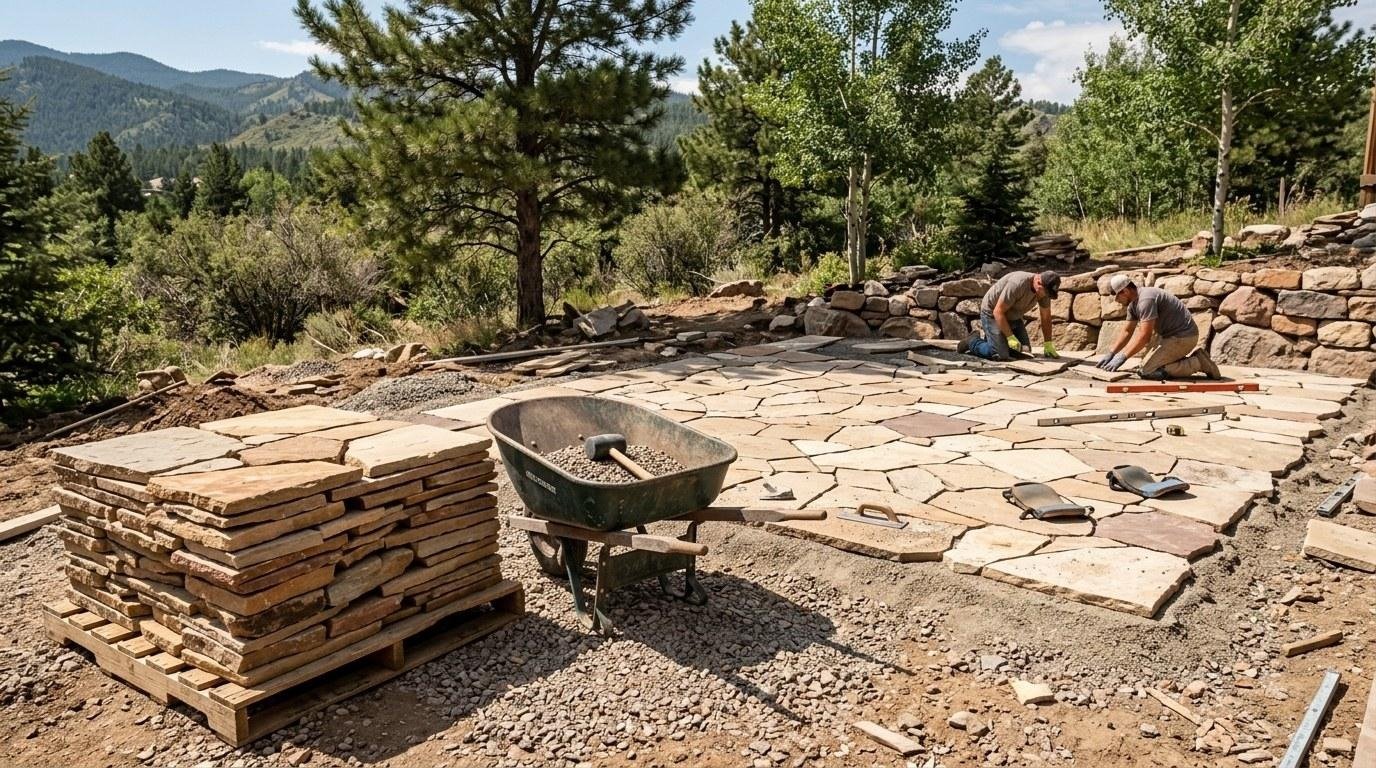
Your material choices also affect how much labor you’ll need and what kind. Fancy stone patios or custom-built structures need special skills and more time to install than simple concrete pads or ready-made kits. This labor is a big part of the cost. The median pay for grounds maintenance workers is around $19.27 per hour, according to the U.S. Bureau of Labor Statistics, and expert workers earn much more. Choosing complex materials or designs means you pay for more hours from these skilled workers, which raises the total cost.
In Colorado, the climate is the biggest test for any material. The strong sun, dry air, and cycles of freezing and thawing can ruin materials that aren’t right for this area. Untreated softwoods can bend and crack in just a few years. Pavers that soak up water can freeze and crack in the winter. Spending more now on materials made for this climate, such as high-density composite decking, properly sealed stone, or steel edging, saves you from the much higher cost of replacing everything in five to ten years.
❝ Ask a potential design-build firm how a certain material holds up after five Colorado winters. Their answer will show if they have real experience. A good answer will mention specific problems, like concrete chipping or colors fading in the sun, and explain exactly how they prevent them.
Besides how long they last, think about the future maintenance. A big lawn needs constant watering, mowing, and feeding. In contrast, a smart xeriscape design with native grasses and mulch beds uses far less water and needs less work. A cedar deck needs to be stained and sealed every year to stop rot. This costs you time and money again and again. A stone patio, while more expensive at first, may only need to be swept or power washed sometimes. Every material choice is also a choice about your future weekends and budget.
What questions should you ask about construction?
The best questions to ask about construction are about the team’s process, how they communicate, and how they handle surprises. A beautiful design is only as good as the team that builds it. A smooth project depends on the company’s planning before any work starts. If they give you vague answers to specific questions about details, that’s a big red flag.
Start by asking about their planning before construction begins. A well-prepared team will have clear answers for questions like: Where will your crew park? Where will materials like stone and soil be kept to avoid damaging your property? What is the plan for site access and daily cleanup? These details may seem small, but they show if a company respects your home and is well-organized. A team that has planned these details is less likely to run into bigger problems later.
Next, ask how they will communicate with you. Ask who your main contact person will be during the project. Is it a project manager, a site foreman, or the designer? It’s important to know who to call if you have a question. Also, ask how often you will get updates and how you will get them. Will you have a weekly meeting, get daily emails, or use a project management app? A regular communication schedule prevents misunderstandings and keeps you aware of progress.
Finally, and most importantly, ask how they deal with changes and unexpected problems. Every project has surprises, from hitting an old pipe to finding difficult soil. Ask to see a sample change order form. A professional form will list the costs for new materials and labor. It should require your signature for approval before they do any extra work. This process protects your budget from surprise costs.
The type of company you hire affects how these issues are handled. The two main options are Design-Bid-Build and Design-Build. Knowing the difference helps you understand who is responsible for what.
| Feature | Design-Bid-Build | Design-Build |
| Accountability | Split between designer and builder. | Single point of responsibility. |
| Budget Control | Design is completed before pricing. | Budget is part of the design process. |
| Timeline | Steps happen one after another; can be longer. | Phases overlap; often faster. |
| Communication | You manage two separate contracts. | One firm, one point of contact. |
In the end, you want a partner who can show you they have a professional process they use every time. Many firms follow the best practices of groups like the National Association of Landscape Professionals (NALP). A team that can clearly explain their process for managing the project, their safety rules, and how they check for quality is a team that is ready to do a great job.
Why is skipping a site analysis so expensive?
Skipping a professional site analysis often leads to expensive repairs. This is because it ignores the two biggest challenges in Colorado landscaping: water and soil. Designing a landscape based on guesses about the ground is a big risk, and it usually ends badly. A good analysis prevents expensive problems by dealing with these issues from the start.
Many properties in the Denver area have expansive clay soil, which is rich in minerals like bentonite. This soil acts like a sponge. It swells up when it gets wet and shrinks when it dries. A design that doesn’t plan for this will fail. A patio built on a poorly prepared base will buckle and crack. A retaining wall without the right drainage will bend and fall apart from the pressure of wet, expanding soil. These are major failures that can cost tens of thousands of dollars to fix. Often, the entire patio or wall has to be torn out and rebuilt.
A site analysis does more than just check the soil type. It includes a survey to map the slope of the land and see how water flows. In an area that gets heavy rain, it’s vital to know where that water will go. If the land isn’t sloped correctly, water can flow right to your house’s foundation. When this water soaks into expansive soil, the pressure can crack your foundation and cause leaks in your basement. Fixing drainage problems after the landscape is finished is much more expensive than doing it right the first time. It often means digging up established gardens and taking apart patios to install the French drains or swales that should have been part of the first plan.
❝ When you interview a designer, ask how they handle soil engineering. Do they work with a geotechnical engineer on projects with a lot of hardscaping? Their answer tells you whether they are building something pretty but temporary, or a landscape made to last for decades against Colorado’s soil.
The analysis also maps the small climates around your property. At this altitude, the difference between a south-facing wall and a north-facing slope is huge. Strong sun on a southern wall can scorch plants and overheat a patio, while a northern exposure might hold snow and ice for weeks longer in winter. A good site plan records these sun and shade patterns through the day. That information guides plant choices, such as grouping plants with similar water and sun needs (called “hydrozoning”), and it also guides where patios, pergolas, and outdoor kitchens go so they are comfortable to use.
A site analysis is not a line item to cut. It is the basic groundwork that shapes every later decision. It gives you the facts you need to manage water, lower the risk from soil, and work with the local climate instead of against it.
Frequently Asked Questions
How long does a typical landscape design-build project take? A full design-build project is measured in seasons, not weeks. The design phase alone can take two to four months to refine ideas, pick materials, and create detailed building plans. The construction timeline depends on the size of the job and Denver’s weather, and most heavy work like concrete and grading happens between April and November.
What is xeriscaping, and does it mean my yard will be just rocks and cactus? Not at all. Xeriscaping is a water-wise way to design, not a look. It groups plants with similar water needs and uses attractive, low-water native and adapted plants. A well-designed xeriscape can be full of ornamental grasses, colorful perennials, and flowering shrubs that do well in Colorado, cutting the lawn watering that, according to Colorado State University, can make up about 40% of a household’s water use.
How much should I budget for a complete landscape project? Every project is different. Some designers use a rough guideline of 10% to 20% of your home’s value as a starting point for a high-end, complete landscape renovation. The real number can vary widely based on features like a pool, a fully equipped outdoor kitchen, or a lot of custom stonework.
Will I need a permit for my project in Denver? It depends on the scope. Simple planting, mulching, and ground-level patios usually do not need permits. You will likely need one for structures like raised decks, retaining walls over about four feet, pergolas, and any gas or electrical work for fire pits, lighting, or outdoor kitchens. Your city’s building department has the final word.
What is the difference between a landscape architect and a landscape designer? A landscape architect is a state-licensed professional who can design and stamp plans for complex projects with grading, drainage, and structural retaining walls. A landscape designer usually focuses more on plants and looks, such as planting plans and material choices. For a large project, a design-build firm will either have a licensed landscape architect on staff or work with one.
Investing in a System, Not Just a Scene
A high-end landscape is a big investment, but its true cost is decided by what happens below ground. The most expensive mistakes, like cracked patios, failing retaining walls, and water damage to a foundation, rarely come from poor taste. They are engineering failures that come from underestimating Colorado’s soil and climate. The main lesson is to shift your focus from the final look to the process that creates it.
Your most important decision is not picking a stone or a plant. It is choosing a partner who can show they know how to handle your site’s challenges. A beautiful design means little if it cannot stand up to expansive soil and storm water. The best sign of success is a firm’s ability to answer detailed questions about logistics, soil, and change orders.
About the author
Lifescape Colorado is a Denver-based landscape architecture, construction, and property care firm founded in 1976. The company uses a design-build model to create and maintain residential outdoor spaces, with a focus on hardscaping, horticulture, and water-wise solutions suited to the region’s climate. As a Sustainable Landscape Charter Partner with the Associated Landscape Contractors of Colorado, the firm often uses xeriscaping principles, and it manages projects from the first idea through long-term maintenance.