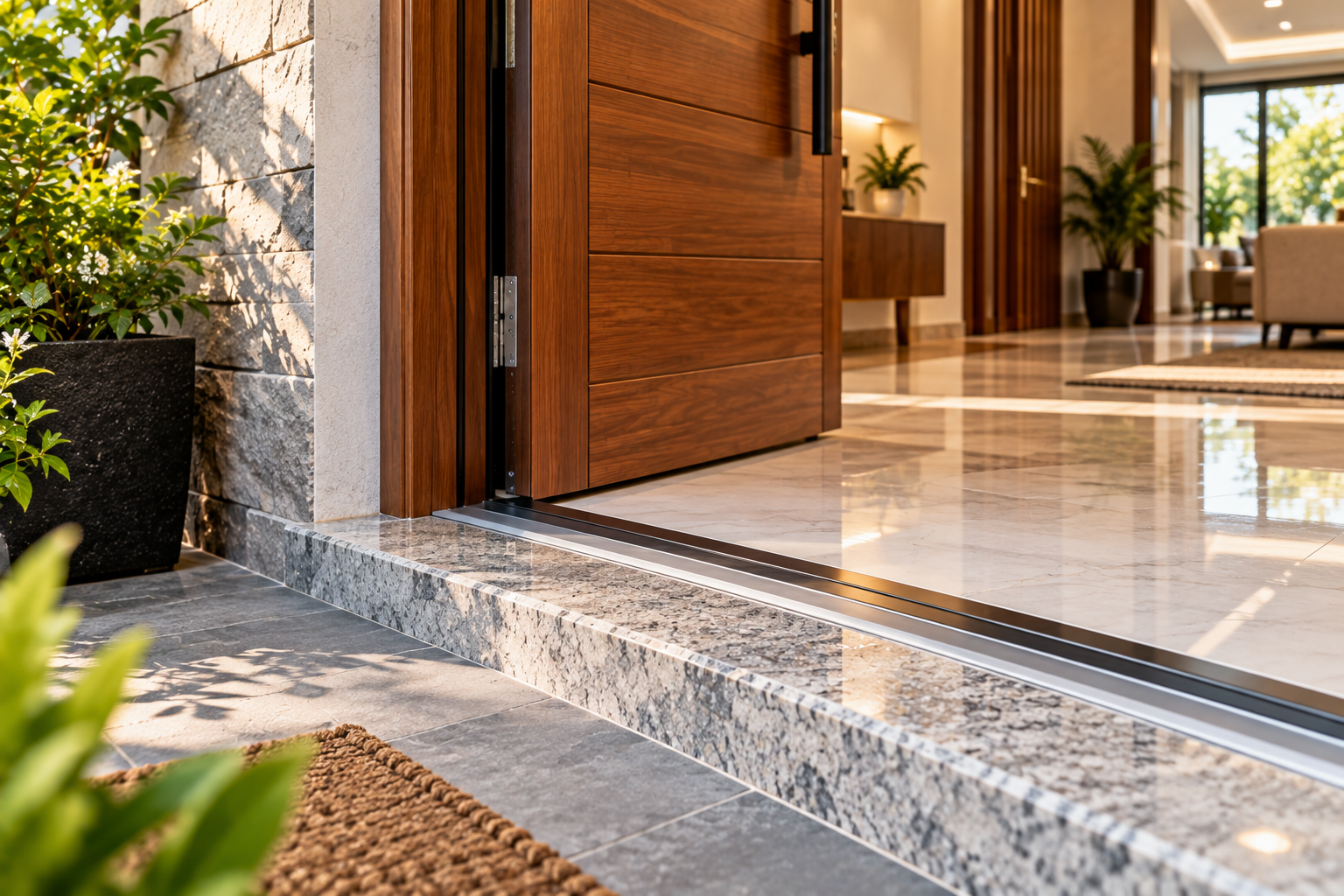
Think about how often you cross a doorway each day, from carrying your morning coffee to bringing in laundry or stepping inside after a monsoon shower. The door sill may be a small part of your home, but it plays an important role in how two spaces connect. A well-chosen sill creates a neat transition between rooms, while a poorly planned one can feel uneven or awkward underfoot. Getting the details right helps make everyday movement through your home more comfortable and seamless.
Understand What a Door Sill Does
A door sill is the horizontal surface at the bottom of a doorway. People often use the term interchangeably with threshold, although the exact construction varies by door type and installation. Depending on where it sits, a sill does one or more of these jobs:
- Joins two floors: It covers the junction where two floor finishes or levels meet, so the change looks deliberate rather than patched.
- Protects the opening: It takes the wear of feet, trolleys, and furniture where floor edges would otherwise chip.
- Keeps weather out: At entrances, balconies and patios, it forms part of the system that stops rainwater from running indoors.
Knowing which of these jobs your doorway needs is the first step. A bedroom door may only need a neat transition, while a balcony door needs careful attention to drainage, sealing and the difference between inside and outside floor levels.
Match the Sill to the Surrounding Finishes
The sill should look like part of the doorway, not an afterthought. You can match it to the floor for a continuous line, or choose a complementary finish that gently marks the change from one room to the next. Both work, as long as the colour, texture and thickness suit the space.
Engineered surfaces make this kind of coordination easier, because the same design can often carry across floors, sills, and even worktops, in finishes inspired by marble, natural stone, concrete, and wood.
For a calm, cohesive look, tie the sill to one of the room’s larger surfaces. If the floor has a strong pattern, a quieter sill keeps the doorway from feeling busy. If the floor is plain, a gently contrasting sill can define the opening without stealing attention.
Door Threshold Ideas for Different Spaces
Every doorway in a home faces different traffic and conditions. These door threshold ideas can help you match the finish to the space:
- Main entrance: Choose a finish that complements the front door and entrance flooring. If the sill is exposed to rain and sun, confirm that both the surface and installation are suited for outdoor use.
- Bedroom and living room: A slim, understated transition helps the spaces feel connected. Check that floor heights align so the sill doesn’t become a trip hazard.
- Bathroom: Water management comes first. The sill should work with the waterproofing, floor slope, and shower layout.
- Balcony and patio: Pay attention to rainwater, drainage and threshold height. Ask the installer how the detail will keep water out without compromising safe access.
- Kitchen and utility areas: Choose a finish that handles frequent mopping and spills, with properly finished edges and joints.
Treat these as starting points, then refine them with your architect, designer or installer once you know the exact floor levels and door system.
Consider Material, Finish and Thickness
The best sill is not simply the one that looks good in a showroom. It has to cope with the conditions at that particular doorway. Weigh up these factors before you decide:
- Durability: A doorway takes repeated foot traffic, dragged bags and moving furniture. Ask about resistance to scratches, wear and impact.
- Moisture: Sills near bathrooms, balconies and external doors need careful detailing. No surface can make up for poor waterproofing or drainage.
- Surface texture: A high-polish finish looks sleek but can be slippery when wet. In bathrooms, entrances and balconies, a matt or textured finish is usually the safer choice.
- Thickness and floor levels: A sill should never create a sharp, unexpected step. Confirm finished floor heights before cutting anything.
- Edge treatment: Rounded, bevelled and straight edges each give a different look. Whatever you choose, finish the edge safely.
- Maintenance: Check which cleaning products suit the surface and whether it needs any special treatment.
The right choice balances looks with everyday use. The right choice balances appearance with everyday performance. Engineered surfaces, such as those from Neotra Advanced Surfaces, are designed to resist scratches and stains, helping maintain a neat finish with regular care.
Get the Installation Details Right
Even a well-chosen sill can look unfinished if the measurements or joints are off. Measure the opening only after accounting for the surrounding floor finishes, and let the installer confirm the details. Before the sill is cut, ask the installer:
- Dimensions: What width, depth, thickness and edge profile does the opening need?
- Fixing: How will the installer fix the sill to the substrate and the door frame?
- Sealing: How will the joints be sealed so moisture and dirt cannot collect?
- Weatherproofing: For external doors, how does the sill fit into the complete drainage and weather-sealing system?
- Access: If anyone in the home uses a wheelchair, walker or pram, can the transition be flush?
Clear answers to these questions prevent most gaps, uneven edges, and leaks that spoil a doorway. Never rely on a decorative strip to solve a drainage problem.
Make the Threshold Part of the Design
A sill can quietly connect materials across a home. It can ease the move from a wood-look living room floor to a hard-wearing kitchen floor, or repeat the tone of a window sill elsewhere in the room. Consistency helps, but the same finish does not need to appear at every doorway.
Look at the doorway from both sides. A sill that looks balanced from the hallway should also suit the room it leads into, so consider daylight, door colour, skirting and nearby furniture. A sample placed against the actual floor tells you far more than a photo on a screen.
Conclusion
The perfect door sill pairs a considered finish with safe, comfortable movement. Start with what the doorway needs to do, then choose a surface and profile that suit the floors and frame around it. Pay close attention to moisture, floor levels, edges and installation. Settle these details early, and the sill will finish the doorway neatly while standing up to years of everyday traffic.