Most business owners picture mobile security patrols as little more than a car doing a slow lap of the car park. In reality, a well-run patrol is a structured, documented process built around deterrence, verification, and rapid response — and understanding how it actually works helps you judge whether the service you’re paying for is doing its job.
Before the Patrol Even Starts
A professional mobile patrol security begins long before the vehicle leaves the depot. Patrol officers are briefed on the specific site: known vulnerabilities, previous incidents, high-value assets, blind spots in existing CCTV coverage, and any special instructions from the client — a delivery expected after hours, a contractor who needs access, or an area currently under repair. Routes are deliberately varied from visit to visit so the timing and path of a patrol can’t be predicted by anyone watching the property.
The Walkthrough
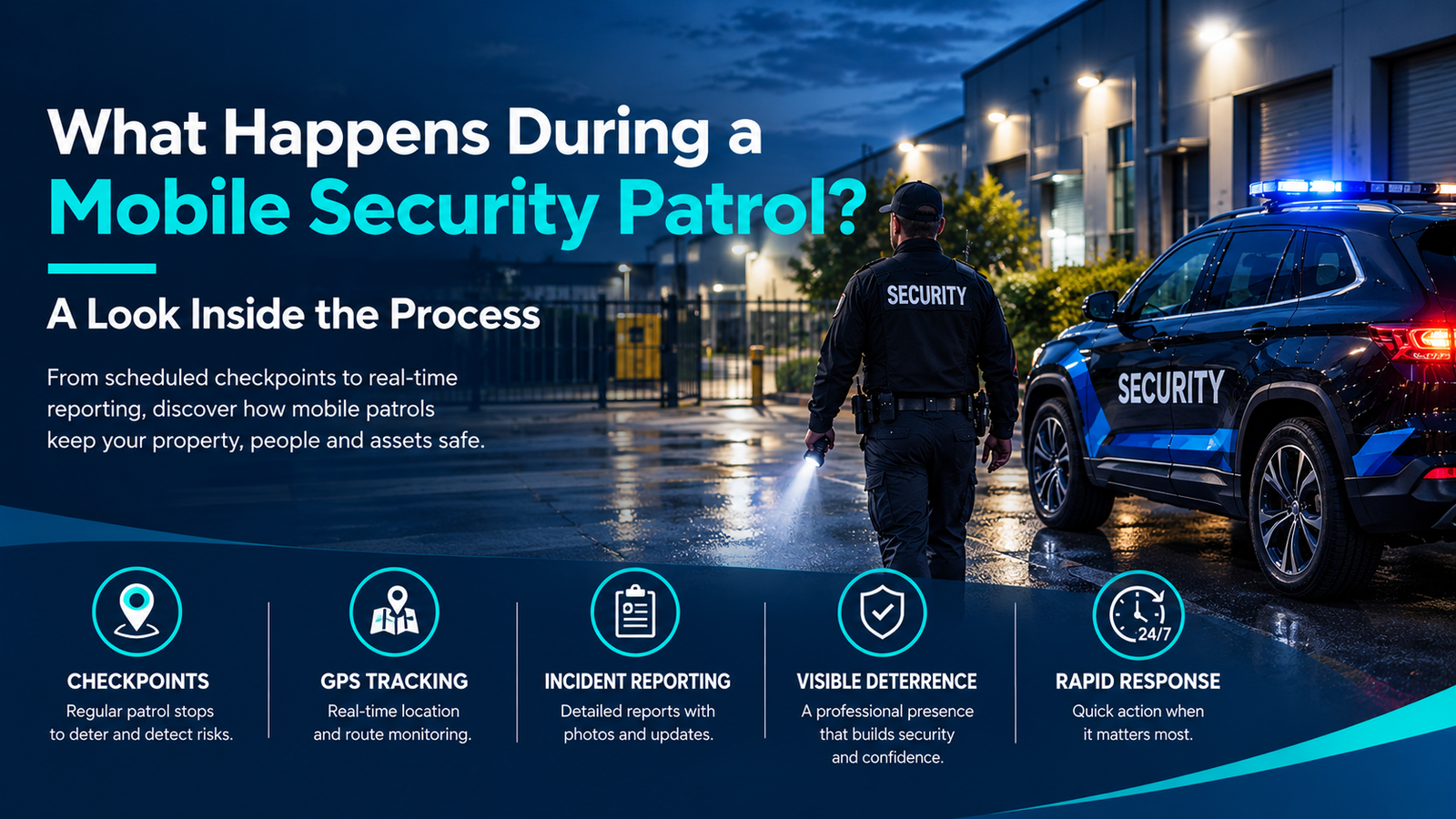
On arrival, a patrol officer doesn’t simply drive past. A genuine patrol involves getting out of the vehicle and physically checking the perimeter — fence lines, gates, loading docks, fire exits, and any point where forced entry is more likely. Officers check that doors and windows are secured, that lighting is functioning, and that nothing looks disturbed since the last visit. Many providers now use GPS-verified checkpoints, meaning the officer has to physically scan a tag or code at each location, creating a timestamped record that proves the patrol actually happened and covered the whole site, not just the easy parts.
Spotting the Small Things
Experienced patrol officers are trained to notice details an untrained eye would miss: a gate that’s been propped rather than locked, tyre marks near a fence that shouldn’t be there, a window latch that’s been tampered with, or people loitering near a site who have no reason to be there. Catching these small anomalies before they become a break-in is the entire point of a patrol — it’s proactive, not reactive.
Responding to Alarms and Incidents
If an alarm is triggered between scheduled patrols, a mobile response unit is typically the fastest way to get eyes on the property. Response times matter here — a patrol company operating locally, with vehicles already moving through the area, can often reach a site faster than police attending a non-emergency alarm call. Once on scene, officers assess the situation, secure the property if it’s safe to do so, and escalate to police if there’s evidence of an active break-in or intruder.
Reporting Back to the Client
The part clients see least — but should care about most — is the reporting. A proper patrol service logs every visit: the time, the checkpoints covered, anything unusual observed, and photos where relevant. This isn’t just paperwork. It’s the evidence trail that lets a business owner see exactly what they’re paying for, and it becomes critical if there’s ever an insurance claim or a pattern of attempted break-ins that needs to be flagged to police.
How Patrol Frequency Is Actually Decided
One detail businesses rarely ask about is how the number and timing of patrols gets set in the first place. It shouldn’t be arbitrary. A provider should look at your site’s specific risk profile — how isolated it is, whether it borders public land or laneways, its history of past incidents, and what’s stored on site — before recommending a schedule. A busy retail strip with passing foot traffic overnight might need fewer visits than an isolated warehouse backing onto an unlit reserve. Patrol frequency should also flex around known risk periods: extended public holidays, school leaver season, or after a spate of break-ins reported in the surrounding area are all times when a provider should be proactively suggesting additional coverage rather than waiting to be asked.
The Equipment Behind a Modern Patrol
Patrol vehicles themselves have become more capable than the simple “drive past and look” model many people still picture. Vehicles are typically fitted with spotlighting for checking dark areas without an officer needing to leave the car in higher-risk situations, two-way radio or direct dispatch communication back to a control room, and in many cases dash and body-worn cameras that create an independent record of what was observed. This isn’t about theatre — it’s about making sure that if an incident does occur, there’s a clear, timestamped account of what the officer saw and did, which matters both for police follow-up and for the client’s own records.
Coordinating With Other Security Measures On Site
A mobile patrol rarely operates in isolation. On sites with existing alarm systems or CCTV, the patrol provider should be integrated into that response chain — meaning an alarm trigger routes directly to the nearest patrol vehicle rather than sitting in a queue for a call centre to action. Similarly, if a site has static guards during business hours, the patrol service picking up after they leave should receive a proper handover: anything unusual noted during the day, expected deliveries, or contractors still on site. Gaps between these layers of security are exactly where incidents tend to slip through, so a provider who asks about your existing setup — rather than treating the patrol as a standalone service — is generally the safer choice.
Common Mistakes Businesses Make With Patrol Contracts
A few patterns show up repeatedly when patrol arrangements fail to deliver value. The most common is fixed, predictable timing — a patrol that always arrives at 11pm and 3am becomes something an offender can simply plan around. Another is accepting a patrol log that only confirms a vehicle was “on site” without checkpoint-level detail, which makes it impossible to verify the whole property was actually checked. A third is treating the patrol as entirely separate from other security spending, rather than asking a provider to look at the site holistically and recommend where a patrol is enough versus where a static guard or additional camera coverage might close a gap the patrol alone can’t.
Why This Matters for Melbourne Businesses
Warehouses, construction sites, retail strips, and industrial parks across Melbourne are common targets for after-hours theft and vandalism simply because they’re unattended for long stretches. A visible, randomised, and properly documented patrol changes the risk calculation for anyone casing a property — most opportunistic offenders will move on rather than risk being caught mid-attempt.
If you’re evaluating providers, ask about checkpoint verification, average response times, and what a patrol report actually looks like. Companies like Alfa Security run their mobile patrol security services around exactly this kind of accountability — GPS-tracked routes, randomised timing, and detailed reporting after every visit — which is the standard any business should expect before signing a contract.
Understanding the process behind a patrol isn’t just useful background knowledge — it’s how you tell a genuine security service apart from a van that occasionally drives past your building.