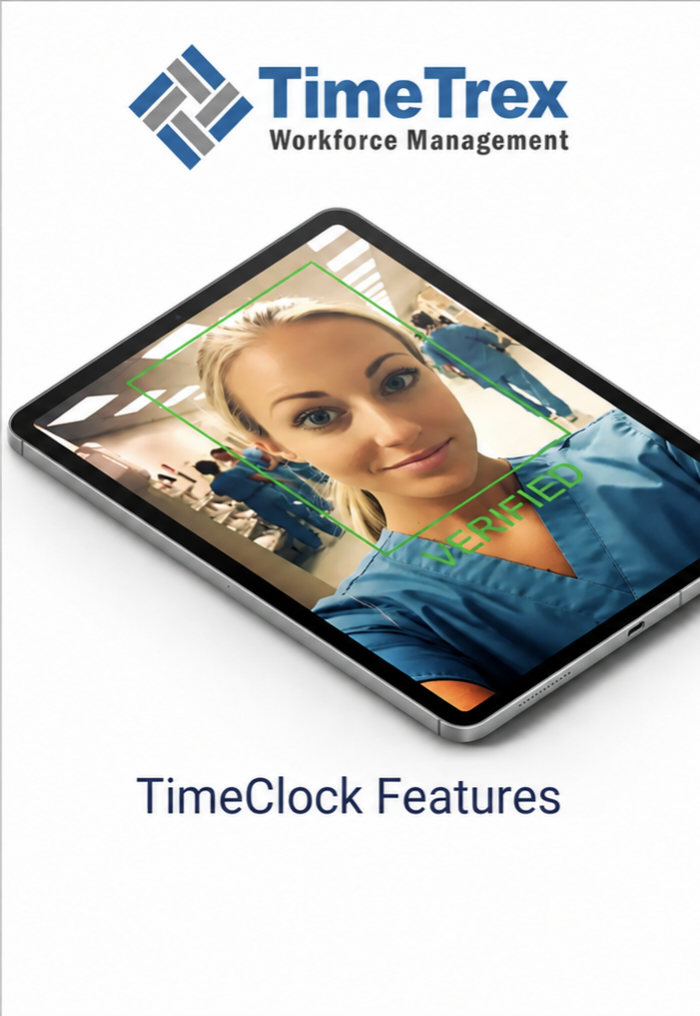
Clocking in should be the easiest part of anyone’s workday, but it is often the part that causes the most quiet frustration. A time clock that jams, a punch that never registered, or a shared badge system that makes it easy for one employee to clock in for another all chip away at something businesses depend on: an accurate record of who actually worked, and when.
The businesses that get the least value out of their time tracking are usually the ones still relying on a clock-in method that was never designed with accuracy or accountability in mind. The ones that get the most value tend to have made a fairly small change, moving to a time clock system that verifies identity and works reliably every single time.
The Everyday Problems With Traditional Time Clocks
Old-style punch clocks and shared login systems create more room for error than most businesses realize. A few of the most common issues include:
- Buddy punching, where one employee clocks in on behalf of another
- Forgotten or missed punches that require manual correction later
- Shared devices or badges that make it hard to confirm who actually clocked in
- Clock-in methods that do not translate well across multiple job sites or shifts
- No easy way to verify a punch after the fact if a question comes up
Each of these seems minor on its own, but across a full pay period, they add up to timecards that need extra review and payroll data that cannot always be fully trusted.
As one team summed it up, “I like that TimeTrex supports a smoother employee clock-in process” because verifying identity at the moment of the punch removes an entire category of disputes, using confirmation instead of a shared badge or a login someone else could easily use.
Why Identity Verification Changes the Conversation
When a clock-in system can confirm identity at the moment of the punch, an entire category of payroll disputes simply disappears. There is no need to investigate whether a punch was legitimate, because the system already confirmed it. This matters just as much for protecting honest employees as it does for catching dishonest ones. Nobody has to be accused of anything, because the record settles the question automatically.
For industries like healthcare, security, and hospitality, where verifying that the right person is on site at the right time carries real operational weight, this kind of accuracy is not just a convenience. It is closer to a basic requirement.
Built for Real Work Environments, Not Just Office Desks
A time clock system only earns its keep if it actually works for the environment employees are in. That means it needs to function smoothly on a tablet at a nursing station, a shared device at a warehouse entrance, or a mobile phone on a job site, without requiring extra hardware or a complicated setup process.
A reliable employee clock-in process should feel effortless for the employee while still giving managers full confidence in the accuracy of the record behind it, which is exactly the balance a well-designed time clock system is meant to strike.
Fewer Corrections, Less Second-Guessing
The practical payoff shows up at payroll time. When punches are accurate and verified from the start, there is far less need to go back and manually correct timecards or chase down employees to confirm a missing entry. Managers spend less time playing detective and more time trusting the data in front of them.
Small changes at the point of clock-in tend to ripple outward through the entire time tracking process. A more reliable start means a more reliable finish, from the first punch of the day all the way through to a payroll run that does not need to be second-guessed.
A Better Experience for Employees, Not Just Managers
It is easy to frame identity verification purely as a management safeguard, but employees benefit from it just as directly. A verified punch means an employee’s hours are recorded exactly as worked, with no risk of a shared badge or a mistaken entry affecting their pay. For employees who have previously dealt with a missing punch turning into a frustrating back-and-forth over a paycheck, a system that gets it right the first time removes a genuine source of stress from the job.
It also tends to speed up onboarding. A new employee does not need to be issued a badge, remember a PIN, or learn a multi-step login process. Clocking in becomes a quick, familiar action rather than something that requires training or a laminated instruction sheet taped to the wall.
Setting a Higher Standard for Time Data
At its core, a time clock is supposed to answer one simple question accurately: who was working, and when. Traditional systems answer that question with varying degrees of confidence, depending on how easy they are to work around. A verified clock-in system answers it with far more certainty, and that certainty is what makes everything downstream, from timecard approvals to payroll processing to compliance recordkeeping, meaningfully more reliable.
For businesses that depend on accurate attendance data, whether for compliance, client billing, or simply running payroll without errors, upgrading the clock-in process is often one of the smallest changes that produces one of the largest improvements in overall data quality.