The pandemic fundamentally changed how millions of people think about fitness. With gym closures and social distancing measures, home workouts went from a convenient alternative to an absolute necessity—and for many, the habit stuck. Yet one challenge persists for those eager to stay active indoors: limited living space. Cramped apartments, shared rooms, and cluttered garages make it seem impossible to carve out a dedicated workout area. Combine that with the intimidation many beginners feel when facing complex equipment, and it’s easy to see why so many fitness journeys stall before they truly begin.
Enter the foldable home gym—a versatile, space-smart solution designed for exactly these obstacles. Whether you’re working with a spare corner in your bedroom or a narrow section of your living room, foldable gym equipment lets you train effectively and tuck everything away when you’re done. In this guide, we’ll walk you through selecting the right multi-functional pieces, setting up an efficient workout space, and maintaining your equipment for long-term use. If you’ve been waiting for the right moment to start your fitness journey at home, this is it.
Why a Foldable Home Gym is Your Best Indoor Fitness Solution
A foldable home gym refers to a collection of exercise equipment specifically engineered to collapse, fold, or disassemble for compact storage when not in use. Think of adjustable weight benches that flatten against a wall, squat racks that fold into a closet-sized footprint, or resistance training stations that tuck behind a door. Unlike traditional bulky machines that demand a permanent room, these indoor fitness solutions transform any living space into a functional training area within minutes—and disappear just as quickly.
The convenience factor alone makes foldable equipment a game-changer for apartment dwellers and anyone sharing living space with family or roommates. You don’t need to sacrifice your dining area or surrender an entire garage. Instead, you roll out your setup when it’s time to train, then reclaim your square footage for daily life. This flexibility removes one of the biggest barriers to consistent exercise: the feeling that you simply don’t have room.
For beginners especially, a foldable home gym reduces the intimidation that often accompanies fitness. There’s no audience watching you figure out a new movement, no waiting for machines, and no pressure to keep pace with experienced lifters. You control the environment entirely, which builds confidence over time. The learning curve feels manageable when you can pause, adjust, and practice without self-consciousness.
From a financial perspective, the math strongly favors investing in quality foldable equipment. A typical gym membership costs hundreds annually, plus commuting time and fuel expenses. Within a year or two, a well-chosen home setup pays for itself—and continues serving you for years beyond that. When you factor in the time saved by eliminating travel to and from a facility, the value becomes even more compelling for busy professionals and parents alike.
Key Features to Look for in Foldable Equipment
When shopping for foldable gym gear, prioritize a sturdy steel frame with a high weight capacity—this ensures safety during intense movements. Look for locking mechanisms that hold the equipment firmly in place during use and allow smooth folding afterward. Rubber or padded contact points protect your floors and reduce noise. The best pieces serve multiple purposes: a bench that adjusts to flat, incline, and decline positions, or a rack system compatible with bands, cables, and free weights. Multi-functional design means fewer items to buy and store, giving you a full-body workout from a single compact station.
Selecting Essential Multi-Functional Gym Equipment for Beginners
Starting a home fitness journey doesn’t require filling a room with specialized machines. The smartest approach for beginners is building a collection gradually, choosing pieces that serve multiple purposes and grow with your abilities. The key is matching your equipment to both your current fitness level and the goals you’re working toward—whether that’s building strength, improving cardiovascular health, or increasing flexibility.
Begin with the foundation: a quality exercise mat. This isn’t just padding for floor exercises—it defines your workout zone, protects joints during bodyweight movements, and prevents slipping during stretches or yoga flows. A thick, non-slip mat makes every other piece of equipment more effective because it gives you a stable, comfortable base to work from.
Next, add resistance bands. These lightweight, portable tools deliver surprisingly challenging workouts across every muscle group. A set with varying resistance levels lets you progress naturally, increasing difficulty as you grow stronger. They’re also ideal for rehabilitation exercises and mobility work, making them one of the most versatile investments you can make for under twenty dollars.
Adjustable dumbbells represent your next logical step. Rather than purchasing an entire rack of fixed weights, a single pair of adjustable dumbbells covers a wide range—often from five to fifty pounds or more—by swapping plates or turning a dial. They store in a fraction of the space and allow you to perform dozens of exercises including presses, rows, curls, lunges, and deadlifts.
Once you’re comfortable with free weights, consider adding a foldable weight bench or collapsible squat rack. These pieces dramatically expand your exercise library by enabling incline presses, step-ups, barbell squats, and pull-ups. When selecting between options, assess your budget honestly and prioritize equipment that addresses your primary goals. Someone focused on strength training benefits most from a bench and rack combination, while a person targeting weight loss might prefer a foldable cardio machine paired with resistance tools. The beauty of multi-functional gym equipment is that each piece you add multiplies your workout possibilities without multiplying your storage needs.
Top Picks for Beginner-Friendly Foldable Gear
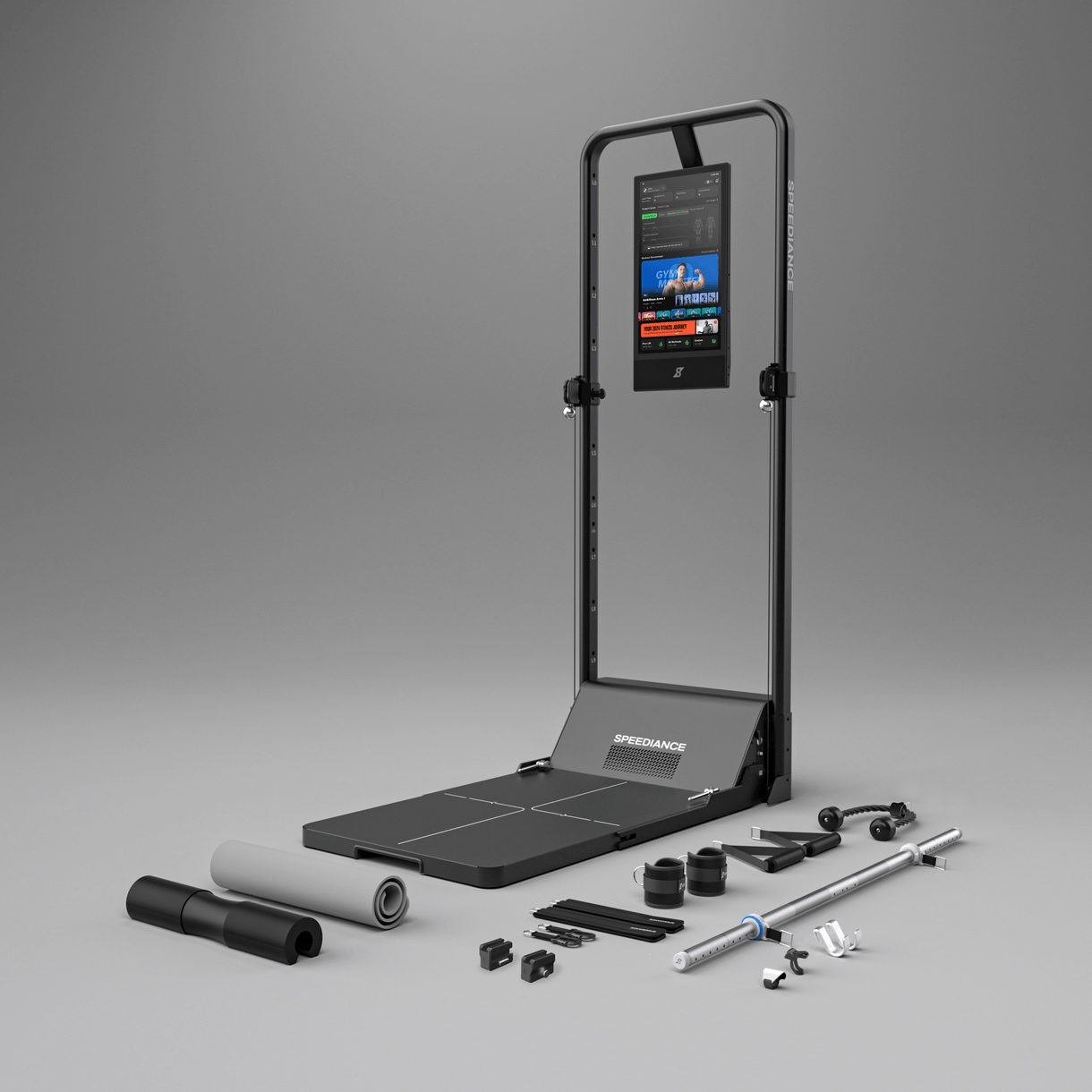
A foldable treadmill with a compact deck works well for those who want walking or running options regardless of weather—many models slide under a bed or stand upright against a wall. Adjustable kettlebells offer another excellent choice, combining cardio and strength training in a single implement that replaces an entire set. Foldable power towers provide pull-up, dip, and leg raise stations that collapse flat for storage. For full-body conditioning, a suspension trainer anchors to any door frame and folds into a small pouch, enabling hundreds of bodyweight exercises at adjustable difficulty levels. Smart cable machines from brands like Speediance take the concept further by combining digital resistance with a compact, foldable design that replaces multiple traditional machines. Each of these options supports progression from beginner through intermediate training without requiring additional purchases, making them smart long-term investments in your fitness.
Tips for Creating an Effective Home Workout Space
Having the right equipment is only half the equation—where and how you set it up determines whether your home fitness routine actually sticks. The goal is creating a space that feels intentional, even if it’s just a six-by-eight-foot section of your bedroom or living room. When your workout area is thoughtfully arranged, you eliminate friction between deciding to exercise and actually doing it.
Start by choosing your location carefully. Ideally, pick a spot with hard flooring or low-pile carpet, since thick rugs can destabilize movements and make equipment wobble. Proximity to a window matters more than most people realize—natural light elevates mood and energy levels, while fresh air circulation prevents the space from feeling stuffy during intense sessions. If a window isn’t available, position a fan nearby and ensure overhead lighting is bright enough to see your form clearly without creating harsh shadows.
Lay down your exercise mat as the anchor of your workout zone. This simple step psychologically separates “training space” from “living space,” which helps your brain shift into exercise mode. The mat also protects both your joints and your flooring from dropped weights or heavy foot strikes. If you’re working on a hard surface, consider interlocking foam tiles beneath your mat for additional cushioning and noise reduction—your downstairs neighbors will thank you.
Organization is critical when working with foldable equipment. Designate a specific closet, wall section, or corner where everything lives when not in use. Wall-mounted hooks hold resistance bands and suspension trainers, while a narrow gap between furniture can store a folded bench upright. The easier it is to pull equipment out and put it back, the more likely you are to use it consistently. If setup takes more than two minutes, motivation starts to erode.
Finally, add elements that keep you engaged. A full-length mirror serves double duty—it helps you monitor form and makes small spaces feel larger. A portable Bluetooth speaker or a tablet mount positioned at eye level lets you follow along with workout videos or playlists. These small investments in your environment create a space you genuinely want to spend time in, transforming exercise from a chore into a ritual you look forward to.
Layout Ideas for Small Spaces
In a studio apartment, position your foldable bench perpendicular to a wall so it doubles as a seat when collapsed, then store dumbbells beneath it in a low-profile basket. Use exercise mats to create distinct zones—one for standing movements near your equipment storage, another cleared area for floor work like planks and stretches. A door-mounted pull-up bar and suspension trainer take zero floor space yet unlock dozens of exercises. For shared spaces, a rolling storage cart keeps all smaller accessories contained and wheels into a closet between sessions, leaving no trace of your gym behind.
Maximizing Your Workouts with Foldable Gym Maintenance and Upgrades
Owning foldable gym equipment is a long-term commitment, and treating it well ensures it performs safely for years. After each session, wipe down surfaces with a damp cloth to remove sweat, which corrodes metal joints and degrades padding over time. Inspect folding mechanisms monthly—tighten any loose bolts, lubricate hinges with silicone spray, and check locking pins for wear. Rubber feet and floor contact points eventually compress, so replace them when you notice equipment shifting during use. Store everything in a dry area, since moisture accelerates rust on steel frames and weakens fabric components like resistance bands.
As your strength and endurance improve, your equipment should evolve with you. Rather than replacing everything at once, upgrade strategically. Swap lighter resistance bands for heavier ones, increase your adjustable dumbbell weight range, or add a cable attachment to your foldable rack. Each incremental addition keeps workouts challenging without overwhelming your space or budget. After six months of consistent training, you might introduce a foldable rowing machine or a set of plyo boxes that stack flat—pieces that support more advanced programming while respecting your storage constraints.
Consistency matters more than intensity in the early months. A well-maintained, gradually expanding foldable home gym removes excuses and builds momentum. You’re never waiting for repairs, never outgrowing your setup overnight, and never losing motivation because your equipment feels inadequate. This sustainable approach to multi-functional gym equipment means your fitness journey compounds over time—each small upgrade and each maintained piece supporting the next level of your progress without requiring a complete overhaul of your living space.
Start Your Space-Smart Fitness Journey Today
Building a home fitness routine doesn’t require a sprawling dedicated room or thousands of dollars in equipment. A foldable home gym meets you exactly where you are—limited space, tight budget, and all—and grows alongside your abilities. The path forward is straightforward: start with versatile, multi-functional pieces like resistance bands and adjustable dumbbells, create an intentional workout space that invites consistency, and maintain your equipment so it serves you reliably for years.
What makes indoor fitness solutions so powerful for beginners is the removal of common barriers. No commute, no crowds, no waiting—just you and your goals in a space you’ve designed for progress. Every foldable bench you unfold, every resistance band you grab, represents a decision to invest in yourself. The compound effect of showing up regularly in your own home gym builds not just physical strength, but the discipline and confidence that carry into every other area of life. Your fitness journey starts the moment you clear that corner and take the first rep. Everything after that is momentum.