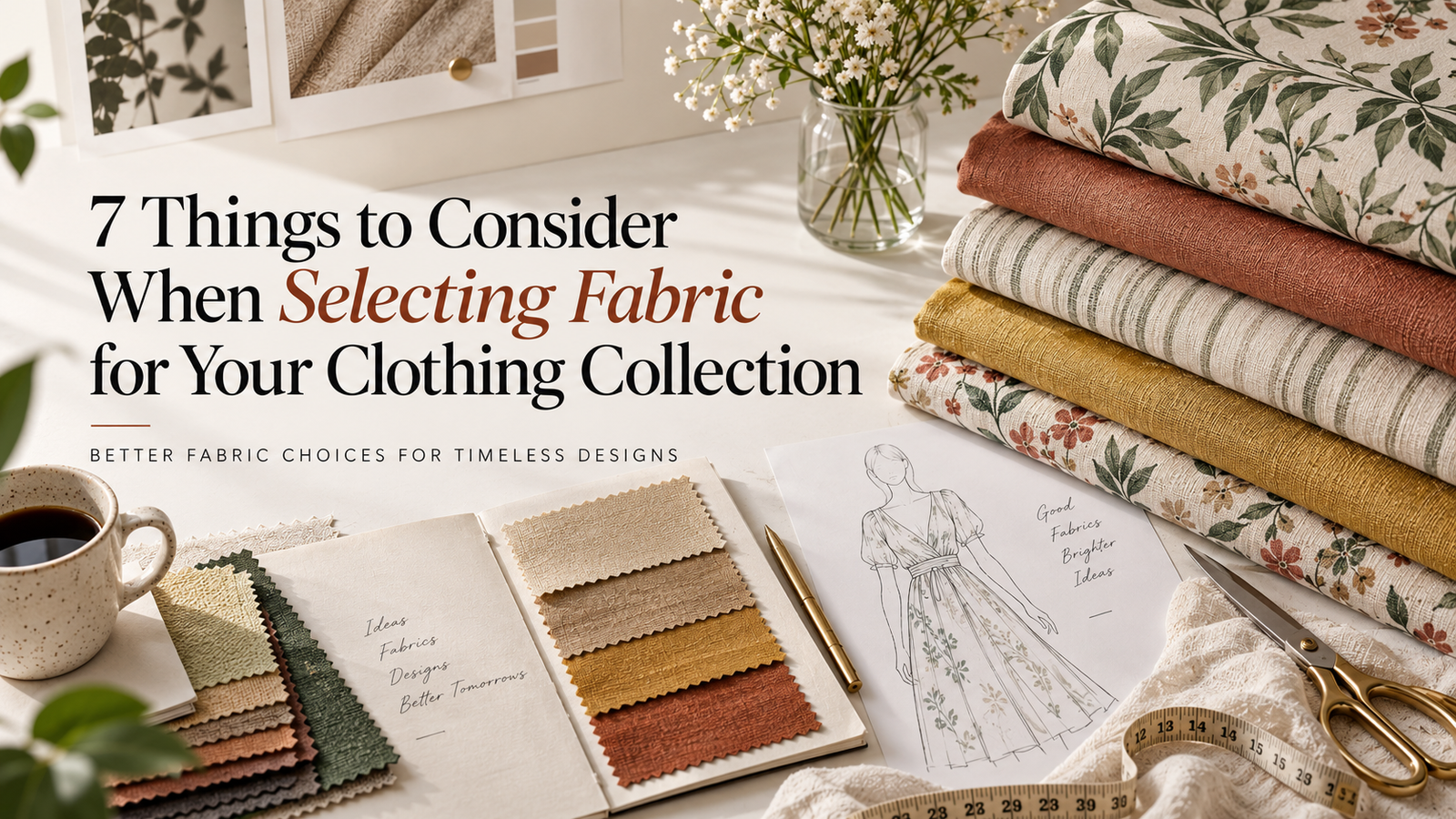
Choosing fabric is one of the most important decisions a designer makes when developing a new collection. It shapes how a garment feels, how it moves, how long it lasts, and ultimately how a customer experiences the finished piece. Yet fabric selection is often rushed in favour of design details that feel more exciting.
A thoughtful approach to material selection can save time, reduce production issues, and result in a collection that feels cohesive from start to finish. Below are the key factors worth working through before committing to any fabric for your next collection.
Start With the Purpose of the Clothing
Before evaluating any specific material, it helps to define what the garment is actually meant to do. Activewear, everyday basics, occasion wear, and outerwear all place very different demands on fabric.
A piece designed for movement needs stretch and breathability, while a structured jacket relies more on stability and shape retention. Clarifying the garment’s purpose early gives you a practical filter for narrowing down fabric options, rather than choosing based on appearance alone and hoping it performs well later.
1. Consider Fabric Weight
Fabric weight affects both the look and function of a garment more than many designers initially expect. Lightweight fabrics tend to suit flowing silhouettes, layering pieces, and warm-weather designs, while heavier fabrics work better for structure, warmth, and durability.
It is worth testing how a fabric’s weight interacts with your specific pattern. A design that looks elegant in a heavier textile might feel stiff or bulky once cut and sewn, while the same design in a lighter material could lose the structure it needs to hold its shape.
2. Look at Comfort and Breathability
Comfort plays a major role in whether a customer continues wearing a garment long after purchase. Breathable fabrics help regulate temperature and moisture, which matters for everyday clothing as much as it does for activewear.
Natural fibres often perform well here, though certain blends can also offer a good balance of comfort and practicality. If a collection is aimed at frequent wear, comfort should carry real weight in the decision-making process rather than being treated as a secondary concern behind aesthetics.
3. Evaluate Texture and Appearance
Texture influences how a garment reads visually, even before anyone touches the fabric. Smooth, matte, textured, or slightly sheen finishes all create different impressions and can dramatically change the personality of an otherwise simple design.
Texture also affects how a fabric photographs and how it appears under different lighting, which matters for both in-store display and online product imagery. It is worth handling physical samples under a few different lighting conditions before finalising your choice, since texture rarely translates fully through a screen.
4. Think About the Material and Its Source
Material composition affects far more than how a fabric feels. Where and how a material is grown or produced, along with its overall environmental footprint, has become an increasingly important consideration for designers and customers alike.
Understanding fibre origin, farming or manufacturing practices, and the overall production process gives you a clearer picture of a material’s broader impact, beyond just its performance in a garment. For designers who want to align their collection with more responsible sourcing, working with organic fabric is one practical way to reduce reliance on synthetic processing while still meeting the comfort and quality expectations customers have come to associate with well-made clothing. Brands like Weaving Vibes have built their fabric offerings around exactly this kind of responsible sourcing.
This kind of material choice can also become part of a brand’s broader story, giving customers a tangible reason to feel good about a purchase beyond style alone.
5. Consider the Season
Seasonal suitability is easy to overlook when a fabric simply looks good on a mood board. A material that performs beautifully in cooler months may feel completely wrong for a spring or summer collection, and the reverse holds true as well.
Think about how a fabric will feel against skin in different temperatures, and whether it allows enough airflow for warmer conditions or enough insulation for colder ones. Building a collection around fabrics genuinely suited to their intended season tends to result in pieces that get worn far more consistently.
6. Match the Fabric With the Garment Design
Not every fabric suits every silhouette, and matching the two thoughtfully is where a lot of design decisions come together. Fluid, lightweight materials tend to suit relaxed or flowing designs, while crisper, more textured fabrics can bring structure and visual interest to simpler shapes.
For warm-weather collections in particular, textured lightweight options are worth exploring. A classic example is seersucker fabric, known for its slightly puckered texture that keeps fabric away from the skin and allows better airflow, making it a practical and visually distinctive choice for summer pieces.
Matching fabric characteristics to garment design this way often prevents the disappointment of a beautiful sketch translating poorly once it becomes an actual, wearable piece.
7. Check Durability and Maintenance
Durability determines how well a garment holds up through regular wear and washing, which directly affects customer satisfaction over time. A fabric that pills, fades, or loses shape quickly can undo even the strongest design work.
Maintenance requirements matter just as much. Fabrics that demand delicate handwashing or specialised dry cleaning may not suit collections aimed at everyday, low-maintenance wear. Being upfront with customers about care instructions, and choosing fabrics that align with realistic care habits, helps set expectations that a garment can actually meet.
Consider Production and Cost
Practical production factors often narrow down fabric choices just as much as design preferences do. Minimum order quantities, fabric width, and sourcing lead times all influence which materials are realistic for a given collection size.
Cost naturally plays a role too, but it is worth weighing cost against expected garment lifespan and customer perception. A slightly higher-cost fabric that performs better and lasts longer can sometimes offer better long-term value than a cheaper option that requires frequent replacement or generates customer complaints.
Test Fabric Samples Before Final Selection
No amount of research fully replaces physically handling a fabric before committing to it. Samples reveal how a material drapes, how it responds to cutting and sewing, and how it holds colour and shape after washing.
Testing samples across different lighting conditions and even running them through a few wash cycles can surface issues that would otherwise only appear after a full production run has already been completed. This step, while sometimes skipped under tight timelines, tends to prevent costly mistakes later.
Final Tips for Building a Well-Balanced Fabric Collection
A strong collection usually relies on a thoughtful mix of fabrics rather than a single material used throughout. Combining different weights, textures, and finishes across a range gives customers variety while still maintaining a cohesive overall aesthetic.
It also helps to revisit fabric choices periodically as customer feedback comes in. Preferences around comfort, sustainability, and care requirements continue to shift, and staying responsive to those changes keeps a collection feeling current rather than outdated.
Conclusion
Selecting the right fabric is rarely about finding one perfect material for an entire collection. It comes down to understanding the purpose of each garment, testing how different fabrics perform in practice, and balancing comfort, durability, and production realities together. Designers who approach fabric selection with this level of care, the way Weaving Vibes does with its own fabric collections, tend to build collections that feel considered, wearable, and genuinely aligned with what their customers value.