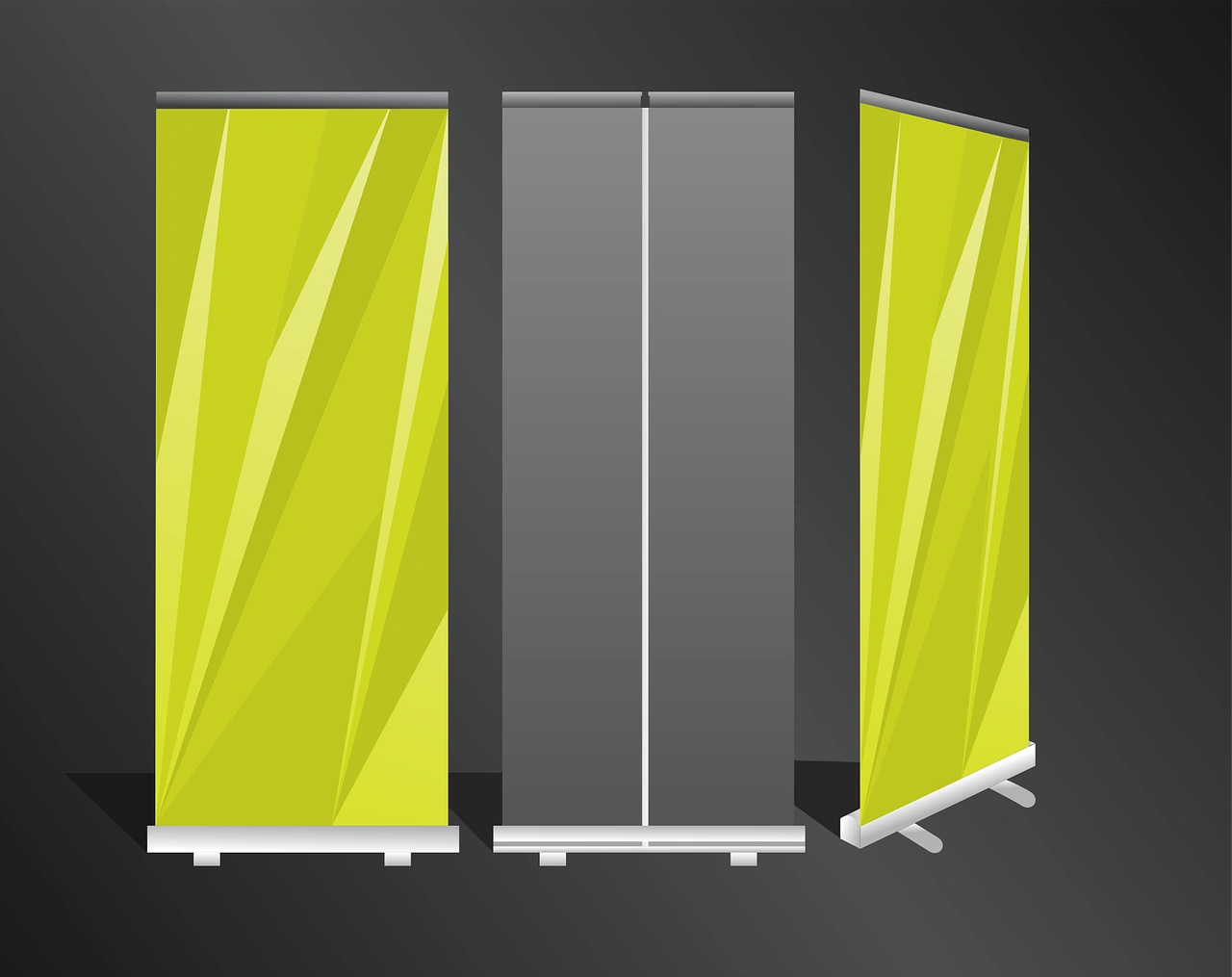
A good pull-up banner isn’t just about the artwork. The material sitting behind that print decides how it looks after the tenth event, the hundredth setup, and every trip in between.
We’ve seen it happen. Someone orders a banner because the price looks great online. It arrives, the colours pop, and everyone is happy. Then comes the second exhibition. The edges start curling. Tiny wrinkles appear. By the fourth or fifth event, that same pull-up banner looks tired, even though the business behind it isn’t.
That’s where the material starts speaking louder than the design.
Not Every Banner Is Built the Same
From the outside, most banner stands look almost identical. Aluminium base. Printed graphic. Carry bag. Done. Not really.
When our team compares different display systems, we spend more time looking at what the graphic is printed on than the stand itself. A cheap vinyl print might work perfectly for a weekend promotion. A business attending exhibitions every month? Different story. Simple.
The print material takes all the punishment. It gets rolled into the cassette. Pulled back out. Packed into the boot of a car. Dragged across convention halls. Left in warm storage rooms. Repeat that cycle enough times, and weak material starts showing every mistake.
That’s why choosing a pull-up banner isn’t only about size or price.
PVC Vinyl Has Its Place
We’re not here to bash PVC. It still works. For retail sales, temporary promotions, seasonal displays or one-off events, standard PVC vinyl gets the job done without blowing the budget. Many small businesses begin with this option because it makes sense financially. We’ve done the same.
If we’re printing something for a short campaign, we’d rather spend less and replace it later than pay for features we’ll never need. The trick is knowing when “good enough” actually is good enough.
Premium Materials Feel Different
The jump from standard vinyl to anti-curl polypropylene or fabric isn’t always obvious on day one. Give it six months.
That’s usually when the difference starts becoming obvious. Premium materials stay flatter after repeated rolling. Colours often hold their appearance better over time, especially under exhibition lighting, and the graphic keeps looking professional instead of tired.
A pull-up banner that stays flat also photographs better. That matters more than people think because event photos usually end up on websites, LinkedIn pages and marketing brochures. Funny how one display keeps working long after the event finishes.
Hardware Matters More Than We Expected
Everyone notices the print. Hardly anyone notices the base. Until something snaps. Economy systems generally come with lightweight aluminium cassettes. They’re easy to carry and perfectly fine if they’re only being unpacked a few times each year. Businesses travelling regularly often move towards reinforced aluminium systems because they take more knocks without becoming unstable.
We’ve watched exhibitors unpack displays at 7 a.m., rush through setup, then repeat the whole process after eight hours on their feet. Nobody wants equipment that adds stress.
Industry reports show that portable display systems are now used at almost every in-person event by 72% of exhibitors, mainly because they’re quick to transport, fast to assemble and can be reused across multiple campaigns. That explains why the pull-up banner still turns up almost everywhere despite all the new digital display options.
Speed Still Wins
Trade shows aren’t calm. They’re organised chaos. Boxes everywhere. Coffee cups. Extension cords. People trying to finish booth setups while forklifts drive past carrying pallets. We’ve timed ourselves before.
One person can usually assemble a pull-up banner in under a minute, which lines up with current industry observations showing setup typically takes between 30 and 60 seconds. That’s one reason these displays refuse to disappear. No tools. No complicated instructions. Just pull and lock, and you’re ready.
Fire Safety Isn’t Just Fine Print
This gets overlooked. Quite often. Large exhibition venues, convention centres and public event spaces regularly ask suppliers to provide display products that meet recognised fire safety requirements. One commonly referenced standard is NFPA 701, which covers flame resistance for certain textile and display materials.
Most visitors never notice. Event organisers definitely do. If we’re preparing displays for larger expos, we’d rather confirm the material meets venue requirements than deal with last-minute surprises at the loading dock.
One Message Beats Ten Messages
Melissa Grant, a senior exhibition graphics consultant, summed it up perfectly:
“The most effective pull-up banners communicate one clear message in under five seconds. If attendees have to stop and work out what you’re trying to say, you’ve already lost their attention.”
We couldn’t agree more. People don’t stand in exhibition aisles reading paragraphs. They’re walking. Scanning. Moving again. A pull-up banner works best when someone understands it almost instantly. One headline. One visual. One action. Done.
Comparing Economy and Premium Options
| Feature | Economy Pull Up Banner | Premium Pull Up Banner |
| Hardware | Lightweight aluminium cassette | Reinforced anodised aluminium base |
| Print Material | Standard PVC vinyl | Anti-curl polypropylene or premium fabric |
| Print Resolution | Up to 720–1440 dpi | Up to 2400 dpi |
| Typical Lifespan | 1–2 years with occasional use | 3–5+ years with frequent use |
| Best For | Retail promotions and short campaigns | Trade shows, exhibitions and corporate events |
| Graphic Replacement | Fixed graphic | Replaceable graphic cassette |
| Carry Case | Basic nylon bag | Padded transport case |
| Typical Setup Time | Under one minute | Under one minute |
Think Beyond the First Event
Here’s the thing. Buying a pull-up banner from Selbys is easy. Living with it for the next three years is the part that matters. We always ask ourselves one question before choosing materials: how often will this display leave the office? If the answer is once or twice a year, an economy option probably makes perfect sense.
If it’s travelling every month, getting packed into vans, rolled out across exhibition halls and becoming the face of the business again and again, spending more upfront usually saves money later.