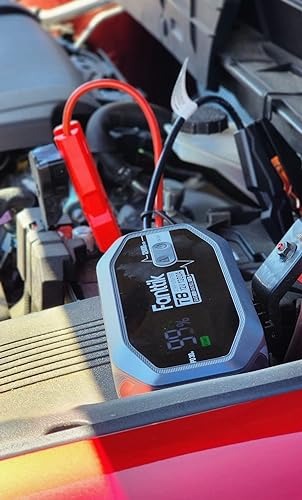
Picture this: you’re running late for an important meeting, you turn the key, and nothing happens. Or worse, you’re parked in a remote area after dark with a completely dead battery and no other vehicles in sight. These moments are frustrating, stressful, and potentially dangerous — yet they happen to drivers every day.
A heavy-duty jump starter exists precisely for these situations, putting the power to revive your vehicle directly in your hands without relying on a stranger or a roadside service. But as the market floods with options promising massive power numbers and flashy features, a critical question emerges: which one is actually safe to use?
Raw power means nothing if a jump starter can damage your vehicle’s electronics, cause a spark near a venting battery, or fail at the worst possible moment. This article breaks down the essential safety features and practical selection criteria that separate a genuinely reliable heavy-duty jump starter from one that simply looks impressive on a shelf. Because when it comes to working with high-current electrical systems, protection isn’t a bonus feature — it’s the entire point.
Why Safety is Non-Negotiable for a Heavy Duty Jump Starter
Jump-starting a vehicle involves working directly with a lead-acid or lithium battery that can deliver hundreds of amps in an instant. That’s not a forgiving environment for mistakes. Traditional jumper cables, while simple, offer zero protection against the most common errors — connect the clamps in the wrong order, touch them together, or hook them to a cracked battery, and you’re risking an electrical short, a damaging voltage spike, or in extreme cases, a battery explosion from ignited hydrogen gas. These aren’t rare worst-case scenarios; they’re documented outcomes that send people to emergency rooms every year.
A modern portable jump starter fundamentally changes this equation. Unlike bare cables that pass raw current the moment metal meets metal, a quality jump starter unit incorporates active protection circuits that monitor the connection before allowing any current to flow. The device acts as an intelligent intermediary rather than a simple wire, making the process dramatically safer for both the user and the vehicle’s sensitive electronics.
The “heavy-duty” classification raises the stakes considerably. Units designed for large gasoline engines, diesel trucks, or commercial vehicles operate at significantly higher power levels — meaning any failure in the protection system carries proportionally greater consequences. A surge that might merely glitch a small sedan’s computer could permanently destroy the ECU of a heavy-duty vehicle. This is precisely why robust, multi-layered safety features aren’t optional upgrades on a heavy-duty jump starter. They are the foundational requirement that determines whether a unit is genuinely useful or genuinely dangerous when you need it most.
Essential Safety Features of the Best Jump Starters
When evaluating a heavy-duty jump starter, the power rating printed on the box tells only half the story. The other half — arguably the more important half — lives inside the device’s protection circuitry. Understanding what each safety feature actually does helps you recognize whether a unit is genuinely engineered for safety or simply marketed that way.
Reverse Polarity Protection
Reverse polarity occurs when the positive clamp connects to the negative terminal and vice versa — an easy mistake to make in low light, under stress, or simply through distraction. On a traditional cable setup, this instantly creates a dead short that can fry sensitive vehicle electronics, damage the battery, or cause dangerous arcing. A jump starter with reverse polarity protection detects the incorrect connection through its internal circuitry and refuses to allow any current to flow until the clamps are properly placed. Most quality units signal the error with an audible alarm or indicator light, prompting you to correct the connection before any harm is done. This single feature has prevented countless expensive repair bills and dangerous situations.
Spark-Proof Technology and Short Circuit Protection
Even correct connections can generate a spark when clamps approach battery terminals, particularly near a battery that may be off-gassing hydrogen. Spark-proof technology addresses this by keeping the output circuit inactive until the device confirms a stable, correct connection — current only flows once the handshake is verified. Short circuit protection works alongside this by continuously monitoring the circuit during operation. If an unexpected fault creates a direct short, the protection circuit cuts power within milliseconds, shielding both the jump starter’s internal components and the vehicle’s wiring from damage.
Over-Current, Over-Voltage, and Over-Charge Protection
These three protections guard against electrical conditions that develop during and after the jump-starting process. Over-current protection limits the amperage delivered to prevent overwhelming the vehicle’s electrical system during cranking. Over-voltage protection monitors for spikes — which can occur when a vehicle starts and the alternator comes online — and clamps the output before a surge reaches sensitive ECU components. Over-charge protection applies when the jump starter itself is being recharged, preventing the internal battery from being pushed beyond safe capacity, which extends the unit’s lifespan and reduces the risk of thermal runaway.
High-Quality, Insulated Clamps and Cables
Protection circuits can only do so much if the physical connection points are poorly made. Thick, low-resistance cables ensure efficient current transfer without excessive heat buildup during the high-amperage demands of starting a large engine. The clamps themselves should be fully insulated copper — copper for conductivity, full insulation so accidental contact with adjacent metal surfaces doesn’t create an unintended circuit. Flimsy, thin clamps with partial insulation are a common cost-cutting measure on budget units and a genuine safety liability. Grip strength matters too; a clamp that slips off mid-crank can arc against surrounding metal with significant force. Brands like Fanttik address this by engineering clamps with reinforced insulation and strong spring tension specifically rated for the sustained demands of heavy-duty applications.
How to Choose the Safest Heavy-Duty Jump Starter: A Buyer’s Guide
Assessing Power Needs (Peak vs. Cranking Amps)
Two numbers dominate jump starter specifications: peak amps and cranking amps. Peak amps represent the maximum burst the unit can deliver for a fraction of a second, while cranking amps — sometimes listed as cold cranking amps (CCA) — reflect sustained power output over several seconds of engine cranking. Cranking amps is the more meaningful figure for real-world use. A standard gasoline engine typically requires 150–400 cranking amps, while large V8 gas engines and light diesel trucks demand 400–600. Heavy commercial diesel engines can require 1,000 or more. Matching your jump starter’s cranking amp rating to your vehicle’s actual requirement prevents both underpowering — which results in failed start attempts — and unnecessary overspending on capacity you’ll never use.
Portability and Build Quality
A jump starter that stays home because it’s too heavy to bother carrying defeats its entire purpose. Lithium-ion units offer a significant advantage here — they deliver serious cranking power at a fraction of the weight of older lead-acid designs, making them genuinely portable for everyday carry in a trunk or cab. Beyond weight, examine the enclosure itself. A rubberized, impact-resistant housing signals that the device was designed for real-world conditions rather than a clean garage shelf. Look for an IP rating indicating water and dust resistance, since emergencies rarely happen in ideal weather. A clear, backlit display showing battery charge level is equally practical — you need to confirm the unit has sufficient charge before relying on it, not discover it’s depleted when you’re already stranded.
Additional Functions: Beyond a Car Battery Charger
Many modern jump starters include USB charging ports, built-in LED work lights, and compatibility with tire inflator attachments — genuinely useful additions that increase the device’s everyday value. A USB port can recharge a phone during an emergency, and a bright LED light makes nighttime connections significantly safer. That said, treat these extras as a bonus rather than a deciding factor. A unit with impressive auxiliary features but weak protection circuitry or undersized cables is a poor trade. Prioritize the core requirements — verified safety certifications, adequate cranking amps for your vehicle, and solid build quality — then consider additional functions as the tiebreaker between otherwise comparable options.
Step-by-Step: Safely Using Your Portable Jump Starter
Knowing your jump starter has robust protection circuits is reassuring — but those features only work when you follow the correct procedure. Skipping steps or rushing through the process undermines even the best-engineered safety systems. Here’s how to do it right every time.
Step 1 — Pre-Use Check: Before approaching the dead vehicle, inspect the jump starter’s charge level on its display. A unit below 20% may lack sufficient power to crank a large engine. Examine the clamp cables for cracked insulation, fraying, or corrosion at the connection points. Also inspect the vehicle’s battery — if it’s visibly cracked, leaking, or frozen solid, do not attempt a jump start. A damaged battery can vent explosive hydrogen or shatter under the sudden current load.
Step 2 — Initial Connection: Power ON the jump starter unit first, then connect the red clamp firmly to the battery’s positive terminal, followed by the black clamp to the negative terminal or a solid grounded metal surface away from the battery. Connecting to a ground point rather than the negative terminal directly reduces the risk of igniting any hydrogen gas the battery may be venting.
Step 3 — The Jump-Start: Wait for the jump starter to confirm a good connection — most units signal this with a green indicator or tone. Then attempt to start the vehicle. If the engine doesn’t turn over within three seconds, stop and wait 30 seconds before trying again. Continuous cranking overheats the starter motor and drains the jump starter rapidly.
Step 4 — Disconnection: Once the engine is running, remove the clamps in reverse order — black first, then red — while keeping them away from each other and any metal surfaces. Turn off the jump starter after disconnecting.
Step 5 — Recharging: Recharge the jump starter within 24 hours of use, following the manufacturer’s specified charging method. Leaving a lithium-ion unit fully depleted for extended periods degrades its capacity over time.
Common Safety Mistakes to Avoid
Even with a well-equipped jump starter in hand, certain habits can undermine every protection circuit the device offers. Never attempt to jump-start a battery that’s visibly cracked, leaking acid, or frozen — these conditions create explosion and chemical burn risks that no safety circuit can neutralize. Using an underpowered unit on a large diesel engine is equally problematic; forcing a jump starter beyond its rated capacity stresses both the device and the vehicle’s electrical system. Always heed warning indicators — a flashing light or alarm isn’t a suggestion to proceed carefully, it’s a hard stop. Storage habits matter too: leaving a lithium-ion jump starter in a hot trunk for months or exposing it to freezing temperatures degrades battery capacity significantly, meaning the unit may fail precisely when you need it. Finally, neglecting to recharge the unit after use — or at least every three months during storage — is the single most common reason jump starters fail at critical moments.
Safety First: Making the Right Choice in a Heavy-Duty Jump Starter
A heavy-duty jump starter earns its place in your vehicle not by the impressive number printed on its packaging, but by the layers of protection engineered into every circuit, clamp, and cable. Raw power without safeguards isn’t a feature — it’s a liability. The best units combine adequate cranking amps for your specific engine with reverse polarity protection, spark-proof technology, over-current and over-voltage safeguards, and physically robust clamps that maintain a secure connection under real-world conditions.
Choosing wisely means looking past marketing claims and asking the practical questions: Does the cranking amp rating match my vehicle? Is the build quality suited for outdoor conditions? Are the safety certifications legitimate? Does it remain genuinely portable? These criteria, taken together, define a jump starter that will actually perform when a dead battery leaves you stranded — not one that simply looks capable on a shelf.
Ultimately, the peace of mind a quality heavy-duty jump starter provides comes from knowing you’ve made a safety-first decision. When you’re parked in the dark, far from help, with a dead engine, the right device doesn’t just restart your vehicle — it does so without putting you, your passengers, or your vehicle’s electronics at risk. That combination of reliable power and genuine protection is exactly what separates the best from the rest.