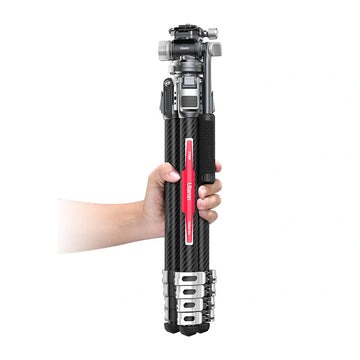
Picture this: you’re perched on a rocky hillside at golden hour, the light fading fast, and your camera keeps tilting because your tripod can’t find stable footing on the uneven ground. A gust of wind rattles your setup, and you realize the flimsy mount holding your external monitor is about to give way. For outdoor filmmakers, moments like these aren’t hypothetical — they’re frustrating realities that can cost hours of work and once-in-a-lifetime shots. The core challenge is deceptively simple: finding a tripod that travels light, stands firm on unpredictable terrain, and offers enough mounting flexibility to support the accessories modern video production demands.
A well-engineered portable video tripod solves all three problems at once. It combines rugged construction with adaptable design, giving filmmakers the confidence to shoot in rain-soaked forests, windswept deserts, or cramped urban alleyways without compromise. In this article, we’ll explore why durability and versatile mounting matter so much for outdoor creators, break down the specific features you should prioritize — from weather-resistant materials to adjustable leg systems — and walk you through a practical guide for choosing and setting up the right tripod for your next shoot.
The Critical Role of a Portable Video Tripod for Outdoor Filmmakers
Outdoor filmmaking throws curveballs that studio work never does. One morning you’re ankle-deep in mud beside a riverbank; by afternoon, you’re scrambling up a gravel trail to catch a sunset timelapse. Each location shift demands gear that keeps pace without weighing you down or failing under pressure. This is exactly why a portable video tripod has become indispensable for creators who refuse to stay indoors.
Reliability in the field directly translates to shot quality. A tripod that wobbles on a grassy slope introduces micro-vibrations that no amount of post-production stabilization can fully correct, especially during long telephoto shots or slow cinematic pans. When your support system is rock-solid, you spend less time troubleshooting and more time composing frames that tell a story. Beyond stability, a well-designed portable tripod grants creative freedom that handheld rigs simply can’t match — smooth tilts, repeatable movements, and the ability to walk away from the camera during self-recorded segments. For filmmakers working solo in remote locations, that kind of autonomy isn’t a luxury; it’s a necessity. The right tripod becomes an extension of your creative vision, adapting to whatever the environment demands rather than limiting what you can capture.
Essential Durability Features: Weather-Resistant and Adjustable Legs
A portable video tripod destined for outdoor use needs to survive conditions that would destroy lesser equipment. Two features separate field-ready tripods from studio-only models: weather-resistant construction and adjustable legs engineered for irregular terrain. These aren’t premium upgrades — they’re baseline requirements for any filmmaker who shoots beyond controlled environments. Understanding what makes these features effective helps you avoid gear failures that derail entire production days.
Why Weather-Resistant Construction is Non-Negotiable
Outdoor shoots rarely happen on schedule with perfect weather. A sudden downpour during a coastal documentary shoot or fine desert sand whipping through your gear at dawn — these scenarios destroy tripods built only for indoor comfort. Weather-resistant construction means sealed leg joints that prevent moisture and grit from infiltrating locking mechanisms, corrosion-resistant materials like anodized aluminum or carbon fiber composites, and rubber gaskets around adjustment knobs that keep internal threads functioning smoothly after repeated exposure to the elements. Carbon fiber legs offer a particular advantage because they don’t conduct cold the way metal does, remaining comfortable to handle during winter shoots while resisting the expansion and contraction cycles that loosen aluminum fittings over time. Look for tripods with stainless steel hardware at stress points and protective coatings on all exposed surfaces. These design choices compound over years of use, maintaining smooth operation long after cheaper alternatives have seized up or developed play in their joints.
Maximizing Stability with Adjustable Legs on Uneven Ground
Flat ground is a luxury outdoor filmmakers rarely enjoy. Adjustable legs solve this by allowing each leg to extend independently and lock at multiple angles — typically offering at least three spread positions ranging from standard upright to nearly flat against the ground. This means you can plant one leg short on a boulder’s edge, extend another down a slope, and angle the third wide for a low-perspective shot, all while keeping the center column perfectly level. The lock mechanism matters enormously here: twist locks provide a slim profile and resist snagging on brush, while flip locks allow faster adjustment when repositioning quickly between shots. Spiked feet that retract to reveal rubber pads give you grip on both hard rock and polished indoor floors without swapping components. For soft surfaces like sand or wet grass, wider foot pads distribute weight to prevent sinking. The combination of independent leg angles and reliable locks transforms unpredictable terrain from an obstacle into a creative opportunity, letting you place your camera exactly where the composition demands rather than where the ground happens to be flat.
Unlocking Versatile Mounting Options for Accessories
A portable video tripod that only holds a camera is leaving most of its potential on the table. Modern outdoor filmmaking demands multi-device setups — an external monitor for framing, a shotgun microphone for clean audio, LED panels for fill light, and sometimes a secondary camera angle running simultaneously. The ability to mount all of these accessories onto a single tripod system eliminates the need to carry separate stands into the field, cutting pack weight and setup time dramatically. A capable video camera tripod achieves this through standardized mounting interfaces: 1/4″-20 and 3/8″-16 threaded holes on the head and base plate, cold shoe adapters along accessory arms, and NATO rail compatibility for quick-attach monitors and recorders. When these connection points are built into the tripod’s design rather than jury-rigged with aftermarket clamps, the entire rig maintains its center of gravity and stays balanced during pans and tilts. This matters more than most filmmakers realize until they’ve experienced a top-heavy setup tipping forward mid-shot because an awkwardly mounted field monitor shifted the weight distribution.
Key Accessories to Enhance Your Filmmaking Toolkit
Quick-release plates sit at the foundation of any versatile mounting system. An Arca-Swiss compatible plate lets you snap your camera on and off the tripod head in seconds — invaluable when you need to transition between tripod and handheld shooting without missing action. Pair this with a fluid ball head or a dedicated video head featuring pan and tilt drag controls, and you gain smooth, repeatable camera movements suited to interviews, wildlife tracking, and cinematic reveals alike.
Smartphone holders with standard thread mounts turn your tripod into a mobile livestreaming or B-roll station, which is especially useful for solo creators who use a phone as a secondary angle. Articulating arm extensions clamp onto the tripod’s center column or leg junction, providing dedicated positions for shotgun microphones that stay close to the subject without entering the frame. For filmmakers who rely on external audio recorders, a small mounting shelf attached to the spreader or mid-level brace keeps the device accessible without dangling cables. LED light panels with cold shoe feet slot directly onto accessory arms, giving you adjustable fill or key light that moves with the tripod whenever you reposition. Brands like Ulanzi offer a wide range of these compact mounting accessories — from cold shoe adapters to articulating arms — designed to integrate seamlessly with standard tripod interfaces. The key principle across all these accessories is secure attachment without tools — every component should lock firmly yet release quickly, because outdoor conditions rarely give you the luxury of fumbling with Allen wrenches while the light changes.
Step-by-Step Guide to Choosing and Using Your Portable Video Tripod
Knowing which features matter is only half the equation — applying that knowledge to your specific workflow determines whether your investment actually improves your filmmaking. The process of selecting and deploying a portable video tripod becomes straightforward when you break it into two phases: first, honestly assessing what you need based on where and how you shoot; second, mastering setup techniques that maximize stability and mounting efficiency in the field. These steps eliminate guesswork and ensure your tripod performs reliably from the first deployment onward.
Assessing Your Environment and Equipment Requirements
Start by cataloging the terrains you shoot on most frequently. If you primarily work on coastal locations or humid forests, corrosion resistance and sealed joints should top your priority list. Desert and dusty trail filmmakers need tripods with protected locking mechanisms that won’t jam when fine particles work their way into threads. Cold-weather creators should lean toward carbon fiber legs that won’t freeze to bare skin or become brittle in sub-zero temperatures. Next, inventory the accessories you currently use or plan to add within the next year — count every monitor, microphone, light panel, and recorder that needs a mounting point. This total determines whether you need a tripod with integrated accessory threads or one that supports add-on arms and brackets. Weigh your camera body with its heaviest lens attached, then add the combined weight of all mounted accessories; your tripod’s rated load capacity should exceed this total by at least thirty percent to maintain smooth head movements without strain. Finally, consider your typical travel distance from vehicle to shooting location. If you regularly hike more than a kilometer with gear, every gram matters, and a compact folded length ensures the tripod fits inside or alongside your pack without catching on branches or doorways.
Practical Setup and Mounting Techniques for Optimal Results
Once on location, resist the urge to fully extend all legs immediately. Begin by spreading the legs to their widest stable angle for the terrain, then extend only the upper — thickest — leg sections first, as these provide the most rigidity. Adjust each leg independently to match the ground’s contour, using a bubble level on the head or your camera’s electronic level to confirm the platform is true before tightening all locks. On soft ground, press spiked feet firmly into the soil and apply downward pressure on the center column to seat them before loading the camera. Attach your camera to the quick-release plate while it’s still in your hands, confirming the locking tab clicks fully into place, then slide the plate onto the head and verify it’s secure by gently tugging upward. Mount heavier accessories like monitors on the side closest to a leg rather than between legs — this channels weight directly down a support column instead of creating a lever that encourages tipping. Route all cables along leg sections using velcro wraps to prevent snags during pans. Before rolling, perform a final stability check: press down on the head with moderate force from multiple directions. Any movement or creaking indicates a lock that needs tightening. This disciplined sequence takes under two minutes with practice and virtually eliminates mid-shoot failures caused by rushed assembly.
Invest in the Right Tripod to Elevate Your Outdoor Filmmaking
A portable video tripod built for outdoor filmmaking needs to deliver on two fronts simultaneously: it must endure the punishment of unpredictable environments, and it must adapt to the complex accessory demands of modern video production. Weather-resistant construction — sealed joints, corrosion-proof materials, and protective coatings — keeps your tripod functioning reliably through rain, dust, and temperature extremes that would sideline lesser gear. Adjustable legs with independent angle settings and dependable lock mechanisms transform uneven terrain from a constant frustration into a non-issue, letting you place your camera precisely where the story unfolds. Versatile mounting options, from standardized thread interfaces to cold shoe adapters and articulating arms, consolidate your entire production rig onto a single support system, saving weight and setup time when both are in short supply.
Together, these capabilities free you to focus on what actually matters — capturing compelling footage in places that challenge your creativity, not your equipment. Before your next shoot, take an honest look at where your current tripod falls short. Evaluate the terrains you frequent, the accessories you rely on, and the conditions you face most often. Then invest in a portable video tripod engineered to meet those demands head-on. The right choice won’t just support your camera; it will expand what you’re capable of creating in every environment you encounter.