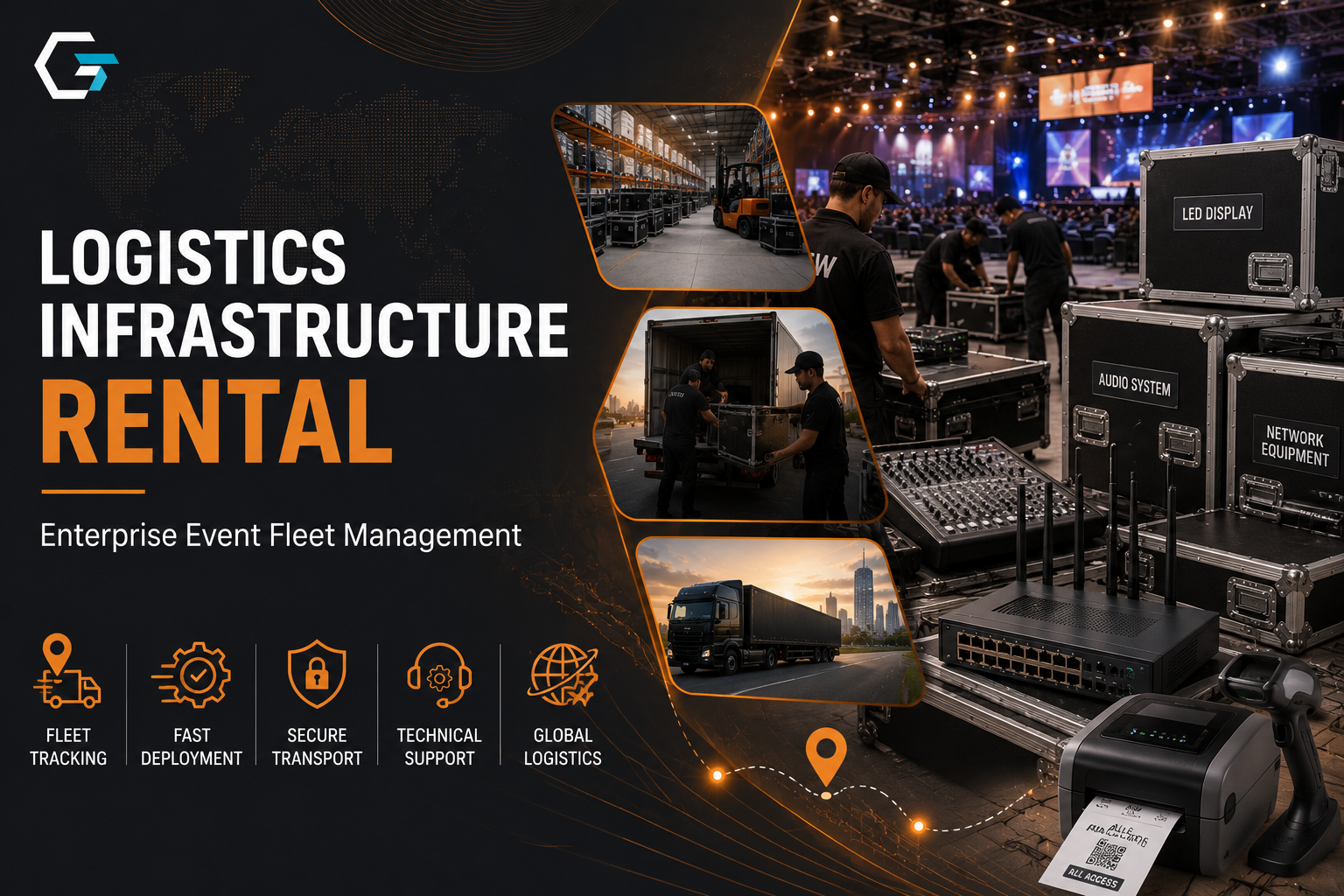
Global conferences, investor forums, leadership summits, product launches, and multinational corporate gatherings require extensive technology infrastructure that must be delivered, deployed, tested, operated, and removed within strict timelines. For procurement managers overseeing these projects, infrastructure logistics often present greater operational risks than the event itself.
A single Tier-1 corporate gathering may require hundreds of assets ranging from LED displays and audio systems to networking equipment, access control hardware, registration systems, and backup power infrastructure. Managing these assets across international borders introduces challenges related to customs clearance, transportation delays, equipment damage, regulatory compliance, and rising shipping costs.
As a result, many organizations are increasingly turning to enterprise event infrastructure rental models that provide locally available equipment inventories supported by regional technical teams. This approach reduces logistical complexity while improving deployment speed and operational resilience.
Modern production hardware suites are no longer viewed as standalone event assets. They are components within larger operational ecosystems that support attendee experiences, communications infrastructure, security operations, and executive presentations. Effective technical equipment deployment therefore requires structured planning frameworks that prioritize reliability, safety, scalability, and cost efficiency.
This article explores the logistics architecture, deployment methodologies, hardware requirements, and governance practices that support successful infrastructure rental programs for large-scale corporate events while highlighting the advantages of local rental fleets compared to cross-border equipment transportation.
Core Architectural Workflows
Event Infrastructure Planning Framework
Successful deployments begin with comprehensive infrastructure assessments conducted months before event activation.
Procurement and operations teams typically evaluate:
- Venue specifications
- Attendee capacity projections
- Technical requirements
- Power availability
- Network requirements
- Security infrastructure needs
- Installation timelines
- Vendor coordination plans
The goal is to establish a detailed deployment roadmap that aligns equipment requirements with operational objectives.
A structured planning process reduces last-minute procurement decisions and minimizes infrastructure gaps.
Asset Classification and Fleet Management
Large corporate events rely on hundreds of interconnected assets.
Infrastructure fleets are often categorized into:
Audio Systems
- Line array speakers
- Digital mixing consoles
- Wireless microphone systems
- Audio processing equipment
Visual Infrastructure
- LED display systems
- Projection equipment
- Video processors
- Presentation systems
Networking Equipment
- Enterprise routers
- Wireless access points
- Network switches
- Internet redundancy systems
Registration and Access Systems
- Badge printers
- Credential scanners
- RFID readers
- Check-in terminals
Power Infrastructure
- UPS systems
- Backup generators
- Power distribution units
- Surge protection systems
Categorization improves inventory visibility and simplifies logistics coordination.
Local Rental Fleets vs Cross-Border Shipping
One of the most significant decisions facing international procurement managers involves selecting between local infrastructure sourcing and international equipment transportation.
Local Rental Fleet Advantages
Benefits often include:
- Reduced shipping expenses
- Faster deployment timelines
- Simplified logistics coordination
- Lower customs risks
- Immediate replacement availability
- Local technical support
- Reduced equipment damage exposure
Local sourcing also enables organizations to scale equipment quantities more efficiently as event requirements evolve.
Cross-Border Shipping Challenges
International transportation frequently introduces risks such as:
- Customs delays
- Import documentation requirements
- Freight damage
- Insurance complications
- Regulatory restrictions
- Extended transit timelines
- Equipment replacement delays
For time-sensitive events, these risks can significantly impact operational readiness.
Deployment Workflow Management
Technical equipment deployment follows a structured operational sequence.
Common deployment phases include:
Phase 1: Equipment Staging
- Inventory verification
- Asset tagging
- Configuration preparation
- Packaging inspection
Phase 2: Transportation
- Secure loading procedures
- Route planning
- Delivery scheduling
- Tracking verification
Phase 3: Installation
- Equipment positioning
- Infrastructure assembly
- Power integration
- Network configuration
Phase 4: Testing
- Functional verification
- Load testing
- Signal validation
- Backup system checks
Phase 5: Operational Readiness
- Final acceptance testing
- Documentation review
- Support team handover
Structured deployment processes reduce installation errors and improve event readiness.
Multi-Venue Logistics Coordination
Corporate events increasingly operate across multiple locations.
Examples include:
- Main conference halls
- Executive meeting rooms
- Exhibition spaces
- Media centers
- Hospitality facilities
Multi-site deployments require centralized coordination platforms capable of tracking assets, schedules, personnel, and transportation resources.
Real-Time Fleet Visibility
Modern logistics programs rely heavily on asset visibility systems.
Tracking platforms may monitor:
- Equipment location
- Delivery status
- Installation progress
- Operational readiness
- Maintenance requirements
- Return logistics
Real-time visibility improves decision-making and accelerates issue resolution.
Contingency Planning and Equipment Redundancy
Large-scale events should maintain backup inventory for critical infrastructure.
Recommended contingency assets include:
- Spare networking equipment
- Backup microphones
- Additional display processors
- Replacement credential printers
- Redundant power systems
Equipment redundancy helps maintain operations when unexpected failures occur.
Hardware and Technical Specifications
Core Production Hardware Suites
Enterprise-grade event environments require reliable, professionally maintained infrastructure.
Recommended specifications include:
Display Systems
- High-brightness LED technology
- Redundant power supplies
- Scalable processing architecture
- Multiple signal input support
Audio Systems
- Digital signal processing
- Network audio compatibility
- Redundant amplification systems
- Wireless frequency management
Networking Infrastructure
- Gigabit and multi-gigabit switching
- Dual-WAN connectivity
- Enterprise Wi-Fi support
- VLAN segmentation capabilities
Technical Equipment Deployment Checklist
Procurement teams should verify:
- Equipment age and condition
- Maintenance records
- Firmware updates
- Safety certifications
- Spare parts availability
- Technical support coverage
- Replacement inventory availability
These checkpoints improve infrastructure reliability.
Power Infrastructure Requirements
Reliable power distribution remains essential for event continuity.
Recommended components include:
- Online UPS systems
- Automatic transfer switches
- Backup generators
- Power monitoring platforms
- Load balancing systems
- Surge protection devices
Power resilience reduces the likelihood of operational interruptions.
Equipment Transportation Standards
Infrastructure assets should be transported using protective systems designed for sensitive electronics.
Recommended specifications:
- Shock-resistant flight cases
- Moisture-resistant packaging
- Environmental monitoring devices
- Asset tracking labels
- Tamper-evident seals
These protections reduce damage during transportation.
Network and Monitoring Infrastructure
Operational monitoring platforms should support:
- Equipment health monitoring
- Network performance analysis
- Asset utilization reporting
- Incident alerting
- Configuration management
Visibility improves operational reliability throughout the event lifecycle.
Compliance, Security, and Governance
Equipment Safety Compliance
All rented infrastructure should comply with applicable safety regulations and venue requirements.
Procurement teams should verify:
- Electrical certifications
- Equipment inspection records
- Fire safety compliance
- Operational testing documentation
- Load capacity validation
Compliance verification reduces operational risks.
Vendor Governance Frameworks
Infrastructure rental programs require structured vendor oversight.
Governance requirements often include:
- Service-level agreements
- Response time commitments
- Equipment quality standards
- Escalation procedures
- Replacement guarantees
- Support responsibilities
Clear expectations improve accountability.
Asset Security Controls
High-value event infrastructure requires protection throughout deployment.
Security measures may include:
- Asset tracking systems
- Secure storage facilities
- Access-controlled staging areas
- Equipment sign-out procedures
- Inventory reconciliation processes
These controls reduce loss and theft risks.
Insurance and Liability Management
Cross-border shipments often introduce complex insurance considerations.
Organizations should assess:
- Transit coverage
- Equipment damage liability
- Replacement costs
- Customs-related risks
- Operational interruption exposure
Local rental fleets frequently reduce these liabilities by minimizing transportation requirements.
Business Continuity Planning
Infrastructure programs should include documented procedures covering:
- Equipment failure
- Transportation delays
- Vendor disruptions
- Power outages
- Network incidents
Preparedness planning improves operational resilience.
Operational Conclusion and Next Steps
Managing technology infrastructure for Tier-1 corporate events requires more than equipment procurement. Success depends on structured logistics frameworks that prioritize reliability, scalability, safety, and operational visibility throughout the deployment lifecycle.
For international procurement managers, enterprise event infrastructure rental programs often provide substantial advantages over cross-border equipment transportation. Local rental fleets reduce customs exposure, minimize freight risks, improve replacement availability, and lower overall logistics costs. These benefits are particularly valuable when supporting large-scale corporate gatherings operating under tight schedules and high stakeholder expectations.
By adopting standardized deployment methodologies, maintaining resilient production hardware suites, and implementing rigorous technical equipment deployment procedures, organizations can improve event readiness while reducing operational risk. Future event logistics strategies will increasingly favor locally supported infrastructure ecosystems that combine technical expertise, rapid scalability, and strong governance controls.