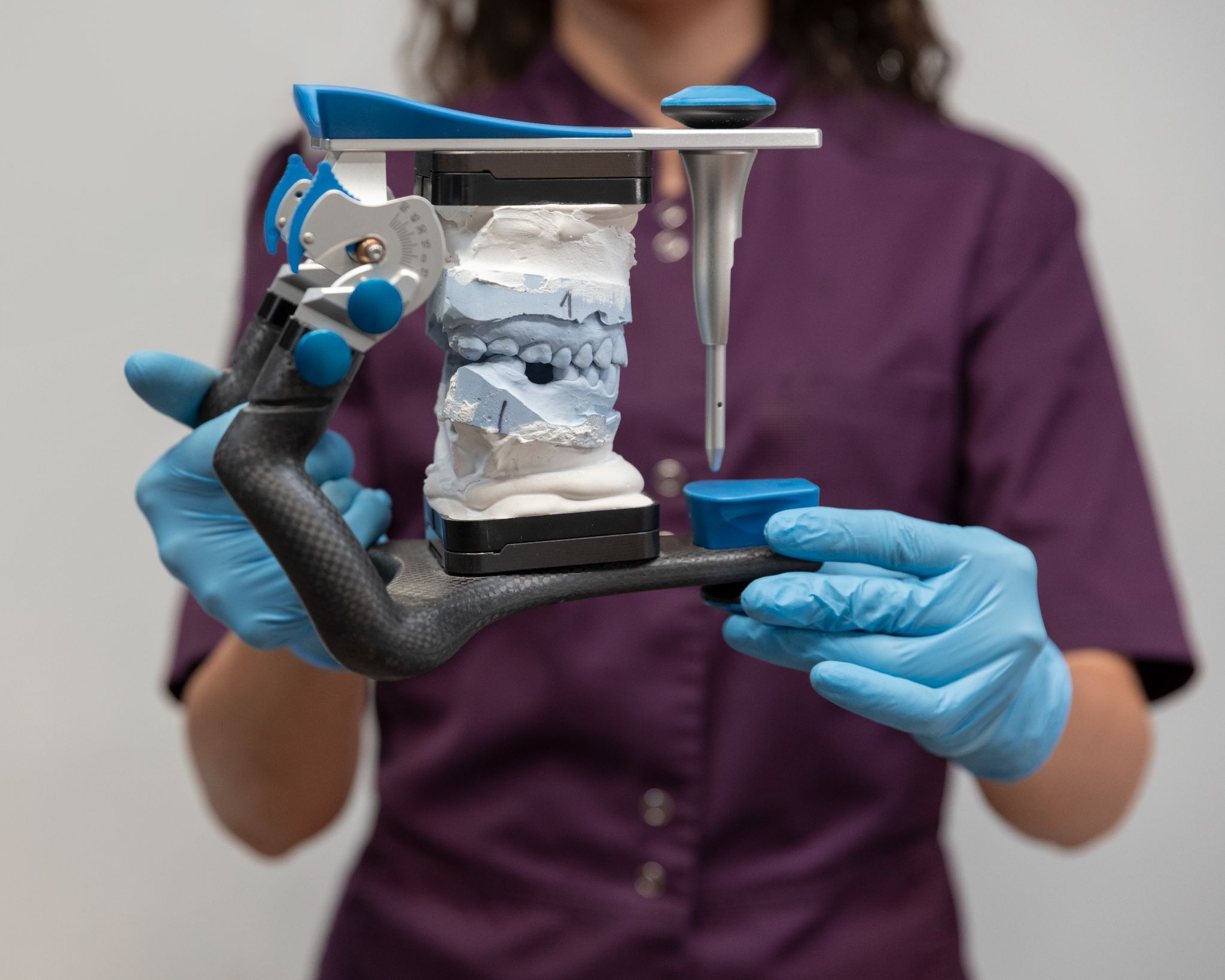
Modern dentistry is focused on providing faster, more accurate, and more comfortable care for patients. One technology making a big difference is 3D printing. From creating precise dental models and surgical guides to producing custom aligners, crowns, and dentures, 3D printing is helping dental professionals improve both treatment quality and efficiency. It also reduces production time, minimizes material waste, and allows patients to receive personalized solutions more quickly. As more dental practices adopt this technology, its impact continues to grow. In this guide, you’ll discover how 3D printing supports more efficient dental treatment and improves the overall patient experience.
What 3D Printing Is Actually Doing to Modern Dentistry
Dental 3D printing technology is touching every single stage of the patient journey from the initial scan right through to the final fitting. And here’s the thing most people miss: this isn’t just about how dental tools get made. It’s about how dentists diagnose, plan, and deliver care. That transformation starts with digital workflows, and it runs deeper than most clinics have had time to realize.
Diagnosis and Treatment Planning Just Got a Whole Lot Faster
Modern clinics are pairing intraoral scanners with CAD/CAM software, creating complete digital dentistry solutions that shave weeks off traditional timelines. When a dentist captures a digital impression, it flows straight into design software, making it easier to produce custom 3D-printed components such as surgical guides, aligners, and dental models without relying on physical molds that can get lost in transit or lead to miscommunication between the clinic and lab. Treatment recommendations become sharper too. Dentists can show patients a 3D model during the consultation itself. When someone can see what’s being proposed, they understand it faster and agree to it more readily. That alone changes the whole rhythm of a patient relationship.
The Technology Driving It All
SLA, DLP, and SLS printing each serve different purposes in a clinical setting. SLA delivers the fine detail needed for surgical guides. DLP moves faster, ideal for high-volume aligner production. SLS handles durable functional parts without requiring support structures. As of January 2026, researchers had identified 372 dental 3D printers relevant to clinical applications, produced by 115 manufacturers across 26 countries. That’s not a niche market- that’s a full-blown industry.
AI is accelerating design workflows too, automatically catching errors before anything gets printed and predicting prosthetic outcomes with steadily improving reliability.
The Real Advantages for Practices and Patients
Knowing *what* the technology can do is one thing. Knowing *how it translates into daily practice* is where it gets genuinely exciting.
And at the center of those practical advantages is one capability that changes almost everything: the ability to make something built specifically for one person’s mouth.
Precision Fit Through custom 3D printed components
Practices are seeing better outcomes across crowns, bridges, and clear aligners as they bring custom 3D printed components in-house. When a restoration is printed from a patient’s own digital scan, the fit isn’t approximate; it’s inherently more accurate than anything built from a traditional impression.
Patients feel the difference immediately. Prosthetics made using custom 3D-printed components arrive with a far better initial fit, meaning less post-fitting discomfort and significantly fewer adjustment appointments. That’s not a minor improvement for patients who’ve historically dreaded follow-up visits; it’s genuinely meaningful.
Beyond the fit itself, practices are discovering something equally valuable: fewer appointments, less waiting, and patients who actually finish their treatment plans.
Same-Day Results Are No Longer a Marketing Gimmick
Same-day restorations used to feel like a pitch. Now they’re a clinical routine. A dentist can scan, design, print, and fit a crown in a single appointment with zero lab involvement.
Research published in June 2025 found that 3D-printed dentures can reduce the entire fabrication process to as few as two visits. That kind of efficiency frees up appointment slots, reduces administrative back-and-forth, and genuinely improves patients’ lives. Fewer trips to the dentist for most people- that’s a relief, not a complaint.
Better Quality, Lower Long-Term Costs
Traditional lab workflows come loaded with hidden costs: material waste, courier fees, and the occasional expensive remake. In-house 3D printing trims all three. Biocompatible resins have become significantly more affordable in recent years, and removing manual hand-steps from the process cuts error rates considerably.
Over time, practices recover their equipment investment and can pass real savings on to patients, making high-quality restorative care accessible to people who might otherwise skip treatment entirely.
Where These Applications Are Changing Everything
It’s one thing to talk about efficiency. It’s another to watch it play out in procedures that genuinely improve patients’ lives.
Implants Placed With Digital-Level Accuracy
Planning implant placement digitally lets surgeons map bone density, nerve positions, and optimal angulation before a single incision is made. 3D printed dental implants and surgical guides translate all of that digital precision into physical reality during the actual procedure.
The results show up in recovery. Patients guided by digital surgical planning typically experience less swelling, fewer complications, and faster healing compared to freehand placement. That’s not small for someone anxious about implant surgery; it’s reassuring in a very tangible way.
Orthodontics Running at a Different Speed
Clear aligner cases that once took weeks to fabricate can now be printed overnight. Clinics using dental 3D printing technology for orthodontics also report that patients respond better when they can see printed models of their treatment progression; it builds real commitment to the process.
Retainers and splints get printed on demand, eliminating the waiting period that sometimes causes patients to drift away from treatment before it’s finished.
Complex Restorative Work That Used to Take Months
Full-arch reconstructions once required lengthy lab coordination and multiple rounds of fittings. Today, skilled teams can print temporaries and final prosthetics featuring layered color gradients that closely replicate natural enamel.
Facial prosthetics for patients recovering from oral cancer surgery benefit enormously here too. Digital scanning and printing deliver anatomical accuracy that manual fabrication rarely, honestly, comes close to matching.
What’s Coming Next in Digital Dentistry
The applications available right now are impressive. But the next chapter is still being written.
AI Taking Over More of the Design Work
AI tools are beginning to automate orthodontic case planning entirely, analyzing bite patterns and predicting tooth movement using machine learning. Predictive modeling for implant placement is improving steadily, reducing uncertainty before the patient even sits in the chair.
Printing That’s Kinder to the Environment
New biodegradable resins and recyclable support materials are reducing the environmental footprint of in-house printing. Additive manufacturing generates significantly less waste than milling, which removes material from a solid block, and that matters both ecologically and financially.
Reaching Patients Who Don’t Have Easy Access to Care
Patients in rural or underserved communities can now receive digital treatment plans remotely, with printed appliances produced at local point-of-care hubs or shipped directly. Portable printers are making this model increasingly practical for global health initiatives.
Common Questions, Answered Honestly
How do dentists actually use 3D printing?
They use it to produce crowns, bridges, aligners, surgical guides, dentures, and implant templates. The process flows from digital scan to CAD design to in-house print to same-appointment fitting, often without involving an external lab at all.
What’s the real story on 3D printed veneers?
The upside is affordability and repairability- chips can often be fixed rather than replaced. The tradeoff is longevity: 3D printed veneers typically last seven to ten years, versus ten to twenty years for traditional porcelain. Worth knowing going in.
Is 3D printing safe for use inside someone’s mouth?
Yes, when biocompatible, FDA-cleared materials are used, and post-curing protocols are followed properly. Regulatory standards for dental-grade resins are strict, and reputable manufacturers validate their materials for intraoral contact and long-term wear.
The Bottom Line for Dental Practices
3D printing in dentistry is no longer a trend worth watching cautiously from the sidelines. It shortens treatment timelines, sharpens clinical outcomes, cuts costs, and gives patients an experience they actually talk about in a good way. Whether you start with aligners or surgical guides, the learning curve is shorter than you’d expect, and the returns show up faster than most practices anticipate. The technology is proven. Your patients are already asking about it. The only real question worth sitting with now is how soon you’re ready to move.