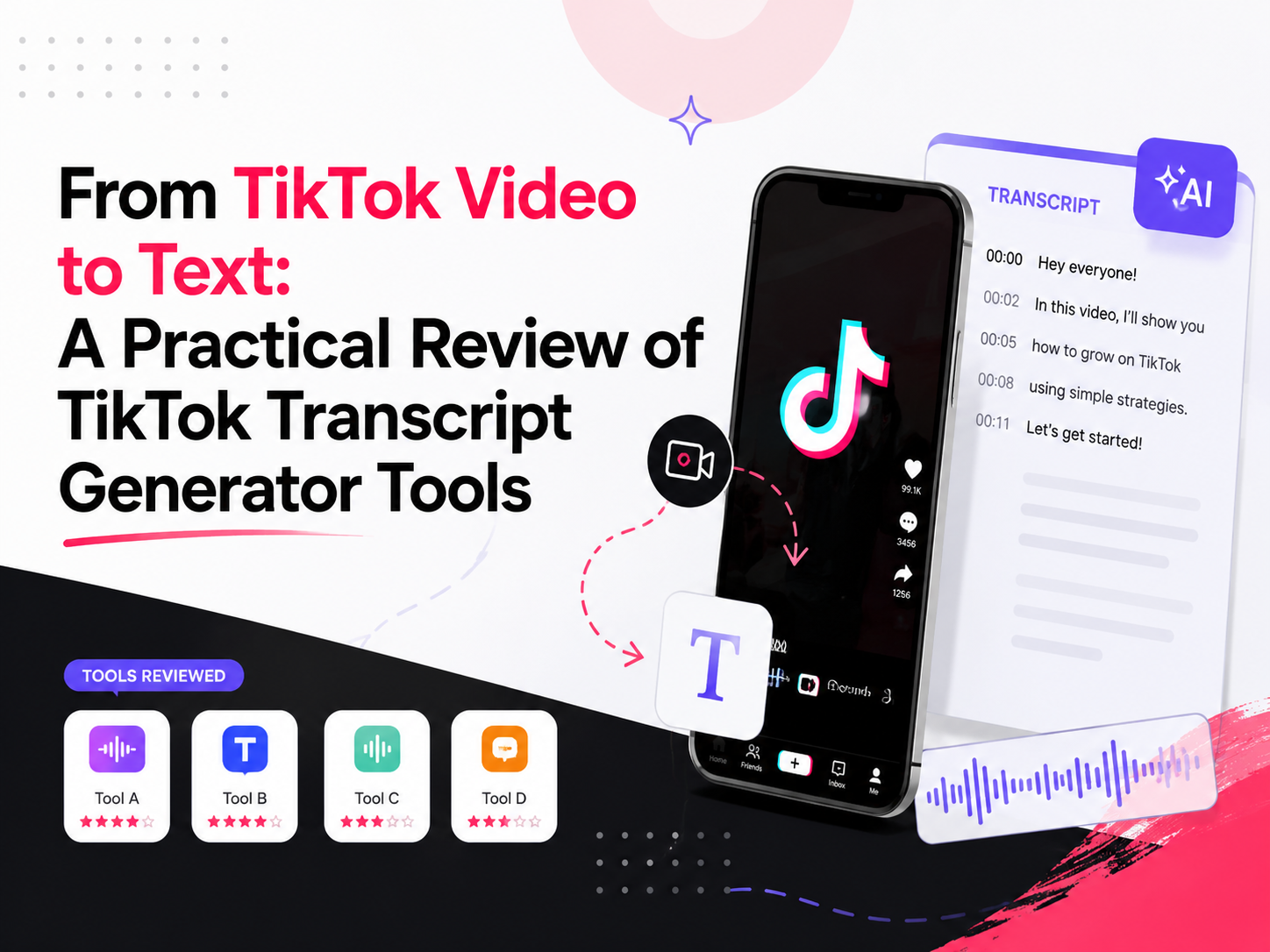
Short-form video platforms like TikTok have changed how information is consumed. But they’ve also created a new problem: most valuable content is locked inside fast-paced videos with no easily reusable text layer. That’s where a Free TikTok Transcript Generator comes in.
In simple terms, it is a tool that converts spoken audio from TikTok videos into structured text. This can include captions, timestamps, or even AI-generated summaries. Tools like these exist because creators, marketers, researchers, and editors increasingly need to repurpose content, analyze viral videos, or extract scripts for reuse. Manually doing this is slow, and TikTok’s built-in features are not designed for exporting usable transcripts.
Today, multiple tools compete in this space, from simple caption extractors to advanced AI systems that also summarize and rewrite content. One example is Saveto AI, which positions itself as an all-in-one transcript and content repurposing assistant.
1. Product Overview: What is a TikTok Transcript Generator?
A TikTok Transcript Generator is an AI-powered or rule-based tool that extracts spoken words from TikTok videos and converts them into readable text.
Most modern tools work in one of three ways:
- Extracting existing TikTok caption tracks when available
- Using speech-to-text AI models to process audio
- Combining both methods for higher accuracy and formatting
Tools in this category typically support:
- Transcript generation from a TikTok URL
- Timestamped text output
- Export formats like TXT, SRT, or CSV
- Optional AI summaries or script rewriting features
The reason these tools exist is simple: TikTok content is inherently “video-first,” but most workflows around content creation, SEO, and research are still text-based.
2. Three Approaches Compared: Manual vs AI vs TikTok Native Captions
A. Manual transcription
This is the traditional method: watching a video and typing everything out.
Pros
- High accuracy when done carefully
- Full control over formatting
- No dependency on tools or platforms
Cons
- Extremely time-consuming
- Not scalable for multiple videos
- Prone to fatigue and human error
Manual transcription still makes sense in legal, academic, or highly sensitive contexts, but it doesn’t scale in modern content workflows.
B. TikTok built-in captions
TikTok provides automatic captions, but they are mainly designed for viewing accessibility, not content extraction.
Pros
- Free and built into the platform
- Instant generation
- Useful for watching without sound
Cons
- Limited editing flexibility
- Difficult to export as structured text
- Accuracy varies with accents, slang, or background noise
- Not designed for reuse outside TikTok
In practice, captions help viewers, but they are not optimized for creators who want to reuse or analyze content.
C. AI TikTok Transcript Generators
This is where modern tools like Saveto AI fit in.
Pros
- Fast processing (seconds per video)
- Scalable for bulk content workflows
- Clean, structured output
- Often includes summaries or rewriting features
- Can support multiple platforms beyond TikTok
Cons
- Accuracy depends on audio quality
- Can struggle with music-heavy or noisy clips
- Some advanced features require paid plans
AI tools essentially bridge the gap between raw video and usable text assets.
3. Efficiency, Accuracy, and Use Case Differences
When comparing the three methods, the differences become clear:
Efficiency
- Manual: very slow, one video at a time
- TikTok captions: instant but limited usability
- AI tools: fastest for usable output at scale
Accuracy
- Manual: highest (if done carefully)
- TikTok captions: medium, depends on device and audio
- AI tools: generally strong, but context-dependent
Best use cases
- Manual → legal, academic, or high-precision needs
- TikTok captions → accessibility and in-app viewing
- AI tools → content creation, repurposing, and analysis
The key dividing line is not just accuracy—it is scalability and usability of output.
4. Where AI Tools Stand (and Why Saveto AI Fits the Category)
AI transcript generators are becoming more than just transcription tools. They are evolving into content transformation systems.
Saveto AI represents this direction by focusing not only on converting speech to text, but also on making that text usable for downstream tasks.
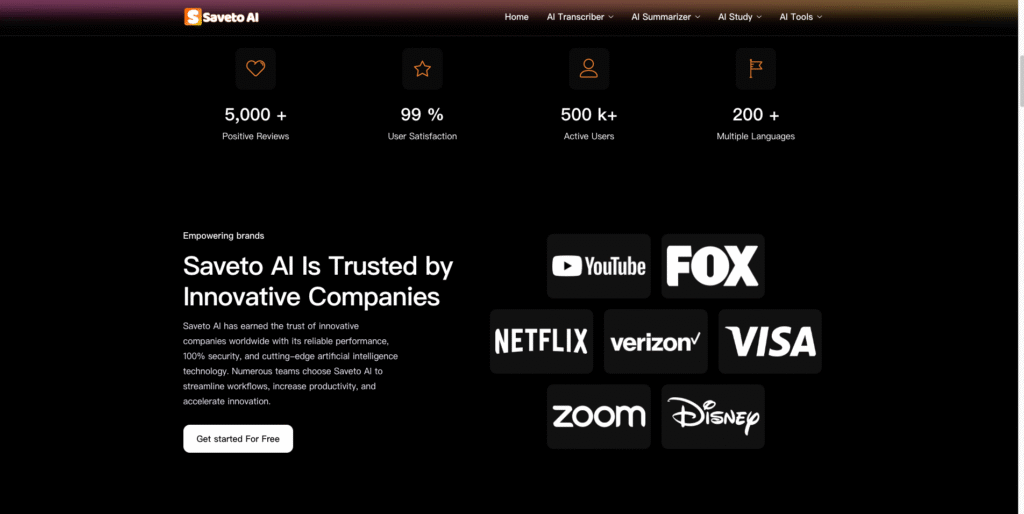
Typical advantages of Saveto AI-style tools:
- Direct TikTok URL transcription
- Clean and readable output formatting
- Faster workflows for creators handling multiple videos
- Optional AI rewriting or summarization
- Designed for repurposing content across platforms
Instead of stopping at raw transcripts, these tools support a broader question:
What can you do with this content next?
That shift is why AI tools are becoming the default choice in many creator workflows.
5. So Which One Is Actually the Best?
There is no universal winner, but the pattern is consistent:
- Occasional use → TikTok captions are enough
- High-precision work → manual transcription still matters
- Content workflows → AI transcript generators are the most practical
AI tools are especially useful when:
- You process multiple videos regularly
- You repurpose content into blogs, scripts, or posts
- You analyze trends or competitor videos
- You need structured text quickly for workflow integration
Conclusion: When Should You Use a TikTok Transcript Generator?
A TikTok Transcript Generator is not about replacing human effort entirely. It is about removing unnecessary friction in content workflows.
It becomes valuable when:
- Speed matters more than perfect manual accuracy
- You need to convert video into reusable text assets
- You are working across multiple platforms and content formats
- You want to analyze or repurpose short-form video at scale
In that sense, tools like Saveto AI are less about “transcribing TikTok videos” and more about enabling content reuse at scale.
If your work involves extracting value from TikTok beyond watching it, then AI transcription tools are no longer optional—they are part of the workflow infrastructure.