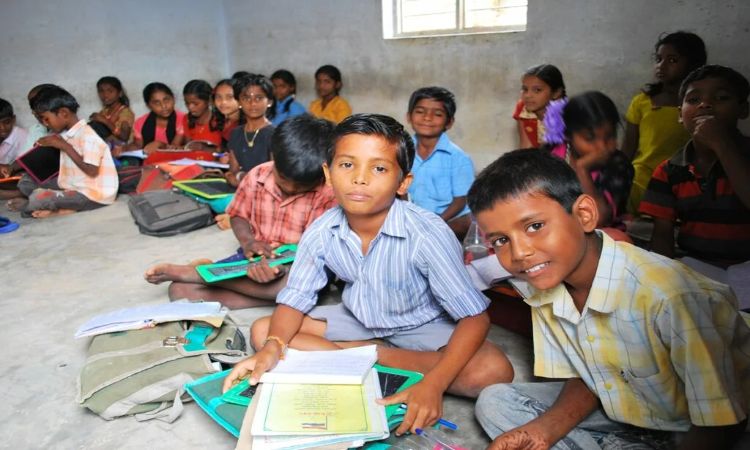
The idea that education should be free for children, that a family’s income should not determine whether a child gets to attend school, is one that most people in India would agree with in principle. The Right to Education Act, passed in 2009, gave this principle a legal foundation by making free and compulsory education a right for children between the ages of six and fourteen. What that framework provides, and what it does not fully address in practice, is a distinction worth understanding for anyone who wants to think clearly about what free education means in the Indian context.
The word free in the context of school education covers a specific set of costs: tuition fees, books and stationery in government schools, midday meals in many states, and in some programs, uniforms. These are real costs, and their removal has had a real effect on enrollment, particularly in communities where even a small fee was the difference between a child attending or not. The midday meal program is worth mentioning specifically because its impact went beyond nutrition. Attendance, particularly for children from poorer families, went up in schools where a meal was provided, because the meal itself was a concrete benefit that parents and children could see immediately.
What Government Schemes Cover and Where the Gaps Are
Several central government schemes address different aspects of school-level support alongside the RTE framework. PM POSHAN, which continues and expands the midday meal initiative, operates across primary and upper primary schools in government and government-aided institutions. The Samagra Shiksha scheme provides a framework for school improvement that covers infrastructure, teacher training, and learning outcomes alongside enrollment. These are not small programs, and the scale at which they operate is significant.
The gaps that remain are not primarily in what the schemes promise but in the distance between the promise and the delivered reality at school level. Teacher absenteeism, poor learning infrastructure, schools without adequate sanitation, the quality of teaching in classrooms where one teacher handles multiple grade levels simultaneously… these are conditions that free access alone does not address, and they are the conditions that determine whether the education a child receives is one that actually builds the skills and knowledge that make the access meaningful. You can read a detailed breakdown of what the government schemes provide and how organizations work alongside them through this page on free education benefits, which covers both the policy framework and what implementation looks like at community level.
CRY India’s work connects to these schemes by working on the conditions around the school rather than only within it, including the family and community factors that determine whether a child who has the legal right to free education is actually in school and learning.
What Free Education Means in Practice for Families
For a family with limited income, even a school that charges no fees can carry indirect costs that create barriers. Transportation to a school that is several kilometers away, the cost of private tutoring to supplement poor classroom quality, the opportunity cost of a child’s time when that time has economic value for the household… these are real considerations that families navigate, and they explain why enrollment data does not tell the full story about educational access.
Girls face additional layers of this calculation in many communities, where the decision about whether to invest in a daughter’s continued schooling is made against a set of cultural and economic factors that free tuition does not address directly. Early marriage, safety concerns about travel to school, and the weight given to domestic responsibilities over education are pressures that organizations working in child education need to understand and work with rather than around.
The benefit of genuinely accessible education, when it reaches children who would otherwise not have it, is not only measured in literacy rates or grade completion. It shows up over a generation in the decisions those children make as adults, the health outcomes of their own children, and the economic independence that education makes possible. These are slow gains, but they are the ones that matter most for the kind of change that holds over time.