If you’ve ever watched your Maine Coon awkwardly squeeze into a standard litter box, backing out with litter flying everywhere, you already know the frustration. These magnificent cats are among the largest domestic breeds, and yet most pet stores stock litter boxes designed with an average-sized tabby in mind. The result? Cats that refuse to use the box, accidents on the floor, and a trail of litter that seems to reach every corner of your home.
Choosing the right litter box for a Maine Coon isn’t just about convenience — it directly affects your cat’s comfort, hygiene habits, and overall well-being. A box that’s too small can cause stress, discourage proper elimination behavior, and turn litter cleanup into a daily battle. Getting the size right is the single most impactful decision you can make.
This article breaks down everything you need to know: the ideal litter box dimensions for Maine Coons, an honest comparison between automatic and hooded litter boxes, and practical strategies to keep litter scatter under control. Whether you’re a first-time Maine Coon owner or looking to upgrade your current setup, you’ll find clear, actionable guidance here to make the right call for your cat and your home.
Why Litter Box Size is Critical for Maine Coon Cats
Understanding Maine Coon Dimensions and Behavior
Maine Coons are not your average house cat. Adult males typically weigh between 13 and 18 pounds, with some reaching 20 pounds or more, while females usually range from 8 to 12 pounds. From nose to tail base, a fully grown Maine Coon can stretch 19 to 30 inches in length — roughly the size of a small dog. Their bodies are muscular, long, and built for movement, which means they need significantly more room to maneuver than most litter box manufacturers account for.
These cats are also instinctively thorough in their elimination habits. They dig, turn, scratch, and reposition themselves multiple times before and after using the box. A cramped space doesn’t just feel uncomfortable — it disrupts this natural routine entirely. Maine Coons are also enthusiastic diggers, which means litter gets launched with real force. Without adequate box walls and floor space, that litter ends up on your floor, your walls, and somehow your couch.
Recommended Litter Box Size and Dimensions
The general rule of thumb for any cat is that the litter box should be at least 1.5 times the length of the cat from nose to tail base. For Maine Coons, this translates to a maine coon litter box size minimum of 24 inches in length and 18 inches in width. Depth matters too — sides of at least 6 to 8 inches help contain the litter that gets kicked up during their vigorous digging sessions.
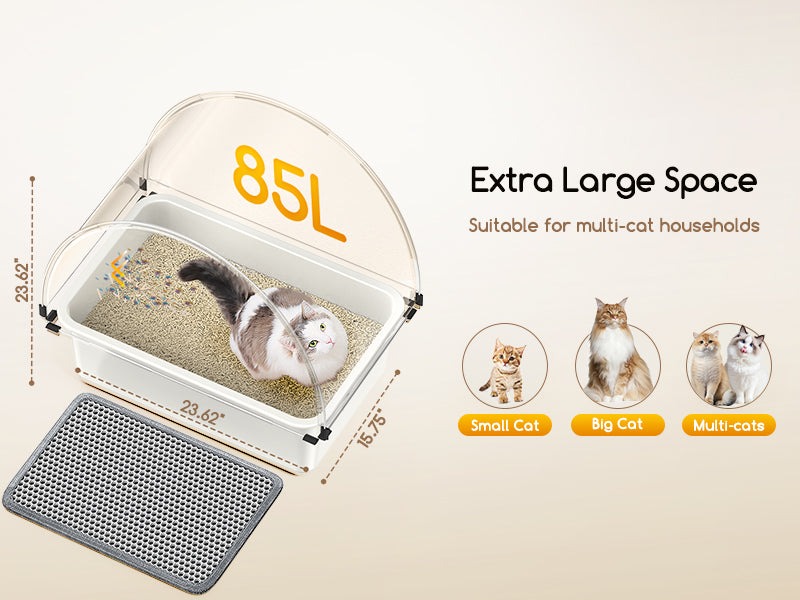
Standard litter boxes sold in most pet stores measure around 18 by 14 inches, which is simply inadequate for a breed this size. Extra-large options, often marketed as “jumbo” boxes, come closer to the mark but still require careful measurement before purchasing. Some owners opt for under-bed storage containers or large plastic totes, which can reach 30 by 20 inches and offer the ideal combination of length, width, and wall height. Brands like Meowant have developed large-format litter boxes specifically with bigger breeds in mind, making it easier to find purpose-built options rather than improvising with storage containers. A too-small box doesn’t just inconvenience your cat — it can cause them to avoid the box altogether, leading to accidents and unnecessary stress for both of you.
Automatic Litter Box vs. Hooded Litter Box: A Detailed Comparison
Pros and Cons of Automatic Litter Boxes
Automatic litter boxes have become increasingly popular for good reason — they handle waste removal on their own, reducing odor buildup and cutting down on how often you need to scoop. For busy Maine Coon owners, that hands-free convenience is genuinely appealing. Many models also track usage frequency, which can be useful for monitoring your cat’s health patterns.
The downsides, however, are significant for large breeds. Most automatic litter boxes are designed around average cat sizes, meaning the interior chamber is often too compact for a Maine Coon to turn around comfortably. The motorized raking or rotating mechanisms can also startle cats, and a skittish Maine Coon may refuse to use the box after one unexpected activation. Sensor malfunctions present another concern — if the unit triggers while your cat is still inside, it can cause fear or injury. Cost is another barrier, as quality automatic units represent a substantial investment, and repairs or replacement parts add up over time.
Pros and Cons of Hooded Litter Boxes
Hooded litter boxes offer two clear advantages: they contain litter scatter more effectively than open boxes, and they give cats a sense of privacy during elimination. For households with dogs or young children, the enclosed design also limits unwanted access. Odor is partially contained inside the hood, which can be a plus in shared living spaces.
For Maine Coons specifically, the hood creates a real problem. Standard hooded boxes have interior heights of around 15 to 17 inches and entry openings that measure roughly 8 by 8 inches — dimensions that force a large Maine Coon to crouch, squeeze, and contort just to get inside. That physical discomfort discourages use. Trapped odors are another drawback; without adequate ventilation, ammonia concentrations inside the hood can build up quickly, making the box unpleasant even for cats that tolerate the tight fit.
Which is Better for Maine Coons? Size and Suitability Analysis
Neither type is inherently superior — the right choice depends on your cat’s temperament and your willingness to prioritize size over convenience. If you lean toward an automatic model, look specifically for units designed for large cats, with interior dimensions of at least 20 by 20 inches and a high weight threshold. Some newer models offer open-top designs that eliminate the claustrophobia problem while retaining the self-cleaning function.
For hooded boxes, the entry opening and interior height are the critical measurements. Look for extra-large hooded options with openings of at least 10 by 10 inches and interior heights above 20 inches. Alternatively, a high-sided open box — essentially a large tote with one lowered entry side — often outperforms both types for Maine Coons by combining generous space with easy access and minimal litter scatter. Whatever you choose, robust construction matters; a Maine Coon’s weight and digging force will stress flimsier plastic over time.
How to Minimize Cat Litter Mess with Large Cats
Practical Tips to Reduce Litter Scatter
Maine Coons dig with the enthusiasm of cats twice their already considerable size, and no amount of wishful thinking will change that. The most effective first step is upgrading to a high-sided box with walls at least 8 to 10 inches tall on three sides and a lowered front entry around 5 to 6 inches high for easy access. This wall height alone catches the majority of litter that gets launched sideways during digging. Top-entry boxes are another strong option — your Maine Coon jumps in from above, and the enclosed top stops scatter almost entirely, though you’ll need to confirm the opening is large enough for a cat their size to enter without hesitation.
Placement and flooring protection matter just as much as the box itself. Position the box in a corner so two walls help contain any litter that clears the sides. Lay a large, textured litter mat — at least 24 by 35 inches — directly in front of the entry point. As your cat steps out, the mat traps litter from their paws before it spreads across the floor. Shake or vacuum the mat every couple of days to keep it effective rather than just redistributing the problem.
Best Litter Box Accessories and Setups
Beyond the mat, a few targeted accessories make a measurable difference. Double-layer litter-trapping mats with a honeycomb surface pull litter down through the top layer and hold it below, preventing scatter from secondary foot traffic. For hooded setups, a short ramp attachment at the entry encourages your cat to walk further onto the mat before stepping onto bare floor, extending the trapping zone.
Litter type plays a significant role in how far mess travels. Heavier litters — clay-based or pellet formats — don’t become airborne as easily as lightweight clumping varieties. If tracking is a persistent issue, switching to a larger-granule formula reduces the amount that clings to paws and gets carried out of the box. Dedicate a corner of a low-traffic room, a bathroom, or a laundry area to the litter setup, and use a small enclosed alcove or furniture surround if aesthetics are a concern. Containing the zone physically is far more practical than chasing scattered litter across an open room every day.
Making the Right Choice: Selecting the Best Litter Box for Your Maine Coon
Step-by-Step Guide to Evaluating Options
Start by measuring your cat. With your Maine Coon standing naturally, measure from nose to tail base and add 50 percent — that’s your minimum box length. Note their shoulder height as well, since this determines the interior clearance you need in any hooded or enclosed design. Once you have those numbers, measure the space where the box will live before buying anything. A box that fits your cat but not your bathroom corner solves nothing.
Next, match those measurements against the box types covered earlier. If your cat is on the larger end — males above 15 pounds or stretching past 25 inches — prioritize open or high-sided designs over enclosed ones. Bring your measurements to the store or filter online listings by interior dimensions rather than exterior footprint, since manufacturers often advertise the outer size. If possible, place the box on the floor and let your cat investigate before committing to a permanent setup. A brief trial period in a low-stakes location tells you more than any review.
Key Factors to Consider: Size, Type, and Features
Three factors should drive every decision. Size comes first — no amount of convenience features compensates for a box your Maine Coon physically struggles to use. Hold to the 24-by-18-inch minimum and treat anything smaller as a non-starter. Type comes second: weigh the hands-free appeal of automatic models against their size limitations, and weigh the scatter-containment of hooded designs against the cramped interior most Maine Coons will reject. Features come third — high walls, wide entry openings, durable thick plastic, and a stable base that won’t flex under a heavy cat are all worth paying for. A well-chosen box bought once beats a series of cheap replacements that never quite work.
Size, Type, and Setup: The Maine Coon Litter Box Decision Simplified
Getting the litter box right for a Maine Coon comes down to one non-negotiable principle: size first, everything else second. A box measuring at least 24 inches long and 18 inches wide gives your cat the room they need to dig, turn, and eliminate comfortably — and a cat that uses the box consistently is a healthier, less stressed cat.
When comparing automatic and hooded options, neither type wins outright. Automatic boxes offer real convenience but demand careful vetting for interior dimensions and weight capacity. Hooded boxes help with scatter and privacy but typically fail Maine Coons on space unless you seek out extra-large models with generous entry openings. High-sided open boxes and large plastic totes remain the most reliable all-around solution for this breed.
Controlling litter mess is equally manageable once you combine the right box height with a large trapping mat, strategic corner placement, and a heavier litter formula. These aren’t complicated changes — they’re targeted adjustments that pay off immediately in less cleanup and a cleaner home.
Investing time in choosing the correct setup now saves you from repeated replacements, ongoing accidents, and a cat that avoids the box entirely. Your Maine Coon deserves a space that fits — and so do you.