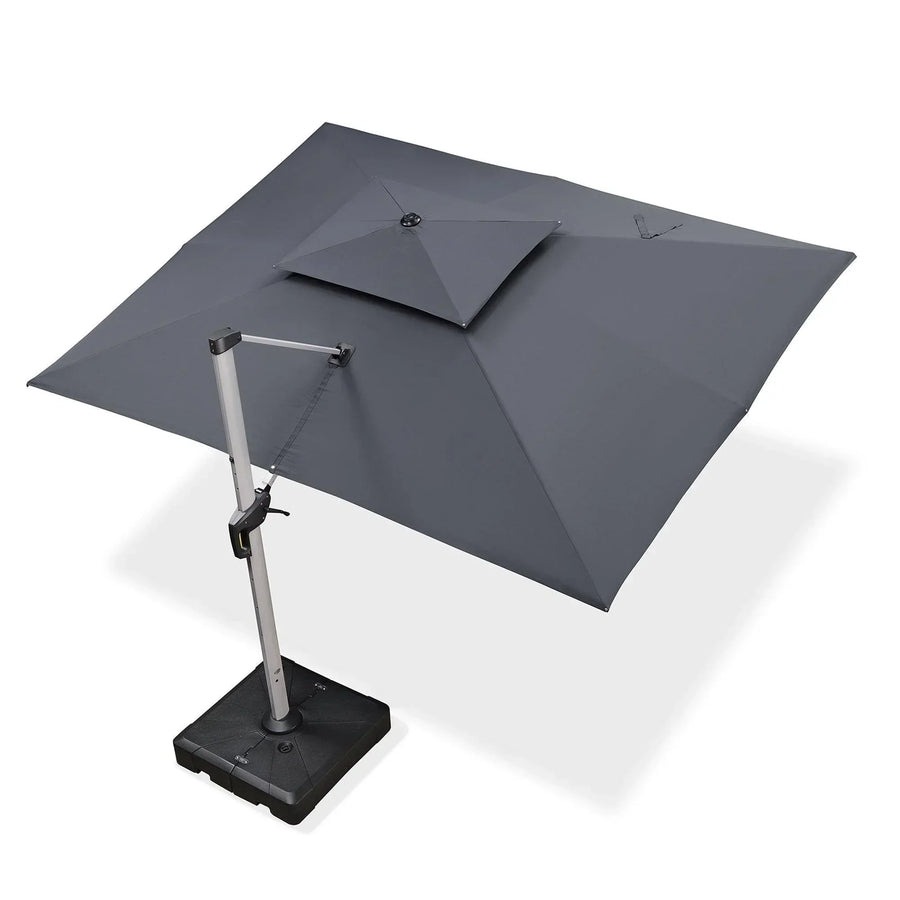
Outdoor living spaces have undergone a remarkable transformation over the past decade, evolving from simple backyard additions into carefully curated extensions of the home. As clients increasingly demand environments that blend functionality with refined aesthetics, every design element must earn its place. The rectangular patio umbrella has emerged as a pivotal component in modern outdoor design, offering something that round or square alternatives often cannot: a seamless alignment with the linear geometry of contemporary architecture and furnishings. Why should design professionals prioritize this particular shape when specifying shade solutions for client projects? The answer lies in its unique ability to solve common outdoor challenges simultaneously—delivering generous, targeted shade coverage while reinforcing clean visual lines that elevate an entire space. For interior designers tasked with creating cohesive, stylish environments that perform under real-world conditions, the rectangular umbrella represents a reliable intersection of form and function. This guide explores why it deserves a central role in your outdoor design toolkit and how to implement it effectively across diverse project types.
The Design and Aesthetic Superiority of Rectangular Patio Umbrellas
Contemporary outdoor design thrives on intentional geometry, and rectangular patio umbrellas speak this visual language fluently. Their elongated profile mirrors the straight edges of modern architecture—think flat rooflines, linear pergolas, and streamlined outdoor furniture. Their elongated profile mirrors the straight edges of modern architecture—think flat rooflines, linear Pergola installation, and streamlined outdoor furniture. Unlike circular alternatives that can feel disconnected from angular surroundings, rectangular umbrellas create a deliberate dialogue with the built environment, reinforcing the clean lines that define today’s most compelling outdoor spaces. This alignment makes them an instinctive choice for designers working within minimalist, transitional, or even rustic frameworks where structure and order guide the composition.
Beyond shape alone, rectangular umbrellas offer exceptional range in material and finish. Canopy fabrics now span from muted earth tones in solution-dyed acrylics to bold graphic patterns that serve as focal points. Frame options include brushed aluminum for a sleek industrial edge, warm teak for organic sophistication, or matte black steel for dramatic contrast. This breadth allows designers to treat the umbrella not as a utilitarian afterthought but as an active participant in outdoor design storytelling—anchoring color palettes, echoing texture choices, and establishing mood across the entire space.
Enhancing Visual Harmony in Outdoor Spaces
Consider a rectangular dining table set for eight beneath a perfectly proportioned rectangular umbrella—the canopy traces the table’s footprint, creating a unified overhead plane that defines the gathering zone without visual competition. The same principle applies poolside, where elongated umbrellas shadow a row of chaise loungers in one continuous sweep rather than requiring multiple round alternatives that fragment the sightline. In lounge configurations, a rectangular canopy positioned over a sectional sofa establishes an intimate “room” within the larger patio, enhancing the perception of intentional spatial planning. This geometric consistency makes spaces feel larger, more organized, and purposefully designed rather than assembled from mismatched components.
Versatility Across Different Settings
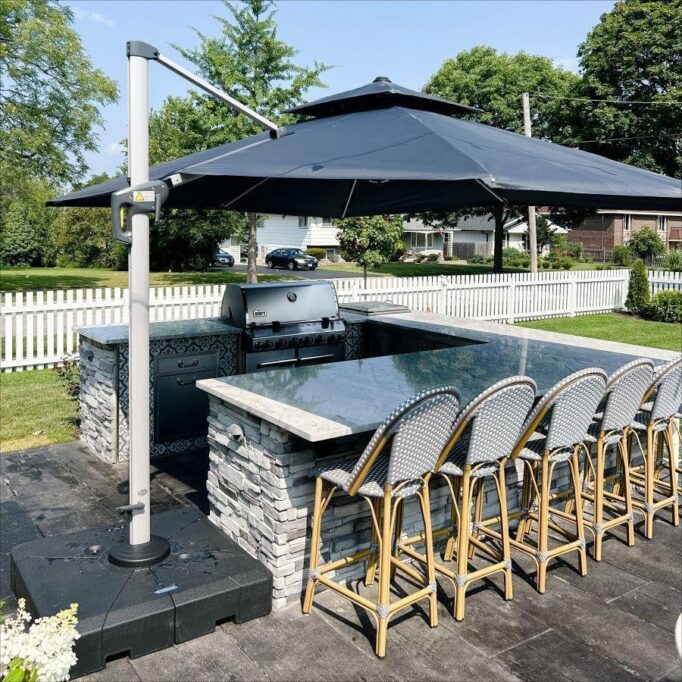
Rectangular umbrellas adapt effortlessly across project scales and contexts. On a compact urban balcony, their narrow profile maximizes shade coverage without overwhelming limited square footage—a critical advantage over bulkier round canopies. In residential patios, they complement standard furniture proportions and can be paired in series along extended entertaining areas. Commercial venues such as restaurants, boutique hotels, and rooftop bars benefit from their ability to create orderly rows of shade that reinforce brand aesthetics while efficiently covering rectangular table arrangements. This adaptability across residential, hospitality, and urban applications makes them a dependable specification for designers managing diverse project portfolios.
Durability and Reliability: Essential for Professional Recommendations
When specifying outdoor products for client projects, durability isn’t merely a bonus—it’s a professional obligation. Durable patio umbrellas protect designers from the reputational fallout of premature product failure, while giving clients confidence that their investment will perform season after season. The rectangular format, with its larger canopy surface area and extended frame spans, demands particularly robust engineering to withstand wind loads, UV degradation, and moisture exposure. Understanding what separates a reliable umbrella from a disposable one enables designers to make specifications that stand behind their professional reputation.
Frame construction forms the structural backbone of any quality umbrella. Aluminum frames offer an excellent strength-to-weight ratio with inherent corrosion resistance, making them ideal for coastal or humid climates. Teak frames bring natural weather resistance and develop a graceful patina over time, appealing to clients who value organic materials. Steel frames, when properly powder-coated, deliver maximum rigidity for larger canopy spans but require more attentive maintenance in salt-air environments. Beyond the frame, fabric quality determines how well the umbrella resists fading, mildew, and water penetration over years of exposure. Construction details—reinforced stitching, stainless steel hardware, and precision-engineered tilt mechanisms—separate professional-grade products from consumer-level alternatives. When these elements align, the result is a shade solution that maintains its appearance and function for years, translating directly into long-term client satisfaction and fewer maintenance callbacks.
Selecting High-Quality Materials for Longevity
Solution-dyed acrylic fabrics represent the gold standard for canopy longevity. Unlike surface-dyed alternatives where color sits atop the fiber, solution-dyed materials integrate pigment throughout the entire thread during manufacturing. This process yields exceptional fade resistance—typically maintaining vibrancy for five to ten years under direct sun exposure—while also resisting mildew growth and retaining water repellency. For frames, marine-grade powder coating applied over aluminum or steel creates a barrier against oxidation, chipping, and peeling that outperforms standard paint finishes significantly. Designers should also look for fiberglass ribs within the canopy structure; these flex under wind pressure rather than snapping, dramatically extending the umbrella’s functional lifespan in areas prone to sudden gusts. Stainless steel or brass hardware at connection points prevents the corrosion that typically causes mechanical failure first. Evaluating these material specifications before recommending a product ensures that the umbrella performs as reliably in year five as it did on installation day.
Maintenance Tips to Ensure Product Lifespan
Designers strengthen client relationships by providing clear aftercare guidance at project handover. Canopy fabrics benefit from monthly brushing to remove debris that traps moisture, followed by quarterly cleaning with mild soap and lukewarm water—never bleach or harsh detergents that degrade water-resistant coatings. Frames should be wiped down regularly to prevent salt or pollution buildup, with particular attention to moving parts like tilt joints and crank mechanisms that benefit from annual lubrication with silicone spray. During off-season months or extended periods of non-use, storing the umbrella in a breathable protective cover prevents mildew while shielding the canopy from unnecessary UV exposure. Clients should also be advised to close and secure the umbrella during high winds, as even the most robust construction has load limits. A simple laminated care card included with project documentation gives clients an easy reference and demonstrates the designer’s commitment to lasting results rather than just initial aesthetics.
Addressing Interior Designer Needs: Stylish and Trustworthy Solutions
Interior designers operate at the intersection of client expectations and product performance, where every recommendation carries professional weight. Rectangular patio umbrellas address this dual pressure by delivering stylish outdoor decor that simultaneously performs under demanding conditions. When a designer specifies a shade solution, they’re not simply choosing a product—they’re staking their credibility on its ability to look exceptional on day one and maintain that standard through years of sun, rain, and daily use. This is precisely why rectangular umbrellas have gained traction among design professionals: their structured geometry communicates intentionality, signaling to clients that every element was deliberately chosen rather than casually placed.
The rectangular format also simplifies the designer’s workflow during product selection. Because these umbrellas naturally correspond to the proportions of most outdoor furniture groupings, they reduce the guesswork involved in scale and placement decisions. A designer can confidently specify a rectangular canopy knowing it will integrate with standard dining configurations, L-shaped sectionals, or commercial seating arrangements without awkward overhang or insufficient coverage. This predictability streamlines project timelines and minimizes costly on-site adjustments. When sourcing products, designers should prioritize manufacturers with established track records in commercial-grade outdoor furnishings—brands like PURPLE LEAF that offer extensive fabric libraries, multiple frame finish options, and customizable sizing demonstrate the kind of flexibility that supports creative vision rather than constraining it. Examining verified project portfolios and independent product reviews rather than relying solely on marketing materials remains essential to confident specification.
Curating Cohesive Outdoor Aesthetics
Successful outdoor design hinges on visual continuity, and the umbrella canopy—often the largest single expanse of color in an outdoor room—plays an outsized role in establishing palette cohesion. Designers should approach umbrella selection the way they would a statement rug in an interior space: as a unifying element that ties disparate components together. Start by identifying the project’s dominant material story. A warm-toned teak dining set paired with linen-textured cushions calls for a canopy in complementary neutrals—sand, taupe, or soft clay—that extends the organic narrative overhead. Conversely, a contemporary setting with charcoal aluminum furniture and concrete planters might benefit from a crisp white or slate gray canopy that reinforces the monochromatic discipline. For projects where the client desires visual energy, a canopy in a saturated accent color—deep terracotta, navy, or olive—can serve as the space’s defining gesture, with smaller accessories echoing that tone below. Texture matters equally; a canvas-weave fabric reads differently than a smooth sailcloth finish, and each contributes distinct character to the overall composition.
Building Client Trust Through Quality Assurance
Every product failure in a completed project erodes the trust that designers work so hard to build. Durable patio umbrellas that maintain their appearance and mechanical function eliminate one of the most common sources of post-installation client frustration. When an umbrella canopy fades unevenly after a single season or a crank mechanism seizes from corrosion, the client’s disappointment reflects directly on the specifying designer—regardless of who manufactured the product. By vetting umbrellas against rigorous performance criteria before recommendation, designers protect their reputation and create the conditions for positive referrals. Offering clients a curated shortlist of proven products, accompanied by clear explanations of why each was selected, demonstrates expertise and builds confidence in the designer’s judgment. This consultative approach transforms a simple product purchase into a value-added service, distinguishing professional designers from retail salespeople and justifying design fees. Over time, clients who experience zero product issues become the most powerful marketing asset a designer can cultivate—enthusiastically recommending the professional who got every detail right, down to the outdoor umbrella that still looks perfect three summers later.
Practical Implementation: A Step-by-Step Guide for Designers
Moving from concept to execution requires a structured approach that accounts for site-specific variables, client expectations, and product performance demands. Rectangular patio umbrellas function as versatile shade solutions only when properly matched to their environment—an oversized canopy on a small terrace feels oppressive, while an undersized one leaves guests squinting through afternoon sun. The following framework guides designers through each phase of integration, from the initial client conversation through long-term aftercare, ensuring that every rectangular umbrella specification delivers on both aesthetic promise and practical performance.
Step 1: Assessing Client Requirements and Site Conditions
Begin every project with a thorough discovery conversation that establishes functional priorities before aesthetic preferences. Ask clients how they intend to use the shaded area—daily family dining, weekend entertaining, commercial guest seating—as usage frequency directly influences durability requirements. Determine peak usage times; a west-facing patio used primarily during evening hours faces different sun angles than a south-facing brunch terrace. Document local climate conditions including average wind speeds, rainfall patterns, and UV intensity, since these factors dictate material specifications and mounting requirements. On site, measure the target shade zone at multiple times of day using a sun path app or physical observation, noting how shadows shift across the space. Record furniture dimensions and fixed architectural elements like walls, railings, or overhead structures that constrain umbrella height or canopy spread. This data creates a precise brief that eliminates guesswork during product selection and prevents costly mismatches between the umbrella and its intended environment.
Step 2: Evaluating and Selecting the Right Umbrella
With site data in hand, establish selection criteria that balance performance with design intent. Size the canopy to extend twelve to eighteen inches beyond the furniture footprint on each side, ensuring adequate shade coverage as the sun moves. Evaluate tilt mechanisms—manual push-button tilts suit residential settings where adjustments happen occasionally, while crank-operated or auto-tilt systems better serve commercial environments requiring frequent repositioning. Assess wind resistance ratings, particularly for exposed locations; look for models tested to withstand sustained winds of at least twenty-five miles per hour, with fiberglass ribs and vented canopy designs that relieve pressure buildup. Review warranty terms as a proxy for manufacturer confidence—reputable producers typically back frames for five or more years and fabrics for comparable periods against fading. Cross-reference your material requirements from the site assessment against available options, prioritizing marine-grade aluminum for coastal projects, powder-coated steel for sheltered urban settings, or teak for organic design narratives. Source from manufacturers who supply the hospitality sector, as their products undergo more rigorous testing than residential-only lines.
Step 3: Styling and Integration Techniques
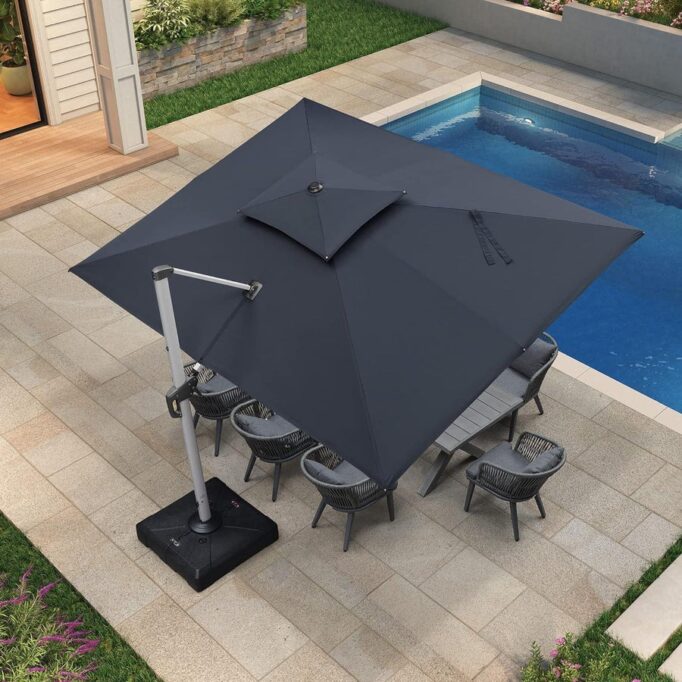
Positioning determines whether an umbrella feels like an integral design element or an awkward addition. Center the canopy over the primary activity zone rather than defaulting to the geometric center of the patio—this might mean offsetting the umbrella toward the sun-facing edge where shade is most needed. For cantilever models, position the mast behind furniture groupings so the base remains accessible without interrupting traffic flow. Pair the umbrella with complementary accessories that enhance the outdoor room concept: string lights threaded along ribs create evening ambiance, while weighted planters at the base double as decorative anchors. Coordinate the canopy color with existing soft furnishings—cushions, outdoor rugs, and throw pillows—creating visual threads that connect the overhead plane to the living level below. In commercial settings, align multiple rectangular umbrellas in uniform rows with consistent spacing to establish rhythm and brand coherence across the venue. Consider the umbrella’s visual weight relative to surrounding elements; a heavy matte canopy grounds a space, while a lighter translucent fabric keeps the atmosphere airy and open.
Step 4: Providing Aftercare and Maintenance Guidelines
Deliver a concise maintenance protocol to clients during the final project walkthrough, reinforcing that proper care protects their investment. Instruct them to close the umbrella whenever winds exceed fifteen miles per hour and during overnight hours when unexpected gusts are common. Recommend monthly debris removal using a soft-bristle brush, with seasonal deep cleaning using manufacturer-approved soap solutions applied with a sponge and rinsed thoroughly. Advise annual inspection of all mechanical components—crank gears, tilt pins, and locking mechanisms—applying food-grade silicone lubricant to moving parts. Suggest storing the umbrella under a breathable cover during extended off-season periods, ensuring the canopy is completely dry before covering to prevent mildew development. For clients in harsh climates, recommend professional re-waterproofing treatments every two to three years to maintain fabric performance. Provide this information as a printed care guide included in the project handover package, positioning yourself as a designer who thinks beyond installation day and invests in lasting client satisfaction.
Elevating Outdoor Spaces With Rectangular Umbrella Design
Rectangular patio umbrellas earn their place in professional outdoor design through a compelling combination of geometric precision, material durability, and functional adaptability that few other single elements can match. Their elongated canopies align naturally with contemporary architecture and standard furniture proportions, creating visual coherence that elevates entire outdoor environments from casual to intentional. For interior designers navigating the constant tension between aesthetic ambition and real-world performance, these umbrellas deliver on both fronts—offering extensive customization in color, texture, and frame material while withstanding years of sun, wind, and rain without compromising appearance. The structured implementation approach outlined here—from thorough site assessment through thoughtful product selection, strategic styling, and proactive aftercare—equips designers to specify rectangular umbrellas with confidence, knowing each recommendation reinforces professional credibility. As outdoor living continues to command greater attention and investment from clients, leveraging versatile shade solutions that perform as beautifully in year five as on installation day becomes a meaningful competitive advantage. Apply these insights to your next project, and let the rectangular patio umbrella demonstrate what happens when form and function align without compromise.