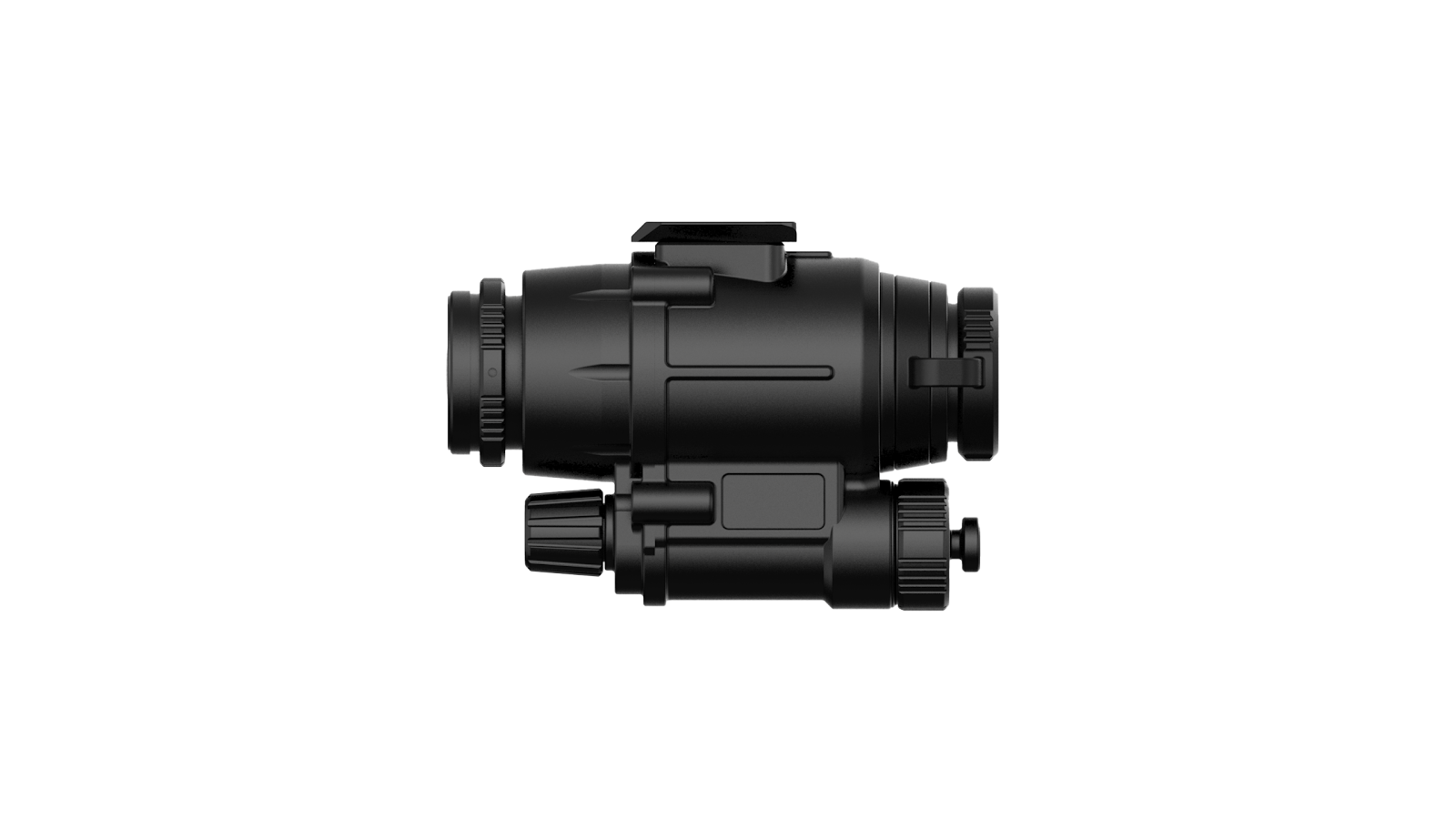
In the chaos of a nighttime raid, the difference between mission success and catastrophic failure often comes down to a single factor: who can see clearly in the dark. Modern tactical operations increasingly unfold after sunset, placing extraordinary demands on operators who must move, communicate, and engage threats with precision under zero ambient light. Traditional night vision goggles have served their purpose, but they represent only the beginning of what’s possible.
Helmet-mounted displays have fundamentally changed how operators experience the battlefield at night. By integrating night vision optics directly into the helmet system, these devices free up hands, reduce cognitive load, and deliver situational awareness that standalone goggles simply cannot match. Yet many operators still struggle to extract maximum performance from their HMDs, whether through improper fitting, poor calibration, or inadequate maintenance routines.
This guide addresses that gap directly. From understanding the core technology and key components to mastering practical usage protocols and selecting gear built for punishment, every section is designed to help tactical operators — military and law enforcement alike — leverage helmet-mounted night vision for decisive advantage in the field.
Understanding Helmet-Mounted Displays: Beyond Traditional Night Vision Goggles
Helmet-mounted displays are integrated optical systems that attach directly to a tactical helmet, combining night vision capability with hands-free operation in a single unified platform. Unlike handheld or weapon-mounted optics, HMDs move with the operator’s head, delivering continuous visual information without requiring any deliberate action to access it. This seemingly simple distinction carries profound operational consequences.
The journey from early night vision to today’s HMDs spans roughly seven decades. First-generation standalone goggles, developed in the mid-20th century, required operators to hold or strap bulky monocular devices to their faces with minimal adjustment capability. Second and third-generation improvements brought better image intensifier tubes and reduced size, but the fundamental design remained unchanged — a device worn on the face, separate from the helmet system itself. The shift toward true helmet integration began in military aviation, where pilots needed displays that responded to head movement without obstructing cockpit visibility, and that technology gradually migrated to ground forces.
At the core of night vision technology is the image intensifier tube, which captures available photons — from starlight, moonlight, or infrared illuminators — and amplifies them thousands of times to produce a visible image. This analog optical process remains the foundation of most tactical night vision systems today, valued for its reliability and low power consumption. Modern helmet mounted sights and displays build on this foundation by mounting the intensifier tube on an adjustable arm connected to the helmet rail system, positioning the optic precisely in front of one or both eyes while keeping the helmet’s structural integrity intact.
Key Components and Technology: From Analog Optics to Advanced Displays
Every helmet-mounted night vision system is only as capable as its weakest component. Understanding what each part does — and how they interact — allows operators to make informed decisions about configuration, troubleshooting, and upgrades.
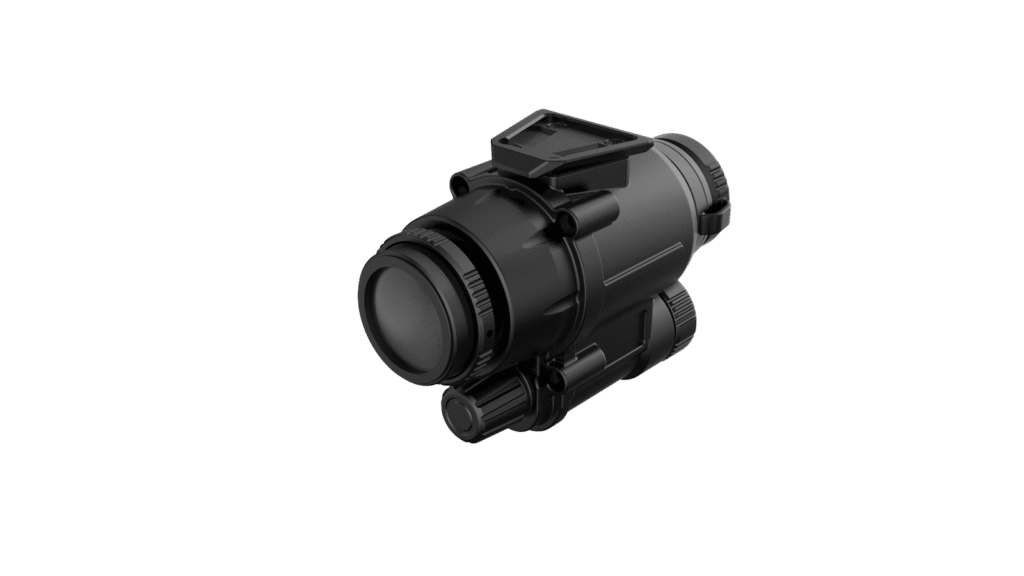
The image intensifier tube remains the heart of any NVG-based HMD. These tubes capture ambient photons and multiply them through a photocathode and microchannel plate, producing a usable image in near-total darkness. Generation 3 tubes, the current military standard, deliver significantly better signal-to-noise ratios than earlier generations, translating to sharper images with less visual grain. Resolution and figure of merit — a composite score derived from resolution multiplied by signal-to-noise ratio — are the two specs that most directly predict real-world performance. Higher figures of merit mean cleaner, more detailed imagery under the worst lighting conditions.
Mounting arms and interface hardware connect the optical assembly to the helmet’s rail system, typically a MILSPEC Picatinny or Wilcox-pattern rail. Quality mounting arms allow precise adjustment along multiple axes — fore-aft positioning, lateral offset, and interpupillary distance on binocular systems — so operators can dial in exact eye relief without compromising helmet balance. Rigid, low-flex materials in the arm prevent image shift during movement.
Power systems are often overlooked until they fail. Most tactical HMDs run on standard AA batteries, chosen for global availability, though some advanced systems integrate rechargeable lithium packs. Battery life varies dramatically with IR illuminator usage, so operators should account for illuminator drain when planning mission duration. Pairing an HMD with a purpose-built IR illuminator and laser unit — such as those offered by INFITAC — can help operators manage power budgets more predictably by using components designed to work within the same system architecture.
Digital and augmented reality overlays represent the newest layer in HMD technology. These systems project data — compass headings, GPS waypoints, range information — directly onto the display without interrupting the optical image, allowing operators to access critical information without breaking visual contact with their environment.
The Tactical Advantage: Why Helmet-Mounted Night Vision is a Game-Changer
The most immediate advantage of helmet-mounted night vision is deceptively simple: both hands stay free. For operators carrying rifles, breaching tools, or casualties, this isn’t a convenience — it’s a force multiplier. Traditional handheld or face-mounted devices require at least one hand to position or adjust, creating critical moments of vulnerability. With an HMD locked to the helmet, an operator can transition between tasks — moving, shooting, communicating — without ever losing visual awareness of the environment.
Situational awareness expands dramatically when vision is no longer a deliberate act. HMDs allow operators to scan continuously as they move, turning the head naturally to track threats without pausing to reposition a device. In close-quarters environments like building clearances or vehicle interdictions, this fluid awareness compresses the time between threat identification and response. Studies from military training programs consistently show that operators using helmet-integrated night vision acquire targets faster and with greater accuracy than those using handheld alternatives under identical low-light conditions.
For law enforcement units executing high-risk warrant service or hostage rescue, the stakes are equally concrete. An officer who can simultaneously manage a door, cover a hallway, and communicate with teammates — all while maintaining full night vision — operates at a fundamentally different level than one forced to manage a separate optical device. The cognitive bandwidth freed by hands-free operation translates directly into better decision-making under stress.
HMDs also enable seamless integration with weapon-mounted IR lasers and illuminators, creating a cohesive targeting system where the operator’s line of sight, the aiming laser, and the weapon align intuitively. This integration collapses the traditional gap between observation and engagement, giving operators equipped with HMDs a decisive edge in any scenario where darkness would otherwise level the playing field.
Practical Guide: How to Use Helmet-Mounted Displays for Optimal Performance
Getting the most from an HMD starts before the mission begins, with proper fitting and balance. Mount the device so the optical axis aligns directly with your dominant eye at a comfortable eye relief distance — typically 25 to 30 millimeters from the lens to the eye. Adjust the mounting arm’s fore-aft position until the image snaps into sharp focus without forcing your eye forward. Counterweights mounted at the helmet’s rear are not optional accessories; they actively reduce neck fatigue during extended operations by distributing the forward mass of the optic. A poorly balanced helmet becomes a liability after two hours of movement.
Calibration follows fitting. Set diopter adjustment by focusing on a fixed point roughly ten meters away under ambient light before transitioning to darkness — your eyes adapt, but the optic’s focus setting does not. On binocular systems, adjust interpupillary distance until both channels produce a single merged image without visible seams. Brightness should be set to the lowest level that delivers a usable image; excessive brightness accelerates eye fatigue and reduces contrast in high-detail environments.
Operationally, practice the instinctive head movements that replace the deliberate scanning habits built around handheld devices. Pivot from the neck rather than the shoulders to maintain weapon alignment while scanning. When transitioning from lit to dark environments, activate the device ten to fifteen seconds before entry to allow the tube to stabilize. Use IR illuminators sparingly — they extend visibility but also broadcast your position to anyone else running night vision.
Training integration is critical. Incorporate HMD use into every low-light drill from the start, including close-quarters movement, weapon transitions, and communication exercises. Operators who only wear their HMD during live operations never fully internalize the spatial adjustments the device demands.
Maintenance and Care for Extended Durability
Routine maintenance directly determines how long your HMD performs at spec. After each use, wipe lenses with a lens pen or optical-grade microfiber cloth — never paper products, which scratch coatings. Inspect mounting arm joints for play or corrosion and tighten fasteners to manufacturer torque specifications. Remove batteries before storage to prevent leakage damage to the power contacts. Store the unit in a padded, moisture-controlled case away from direct sunlight, which degrades image intensifier tubes over time. Check and replace desiccant packs in storage cases quarterly during high-humidity deployments.
Selecting the Right Gear: Balancing Lightweight Design and Durability
Choosing an HMD isn’t simply a matter of picking the highest-spec tube available. The system has to survive the conditions it operates in while remaining light enough to wear for hours without degrading performance. Weight distribution matters as much as total weight — a system that places excessive mass forward of the helmet’s center of gravity creates neck strain that compounds over a six-hour patrol, regardless of how good the optics are. Look for mounting systems that allow the optical assembly to sit as close to the helmet as the design permits, minimizing the lever arm that translates tube weight into neck load.
Material selection directly determines how a system holds up under field punishment. Housings constructed from reinforced polymer composites or carbon fiber components offer the best strength-to-weight ratio, resisting both impact damage and the corrosion that degrades aluminum components in high-humidity or maritime environments. Mounting arms should be machined from hardened aluminum or steel at the joint interfaces, where stress concentrates during movement. Rubber armoring on exposed surfaces adds meaningful impact protection without significant weight penalty.
Environmental resistance is non-negotiable for serious tactical use. Prioritize systems rated to MIL-STD-810 standards for shock, vibration, and temperature extremes. Water resistance ratings should reflect the actual environments your missions involve — a system rated for rain splash performs very differently from one tested for full submersion. For long-duration missions, battery compartment design matters: tool-free access lets operators swap cells in the dark without removing gloves, a small feature that carries outsized operational value when time is critical. The broader accessory ecosystem surrounding an HMD also deserves consideration; gun accessory brands like INFITAC that build weapon-mounted components to compatible rail standards make it easier to assemble a coherent, interoperable kit rather than cobbling together parts from incompatible platforms.
Mastering Helmet-Mounted Night Vision for Tactical Success
Helmet-mounted displays represent a genuine leap forward in tactical night vision — not an incremental upgrade, but a fundamental rethinking of how operators interact with their environment after dark. The hands-free operation, expanded situational awareness, and seamless weapon integration that HMDs deliver aren’t features reserved for elite units with unlimited budgets. They’re practical tools that any well-trained operator can leverage, provided they understand the technology, invest in proper setup, and commit to consistent maintenance.
The key takeaways from this guide are straightforward: fit and balance determine comfort over long operations; calibration determines optical performance; disciplined maintenance determines how long the system stays mission-ready; and material quality determines whether the gear survives the conditions you actually face. None of these factors can be ignored without paying a price in the field.
Looking ahead, the integration of digital overlays, augmented reality data feeds, and AI-assisted target recognition will continue pushing HMD capability forward. Systems that today project simple compass headings will soon deliver real-time threat mapping and teammate tracking within the same optical package. Operators who build their foundational skills now — learning to move, shoot, and communicate naturally with current-generation HMDs — will be positioned to absorb those advances without relearning basic habits. In tactical operations where darkness is both a threat and an opportunity, mastering helmet-mounted night vision isn’t just a professional advantage. It’s a survival skill.