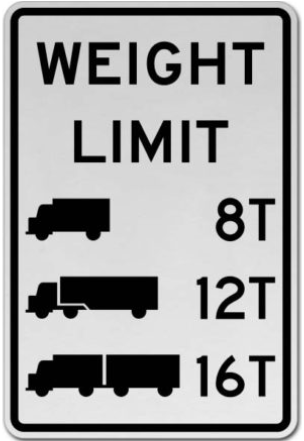
Each year, heavily laden trucks damage bridges, break pavement and destroy parking garages that weren’t ever designed to hold such weight. In most cases, this kind of destruction is not intentional. The trucker didn’t know the load limit; he/she simply did not read the sign. This is exactly why choosing the appropriate weight limit signs is one of the wisest things any municipality or contractor can do for safety reasons.
This guideline helps to identify important factors to take into account in different locations.
Why Weight Limit Signs Matter
The weight limit sign warns drivers of the weight capacity of a particular structure or roadway to ensure safety. The protection provided is a combination of protection for people, structures, and money.
One heavy vehicle could damage the deck of a bridge, the roadbed of a street, or cause excessive stress on a parking garage. The cost of repairs would be high, and the liability would be worse yet. The cost of an effective sign is minimal compared to the potential costs involved.
Also, the weight limit sign is just one sign among many traffic control signs – the regulatory, warning, and guidance signs that control traffic flow. An effective sign is one that communicates instantly.
Know the Types of Weight Limit Signs
It pays to be aware of what sign goes with each kind of restriction before buying one.
- Regulatory signs for Weight Limitations (R12 series): This is an enforceable sign that indicates the maximum gross vehicle weight that the road or bridge can accommodate, such as “Weight Limit 10 Tons.”
- Axle weight limitation signs: This restricts the load on a particular axle as opposed to being concerned about the whole vehicle weight because this may affect certain roads with weaker pavements.
- Signs for Truck weight limitation and combinations: Here, different limits are set for vehicles as individual units and in combinations.
- Bridge posting signs: These signs state the capacity of loading on a specific bridge. It is mandatory to post these signs once an engineering inspection reduces the capacity of a bridge.
First thing to consider is matching the sign to the kind of restriction in question. The next thing is to make sure it meets your standards.
Follow MUTCD Standards
The Manual on Uniform Traffic Control Devices (MUTCD) is the guideline on sign size, colors, shapes, letterings, and sign placement in the USA. By following the MUTCD guidelines, you will have signs that are standard and legally accepted.
While assessing various design alternatives, it is crucial to make sure that the sign complies with the regulatory design, that is, black letters on white background and appropriate height and mount. Also, your state/county Department of Transportation (DOT) may have other design criteria for you to be aware of.
Choosing Weight Limit Signs for Bridges
Bridges are the highest-stakes locations. The posted limit should be based on the most recent engineering inspection, not an outdated record. Clearly displayed vehicle weight restrictions help drivers understand load limits and protect bridge infrastructure..
Here’s what to focus on:
- Use the current rating. If the bridge was re-rated, replace outdated signs right away.
- Place signs before the approach. There should be sufficient distance to allow the driver to either stop or make a U-turn. Include advance signs as the final good intersection or detour point.
- Choose highly visible sheeting. Signs made with high-intensity or diamond-grade reflective sheeting stay readable even during the night or poor weather conditions.
- Choose high-quality material. Bridge signs are always exposed to wind, salt, and moisture; thus, the recommended material is heavy gauge aluminum.
- Post both directions. Don’t assume traffic only comes from one side.
Choosing Weight Limit Signs for Roads
Weight restrictions on roads help preserve pavement and residential streets by restricting access by trucks, especially during thaw in spring or construction areas.
In this case, the emphasis should be on big, visible letters since drivers are traveling at higher speeds. Install the sign right at the entrance to the restricted section and also place it after intersections to allow drivers turning into this street see the weight limit sign.
Use weight limit signs together with other traffic control signs like truck route signs, detour arrow signs, and advanced warning signs to give drivers all the information instead of just the restriction without any alternatives. Where there are multi-lane roads allowing trucks only in certain lanes, use lane control signs to direct the trucks to the proper lane before the restricted area.
Choosing Weight Limit Signs for Parking Lots and Garages
Parks and garages present a different set of problems as far as weight limit signs are concerned. The upper levels, ramps, and loading docks have weight limits that are easy to surpass for trucks and work vehicles.
For these spaces:
- Post at every entrance. Include the maximum weight, and add height clearance information if relevant.
- Use bold, simple wording. Drivers are often slowing down and looking for parking, so short messages work best.
- Consider indoor and outdoor conditions. Garages may need signs that resist moisture and frequent cleaning, while open lots need strong UV resistance.
- Mark service and loading zones clearly. Direct heavy vehicles to the proper entrance with directional signs and lane control signs that keep them away from restricted ramps.
Key Features to Compare Before You Buy
Having known the position and the sign type, let us now consider some practical aspects of their comparison.
- Material. It is usually made of aluminum, as it is durable enough and does not rust easily. The gauge of material is an important criterion.
- Reflective sheeting. It may be engineering grade for low speed zones and high intensity prismatic or diamond grade for highways and bridges.
- Size. Large signs are always seen better than small signs at greater distances, and the bigger the sign is, the more convenient it is in multi-lane traffic situations.
- Fastening materials. Posts, brackets, fasteners must be compatible with the sign’s weight and wind conditions of the region where the sign will be installed.
- Customized signs. Sometimes there is a need in the certain tonnage of the sign, wording, format – then choose a supplier able to produce customized products.
- Warranty. Good signs should serve for many years and keep their appearance.
A few small mistakes lead to most sign problems:
- Putting up a sign with a weight rating that has changed
- Putting the sign too close to the restriction for the driver to do anything about it
- Using poor-quality signs that lose reflectivity within two years
- Hanging signs where they can be hidden by trees or posts
- Not checking signs often enough to catch any that are damaged or stolen
An annual inspection of all posted signs is an easy routine to keep your system running well.
Conclusion
The process of selecting proper weight limit signs is a fairly simple one that requires understanding of the type of sign needed, compliance with MUTCD regulations, proper matching with the setting and purchasing signs made from durable materials that reflect light very well.
For anyone responsible for the management of a bridge, city streets, parking garages and other infrastructure, having the right signs ensures safety on the road.
www.roadwaysigns.com offers a selection of weight limit signs, traffic control signs and lane control signs. Visit www.roadwaysigns.com to find the right fit for your project and keep your roads, bridges, and parking lots safe.
Frequently Asked Questions
1. What do weight limit signs mean?
They indicate the maximum allowable weight of a vehicle for using a bridge, road or structure. It is illegal and dangerous to exceed these signs and it results in fines and damages.
2. Can weight limit signs be enforced?
Yes, regulatory weight limit signs that conform to local and state requirements can be enforced and violations may result in citation. Proper location and design will facilitate enforcement.
3. How far ahead of the bridge should I place a weight limit sign?
Drivers need enough time to decelerate and take an alternative route. The required distance depends on road speed and varies according to MUTCD requirements.
4. How does a weight limit sign differ from other types of traffic control signs?
Weight limit sign belongs to the class of regulatory signs. There are other traffic signs including speed limit signs, stop signs, warning signs and guide signs.
5. Where should I place lane control signs with weight limitations?
Lane control signs should be used when some lanes are able to accommodate overweight vehicles and when trucks need to be diverted from those lanes, ramps or structures.