Replacing exterior shutters in a historic district often requires approval before any work begins. Even when the new shutters look similar to the old ones, a local review board may need to examine the design, material, dimensions, color, and installation method.
Starting the review process early can prevent delays, rejected applications, and unnecessary purchases. The rules vary by community, so homeowners should confirm local requirements before removing existing shutters or placing an order.
Learn Which Rules Apply
Historic districts are usually governed by local preservation ordinances and design guidelines. These documents explain which exterior changes require review and which materials or designs are considered appropriate.
Visit the municipal planning or preservation department’s website and locate the guidelines for your district. If anything is unclear, contact staff directly. A short conversation can help you determine whether the work qualifies for staff approval or requires a hearing before the full board.
Document the Existing Shutters
Before removing anything, photograph each window and shutter from several angles. Include close-up images of panels, louvers, hinges, fasteners, holdbacks, and areas of damage.
Record the height, width, thickness, and construction details of each shutter. If original pieces survive, they can provide valuable evidence when selecting replacements. Do not discard damaged shutters until the board has reviewed the project.
Useful documentation may include:
- Current photographs of the entire facade
- Close-ups of original materials and joinery
- Measurements for every window
- Old property photographs or building plans
- Notes describing rot, cracks, missing parts, or failed repairs
Match the Historic Design
Review boards generally focus on whether the replacement preserves the building’s architectural character. A shutter that is suitable for one historic style may look incorrect on another.
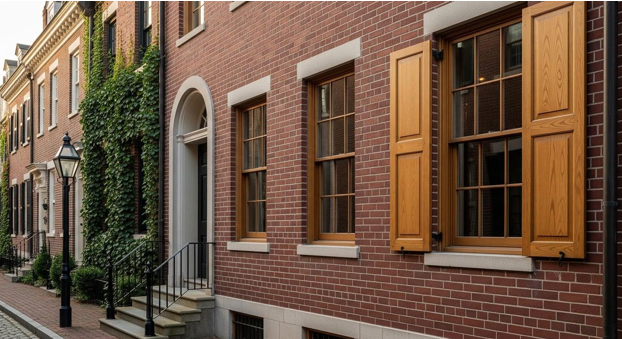
Pay attention to panel arrangements, louver dimensions, rail widths, and overall proportions. The shutters should also appear able to cover the window when closed. Undersized decorative panels are commonly rejected because they do not look historically functional.
When standard products cannot reproduce the original dimensions or details, custom exterior wood shutters may offer a closer architectural match. Provide product drawings, material specifications, and finish samples with the application.
Choose Materials Carefully
Some districts require traditional wood, while others allow composite materials when they closely resemble the original. Never assume a lower-maintenance material will automatically be accepted.
Explain why a particular material is being proposed and how it will be finished. If the existing shutters are beyond repair, include photographs or a condition report showing why replacement is necessary.
Repair is often preferred when enough historic material remains. Ask whether damaged sections can be patched, reinforced, or rebuilt rather than replacing the entire set.
Include Installation Details
The review board may examine more than the visible shutter panels. Mounting position, fasteners, hinges, and shutter hardware can affect the project’s historical accuracy.
Show where each component will be installed and whether the shutters will operate. Surface-mounting new panels far from the window opening may create an appearance that the board considers inappropriate.
Prepare a Complete Application
Application requirements vary, but most boards want clear, specific information. Submit all requested forms, photographs, measurements, product sheets, color samples, and drawings together.
Avoid ordering nonreturnable products before receiving written approval. The board may request revisions to the material, dimensions, paint color, or hardware placement.
Attend the review meeting if a hearing is required. Bring samples and be ready to explain how the proposal matches the building’s original design. If changes are requested, confirm them in writing before revising the order or beginning installation.