Every day, businesses lose money in ways they never see. A caller hangs up after four rings. A lead gets scribbled on a sticky note and thrown away. A service advisor promises a callback that never happens. None of this shows up in a monthly report, but it shows up in lost revenue.
Your phone system holds the answers. The problem is that most phone systems were built only to connect calls, not to capture what happens inside them. That is where VoIP CRM integration changes the game.
When your phone system and your CRM share the same data, every call becomes a measurable event. You stop guessing what happened on the phone and start knowing. In this guide, we will walk through how VoIP CRM integration works, why call reporting software matters, and how AI call analysis is reshaping front-desk accountability.
What Is VoIP CRM Integration, and Why Does It Matter?
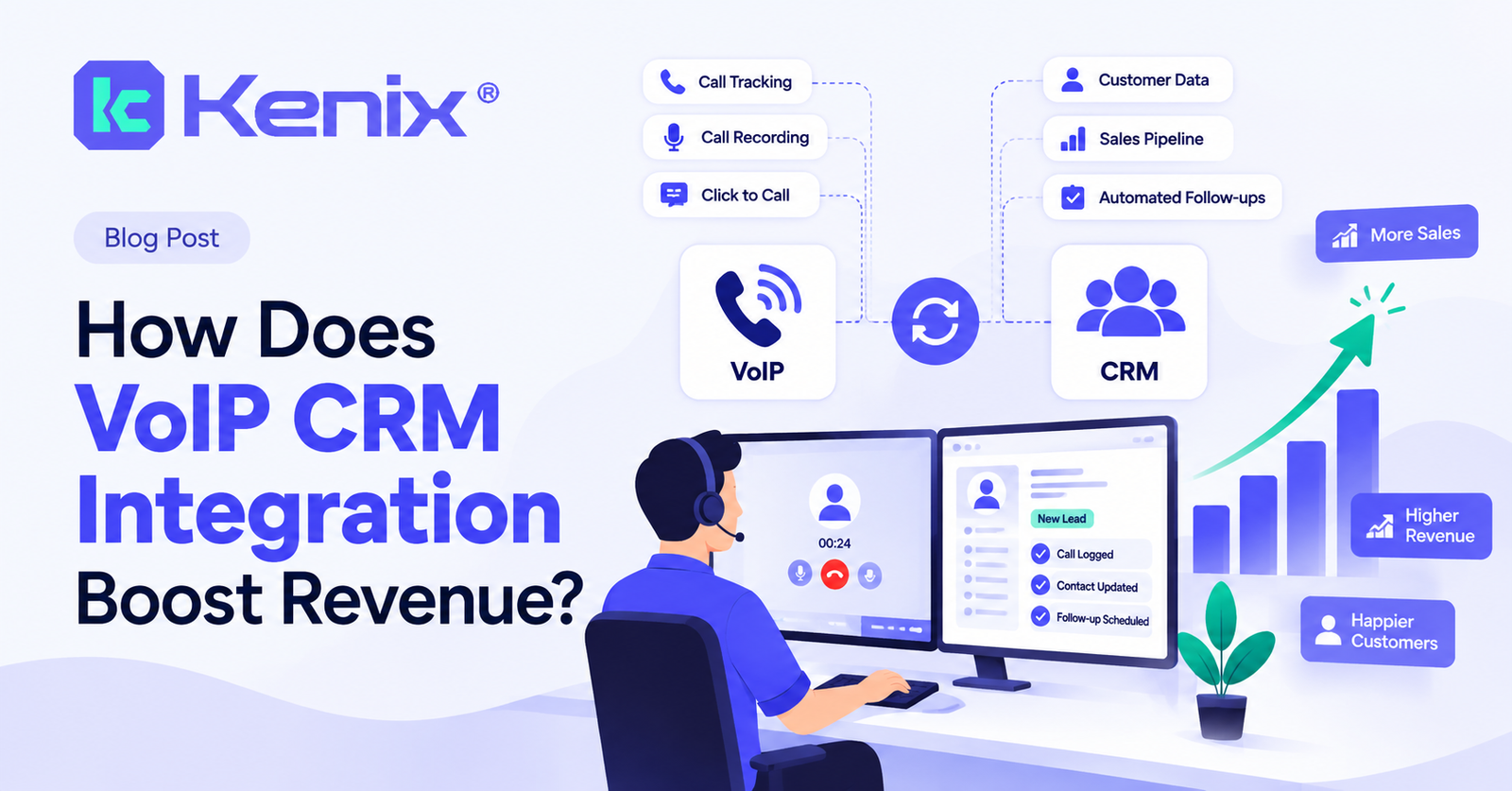
VoIP CRM integration connects your internet-based phone system directly to your customer relationship management platform. When a call comes in, the system instantly matches the phone number to an existing contact. The moment someone answers, the rep sees the full customer history: past conversations, appointments, purchases, and open issues.
After the call ends, the integration logs the interaction automatically. No manual entry. No forgotten notes. The record is complete before the rep hangs up.
This matters more than most leaders realize. Industry research consistently shows that a large share of inbound calls to service businesses go unanswered or unlogged. Without integration, those calls simply vanish. With it, every call has an owner, a category, and a follow-up path.
For businesses where the phone is the primary revenue channel, such as auto repair shops, dental offices, home services, and legal practices, this visibility is not a luxury. It is the difference between running the business on facts versus running it on assumptions.
The Hidden Cost of Untracked Calls
Before we talk about solutions, let us be honest about the problem. Manual call handling fails in predictable ways:
- Staff forget to log calls during busy periods, so records become incomplete.
- Notes get typed inconsistently, making them impossible to search later.
- Managers have no way to verify what was actually said on a call.
- Missed calls rarely trigger a follow-up, so interested buyers call a competitor instead.
- Reporting depends on someone building spreadsheets by hand, which means reporting happens late or never.
These are not staffing problems. They are systems problems. People will always prioritize the caller in front of them over the data entry task behind them. The fix is to remove the data entry from their plate entirely.
How Call Reporting Software Changes Management
Call reporting software takes the raw stream of calls flowing through your business and turns it into numbers you can act on. Instead of asking your team how the phones are doing, you open a dashboard and see it.
Here is what modern reporting tracks:
- Call volume by day, hour, and line, so you can staff peak times correctly.
- Answer rate and response time, so you know exactly how many callers reach a human and how fast.
- Outcome tracking, showing which calls became leads, appointments, or closed deals.
- Missed call counts with automatic follow-up status, so no inquiry falls through the cracks.
- Per-employee performance, giving managers a fair, data-based view of front-desk work.
The cultural shift this creates is significant. When advisors know their call metrics are visible, accountability rises without a single confrontation. When managers can see opportunity rate trends, coaching conversations become concrete. One shop owner we spoke with described it simply: he stopped managing personalities and started managing numbers.
Call Tracking CRM: Attribution You Can Trust
A call tracking CRM goes one step further by connecting each call to its source and its result. Which marketing campaign brought this caller in? Did the caller book? Did they show up? Did they buy?
With call-level attribution, marketing decisions stop being guesswork. If your radio ad generated forty calls but zero appointments, that is useful information. If your Google listing generates fewer calls but a much higher booking rate, that is even more useful. Call tracking lets you shift budget toward what actually produces revenue, not what merely produces phone rings.
For multi-location businesses, call tracking also reveals which location answers fastest, converts best, and needs coaching. The data travels with every call, so comparisons are apples to apples.
AI Call Analysis: The Layer That Makes Sense of Everything
Reporting tells you what happened. AI call analysis tells you why.
Modern AI can listen to every call, transcribe it, and classify it in real time. Here is what that looks like in practice:
- Automatic classification. The AI tags each call as a new lead, an existing customer, a vendor, or a complaint. Your CRM fills itself in.
- Sentiment detection. Calls flagged with frustration get surfaced to a manager before a bad review ever gets written.
- Opportunity detection. The system identifies callers asking about services you offer but did not book, creating instant follow-up lists.
- Keyword and phrase tracking. Want to know how often price objections come up, or how often a specific service is requested? AI counts it across every call, something no human team could ever do.
This is where the real return on investment appears. Platforms like Kenix built their VoIP system around this idea, where every call is transcribed, categorized, and tied directly to business KPIs without staff lifting a finger. When analysis happens automatically, insight stops depending on anyone’s discipline.
Building Your Integration Stack: A Practical Roadmap
If you are evaluating VoIP CRM integration for your business, here is a sensible sequence:
- Start with a CRM connection. Make sure calls log automatically against contact records. This is the foundation everything else sits on.
- Add reporting. Define the five to ten metrics that actually reflect revenue, such as answer rate, opportunity rate, booking rate, and show rate. Watch them daily.
- Enable source tracking. Assign tracking numbers to each marketing channel so attribution is clean.
- Layer in AI analysis. Let classification, transcription, and sentiment run in the background. Review flagged calls weekly with your team.
- Close the loop. Connect missed calls to automatic SMS replies and follow-up tasks so no interested caller is ever ignored.
Businesses that follow this path typically report the same pattern: within weeks, answer rates improve because they are finally measured. Within a quarter, opportunity rates climb because follow-ups are systematic instead of random.
Common Mistakes to Avoid
A few pitfalls show up repeatedly:
- Tracking too many metrics. Five meaningful numbers beat fifty ignored ones.
- Using data to punish. If staff fear the reports, they will give them. Use data for coaching and recognition first.
- Ignoring missed calls. Missed calls are your most motivated prospects. Automate the recovery process.
- Buying tools that do not talk to each other. A VoIP system, a CRM, and an AI tool purchased separately often create three silos instead of one solution. Prefer integrated platforms.
The Bottom Line
Your phone line is already your busiest sales channel. The only question is whether you can see it, measure it, and improve it. VoIP CRM integration gives every call a record. Call reporting software gives every record a number. AI call analysis gives every number a meaning.
Together, they turn a ringing phone from an interruption into your most reliable source of growth.