Storage space can become a serious challenge when a business grows, takes on a large project, or needs to keep more equipment on site. Adding another warehouse may seem like the obvious answer, but construction is not always practical. It can require significant investment, additional land, and a long planning process.
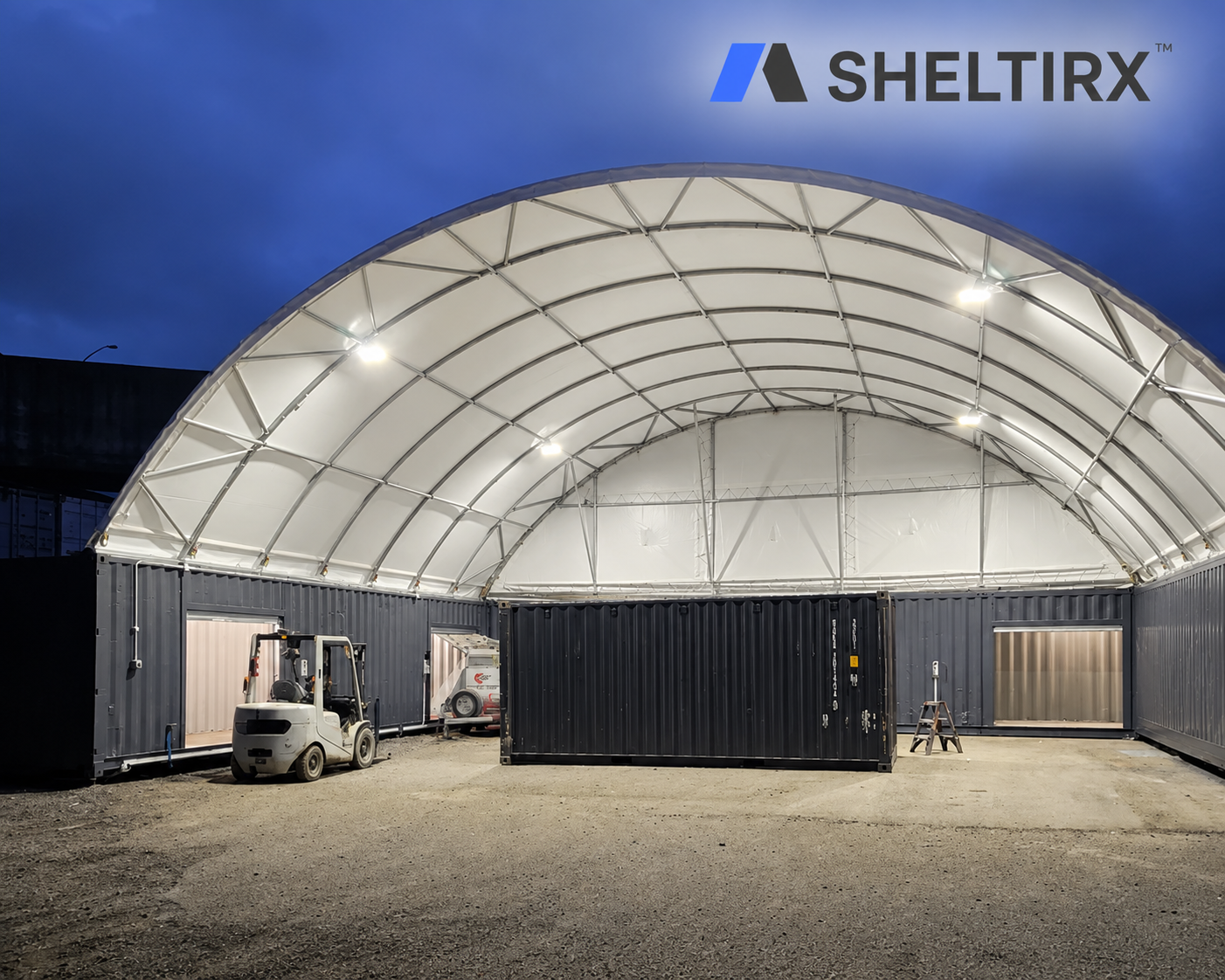
For businesses that already use shipping containers, there is another way to increase usable space. A container shelter can create a covered area around existing containers, providing room for equipment, materials, vehicles, or daily work without requiring a completely new building.
Making Existing Containers More Useful
Shipping containers are useful for secure storage, but they have a limitation: their enclosed space is fixed. Once the container is full, anything larger must usually be stored elsewhere.
A shelter can help solve that problem by creating additional covered space next to or between containers. The area underneath can be used for items that need protection but do not necessarily need to be kept inside an enclosed container.
For example, construction materials can be staged under cover, equipment can remain protected between uses, and frequently accessed supplies can be kept outside the container without being completely exposed to the weather.
This makes the existing storage setup more useful without requiring the business to replace its containers.
Creating Protected Space Without a New Building
Not every storage requirement justifies a permanent building. A business may need extra space for a construction project, seasonal inventory, equipment, or a temporary increase in operations.
A container-based shelter can provide a practical middle ground. It creates overhead protection while maintaining an open layout that allows equipment and vehicles to move in and out.
This can be especially useful on construction sites, industrial properties, farms, equipment yards, and other locations where storage needs can change.
The goal is not to replace every warehouse or enclosed building. Instead, a shelter can provide the additional covered capacity needed for specific uses.
Protecting Equipment and Materials From Weather
Leaving equipment and materials outdoors can create unnecessary exposure to sun, rain, snow, and wind. Some materials are more sensitive than others, but even durable equipment benefits from having a protected place when it is not being used.
A covered area can reduce direct exposure and provide a more suitable environment for outdoor storage. It can also make loading and unloading easier when weather conditions are poor.
For businesses that regularly move equipment between containers and work areas, having covered space nearby can make everyday operations more convenient.
An industrial canopy can serve a similar purpose where a business needs protected outdoor space for equipment, materials, or work activities.
Using the Space for More Than Storage
One of the advantages of a container shelter is that the covered area does not have to serve one purpose permanently.
A construction company might use it for material preparation during one project and equipment storage during another. An industrial business could use the same area for maintenance or staging. A farm might use it for machinery during one season and supplies during another.
This ability to change the purpose of the space makes a covered container area useful for businesses that do not want to build a facility around a single requirement.
It can also provide a practical workspace when working outdoors is necessary but direct exposure to the weather is not desirable.
Improving Organization on the Site
Limited storage space can create another problem: poor organization. When there is nowhere designated for equipment or materials, items can end up scattered around the property.
A covered area gives businesses another place to organize frequently used equipment and supplies. Larger items can remain outside the containers while smaller or higher-value items stay inside.
A container canopy can also create a defined area for loading, unloading, staging, or temporary storage. This can make movement around the site easier and reduce the amount of equipment occupying valuable working areas.
Good storage is not only about having more room. It is also about making the available room easier to use.
Choosing a Shelter for the Available Space
The right shelter depends on the site and how the business plans to use it. Before selecting a system, businesses should consider the location of existing containers, the available footprint, required clearance, access routes, and the size of the equipment or materials that will be placed underneath.
Height is particularly important when vehicles or large machinery need to enter the covered area. The layout should also allow workers to access containers without creating unnecessary obstacles.
Weather conditions should be considered as well. A commercial shelter should be appropriate for the environment in which it will be installed and for the intended use of the space.
Careful planning at the beginning can help businesses avoid creating a covered area that looks suitable on paper but is difficult to use in practice.
A Practical Option for Growing Businesses
Storage requirements can change quickly. A company may need extra space during a major project and less space once the work is finished. Seasonal businesses can experience similar fluctuations.
This is where a flexible storage approach can be valuable. Instead of committing to a new permanent building, businesses can add covered space that supports their immediate requirements and can serve another purpose later.
For businesses already using shipping containers, this can be a particularly practical approach because the containers remain useful as enclosed storage while the shelter provides additional open-sided space.
The combination creates more options without requiring every item to be stored inside a conventional building.
Making Better Use of Existing Infrastructure
Expanding storage does not always mean expanding the property. In many cases, the opportunity is already available on the site.
Unused space around existing containers can become useful when it is properly planned and protected. A shelter can connect the enclosed storage provided by containers with an additional covered area for larger or frequently accessed items.
This approach can be useful for businesses that need more storage but want to avoid unnecessary construction. It allows existing infrastructure to play a larger role in the overall storage strategy.
Sheltirx SkyShield container shelter systems are designed to work with existing container infrastructure, helping businesses create additional covered space for commercial and industrial applications.
Conclusion
A container shelter can provide businesses with a practical way to expand usable storage without immediately constructing another building. By creating covered space around existing shipping containers, businesses can protect equipment and materials while gaining room for storage, staging, loading, or other activities.
The most effective solution depends on the site’s layout, intended use, required clearance, and environmental conditions. With thoughtful planning, the space around existing containers can become a valuable part of the overall operation.
For businesses that need more usable space but do not want to commit to a traditional expansion, a container shelter can offer a flexible way to get more value from infrastructure they already have.