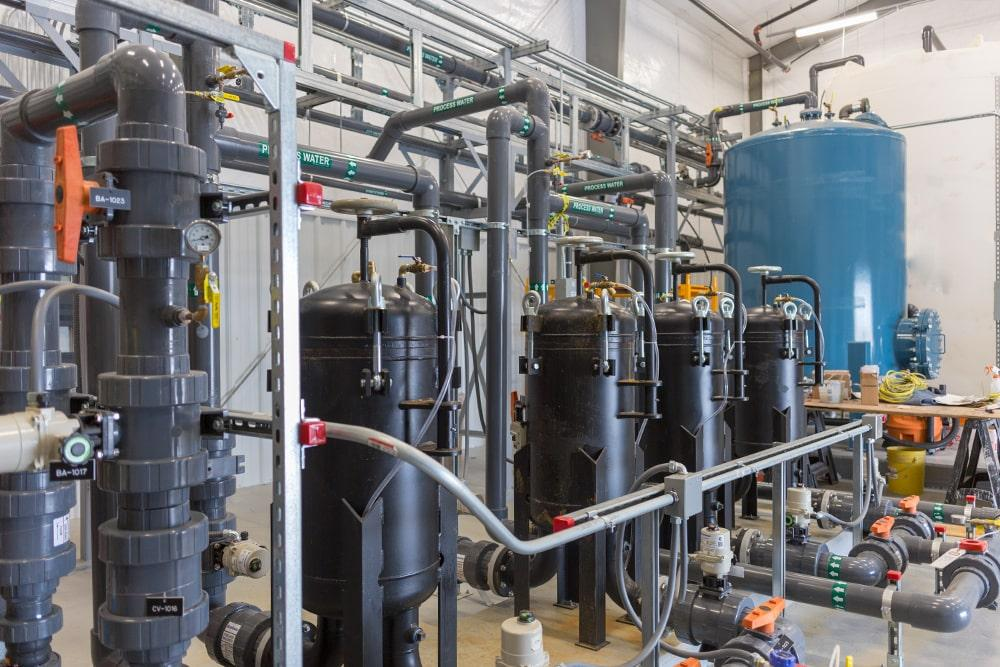
PFAS filtration systems help industrial facilities reduce certain “forever chemicals” in water, enabling better management of discharge, reuse, and compliance responsibilities.
As EPA attention on PFAS grows, many facilities are looking more closely at where these compounds may appear in their operations. PFAS can be difficult to break down, and even low concentrations can create concern when water leaves a site or enters a reuse stream. A practical treatment plan can help companies understand risk, improve control, and prepare for changing requirements.
Why PFAS Matter For Industrial Water
PFAS stands for per- and polyfluoroalkyl substances. These chemicals have been used in many products because they resist heat, oil, water, and stains. They may be connected to manufacturing, metal finishing, textiles, coatings, firefighting foam, landfill leachate, and other industrial sources.
The challenge is persistence. PFAS do not readily degrade in the environment, so they can move through water systems and persist for long periods. For industrial facilities, this makes testing and treatment part of broader water planning.
How Filtration Supports EPA Readiness
A PFAS filtration system is designed to reduce targeted PFAS from water before it is reused, discharged, or sent for further treatment. The right setup depends on the water source, flow rate, PFAS concentration, and final water quality goal.
Common treatment methods may include:
- Granular activated carbon
- Ion exchange resin
- High-pressure membrane treatment
- Pre-filtration to remove solids
- Polishing steps for final quality control
Each method has strengths and limits. Some work better for specific PFAS compounds, while others perform best as part of a combined treatment train.
The Role Of Testing And Monitoring
Facilities cannot manage PFAS effectively without reliable testing. Sampling helps identify which PFAS are present, how much is in the water, and whether levels change over time.
Monitoring also helps operators know when media needs replacement or when treatment performance is dropping. This matters because a system that worked well at installation may need adjustment as water chemistry changes.
Where Reverse Osmosis Fits
For some sites, an industrial reverse osmosis system can help reduce PFAS by using membranes to separate contaminants from the treated water. It may be useful when facilities need high-quality water for reuse or when PFAS treatment is part of a larger purification process.
Reverse osmosis also creates a concentrated reject stream. That stream must be handled carefully, since the removed PFAS do not disappear. Proper concentrate management is a key part of responsible design.
Planning A Practical Treatment Approach
A strong PFAS plan usually starts with three questions:
- Where could PFAS be entering the water?
- What standard or permit condition must the facility meet?
- How will spent media, reject water, or residuals be managed?
From there, engineers can match the treatment approach to the site. The best solution may be a single technology or a layered system in which filtration, resins, membranes, and monitoring work together.
Maintenance And Operator Training
PFAS treatment is not a set-it-and-forget-it process. Filters, resin vessels, membranes, pumps, and sensors need routine checks. Operators also need clear procedures for sampling, changeouts, alarms, and recordkeeping.
Good maintenance helps facilities avoid breakthroughs and maintain consistent treatment performance throughout daily operations.