You’re halfway through installing new shelving in your garage when you realize the measurements are off by half an inch. The tape measure slipped, the pencil mark was ambiguous, and now you’re staring at a crooked bracket wondering where things went wrong. Sound familiar? For DIY enthusiasts, measurement frustrations like these can turn a satisfying weekend project into a costly headache. This brings us to a debate that’s gaining momentum in home improvement circles: should you stick with traditional measurement tools you’ve always known, or make the leap to laser measuring technology? The answer isn’t as straightforward as you might think. Factors like accuracy, ease of use, project scale, and the role of innovation all play into the decision. A tape measure might feel comfortable in your hand, but can it compete with the precision and speed of a laser device? In this guide, we’ll break down both options in detail, comparing their strengths and weaknesses specifically for DIY applications, so you can confidently choose the right tool for your next project.
The Evolution of Measurement Tools: From Traditional to Laser
Measurement has been fundamental to human construction since ancient civilizations used body parts—cubits, feet, and hand spans—as reference points. Over centuries, standardized rulers, folding yardsticks, and eventually retractable tape measures became the backbone of building and craftsmanship. These tools served generations of builders well, but they always carried inherent limitations tied to human interpretation and physical constraints. The late 20th century introduced a quiet revolution: laser technology adapted for portable measurement. What began as expensive equipment reserved for professional surveyors gradually became accessible to everyday users. Today, laser measuring tools and digital rulers represent a significant leap in precision measuring, offering capabilities that mechanical tools simply cannot match. They eliminate guesswork, reduce the physical awkwardness of stretching a tape across a room solo, and deliver readings in milliseconds. This evolution doesn’t mean traditional tools are obsolete—far from it. Rather, it creates a spectrum of options that DIY enthusiasts can draw from depending on their specific needs. Understanding where these technologies came from, and what drives their differences, provides the foundation for making a smart choice about which belongs in your toolbox.
Understanding Traditional Measuring Tools
Traditional measuring tools encompass everything from the ubiquitous retractable tape measure to rigid rulers, folding yardsticks, combination squares, and analog calipers. These instruments rely on physical markings—typically etched or printed graduations—that users read visually and interpret manually. For decades, they’ve been the default choice in every DIY toolkit, and for good reason. They require no batteries, no calibration software, and no learning curve beyond basic numeracy. A quality tape measure costs relatively little, fits in a pocket, and can handle an impressive range of tasks from checking stud spacing to measuring lumber cuts.
Types and Applications for DIY
Traditional tools fall into two broad categories: manual and mechanical. Manual tools include flat rulers, yardsticks, and straightedges—ideal for marking cut lines on sheet goods or verifying short dimensions on a workbench. Mechanical tools like retractable tape measures and spring-loaded calipers add convenience through locking mechanisms and self-retracting blades. For small-scale woodworking, a combination square helps you mark perfect 90-degree and 45-degree angles on boards. Basic home repairs—hanging curtain rods, centering a picture frame, or checking appliance clearances—rarely demand more than a 25-foot tape and a pencil. In these contexts, traditional tools perform admirably because the distances are short, the tolerances are forgiving, and the workflow is simple enough that a single person can manage without assistance.
Limitations in Precision and Efficiency
Problems emerge when projects scale up or demand tighter tolerances. Parallax error—reading a measurement at a slight angle—can introduce inaccuracies of a sixteenth of an inch or more, which compounds across multiple cuts. Measuring long distances solo becomes an exercise in frustration: the tape sags under its own weight, the hook shifts, or the blade retracts mid-measurement. Transferring dimensions from one location to another introduces additional opportunities for mistakes, especially when you’re jotting numbers on scrap paper between rooms. For DIY enthusiasts tackling flooring installation, crown molding, or built-in cabinetry, these accumulated errors translate directly into wasted materials, visible gaps, and rework. Time consumption is another factor—measuring, marking, double-checking, and re-measuring a single wall can eat fifteen minutes that a faster tool could reclaim.
Exploring Laser Measuring Tools and Digital Rulers
Laser measuring tools operate on a simple but powerful principle: they emit a focused beam of light toward a target surface, then calculate distance based on the time it takes for that beam to reflect back to the device’s sensor. This process, known as laser time-of-flight measurement, delivers results in fractions of a second with accuracy typically within 1/16 of an inch over distances up to 200 feet or more. Digital rulers complement this technology by combining physical measurement surfaces with electronic sensors that display precise readings on built-in screens, eliminating the need to interpret tiny graduation marks. Modern laser measuring tools go far beyond simple point-to-point distance readings. Many feature digital displays that show measurements in multiple units simultaneously, Bluetooth connectivity for sending data directly to smartphones or tablets, and internal memory that stores dozens of readings for later reference. These capabilities transform measurement from a manual, error-prone task into a streamlined digital workflow.
How Laser Technology Enhances DIY Projects
The practical advantages for DIY enthusiasts extend well beyond basic distance measurement. Built-in area and volume calculation functions let you point the device at walls and instantly determine how much paint or flooring material you need—no calculator required. Indirect measuring modes use the Pythagorean theorem internally, allowing you to calculate heights you can’t physically reach, like the peak of a vaulted ceiling or the top of an exterior wall. One-person operation is perhaps the most underrated benefit; there’s no tape to hold at the far end of a room, no sagging blade to compensate for, and no need to recruit a helper for long measurements. Many devices also integrate with project planning apps, letting you build digital floor plans, generate material lists, and share measurements with contractors or family members collaborating on a renovation.
Case Study: HOZO Products and Their Advantages
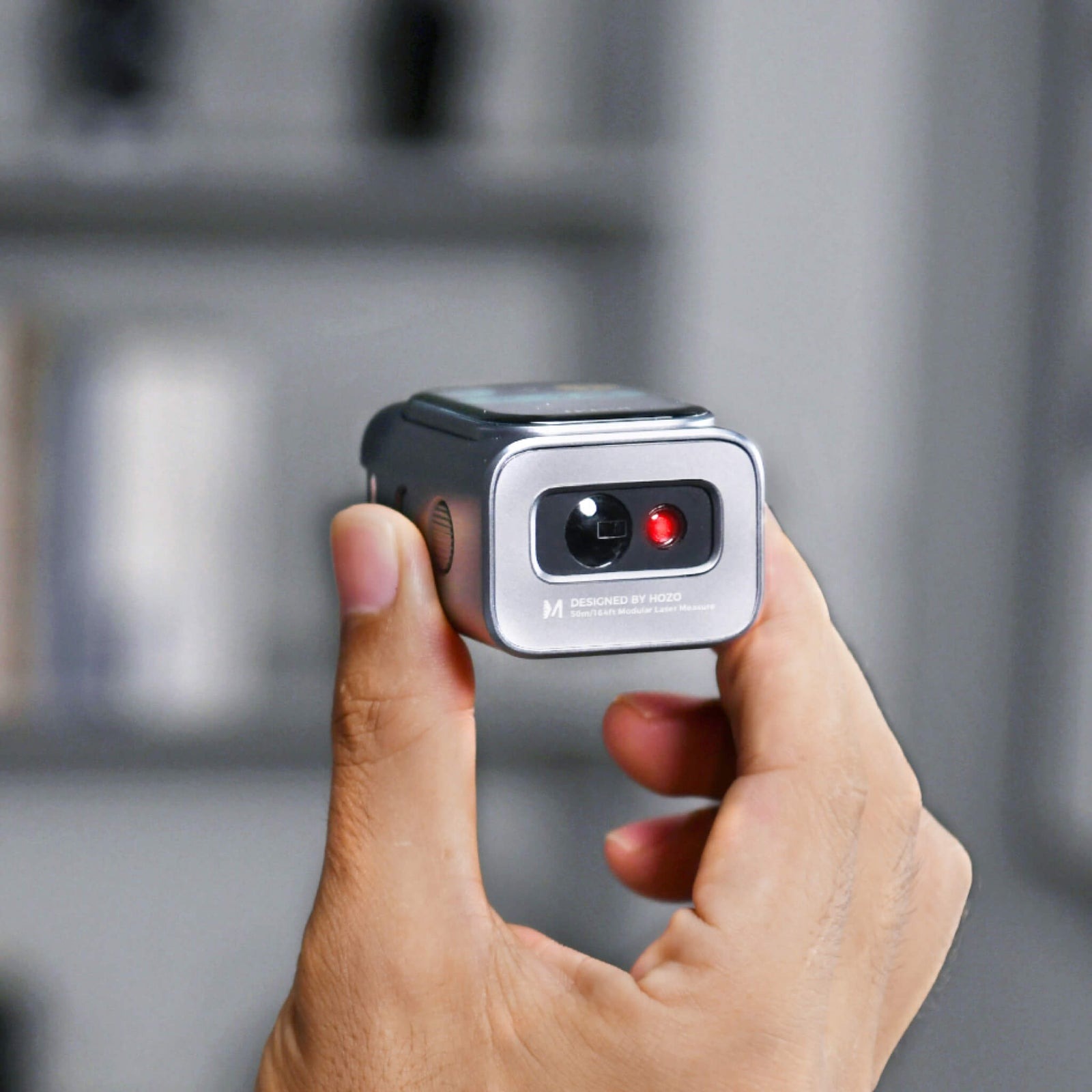
HOZO has positioned itself as a brand specifically addressing the gap between professional-grade surveying equipment and basic consumer tools. Their laser measuring devices and digital rulers are designed with DIY users in mind, featuring intuitive interfaces that require minimal instruction to operate effectively. Key advantages include compact form factors that fit comfortably in a pocket or tool belt, durable housings that withstand workshop conditions, and clear backlit displays readable in both bright sunlight and dim basements. HOZO tools also emphasize versatility—combining multiple measurement modes in a single device so users don’t need separate instruments for linear, area, and volume calculations. For DIY enthusiasts who want professional-level precision without the complexity of contractor-grade equipment, these products represent a practical middle ground that balances capability with accessibility.
Key Factors for DIY Enthusiasts: Precision and Ease of Use
For DIY enthusiasts, two concerns consistently rise above all others when selecting measurement tools: will this give me accurate results, and can I use it without a steep learning curve? These priorities reflect the reality of home projects—you want professional-looking outcomes without investing weeks in mastering complex equipment. The tension between precision and simplicity defines the laser versus traditional debate, and understanding how each tool category performs on both fronts helps clarify which deserves space in your workshop.
Achieving Precision Measuring in Home Projects
Consider a flooring installation where you need to calculate square footage across an irregularly shaped room with alcoves and closets. With a tape measure, you’d break the space into rectangles, measure each one individually, record the numbers, then calculate areas manually—each step introducing potential error. A laser measuring tool handles the same task by pointing at each wall, automatically computing area, and storing the result digitally. The precision difference becomes even more pronounced in tiling work, where cumulative measurement errors across a bathroom floor result in awkward cuts along the edges or grout lines that visibly drift out of alignment. Furniture building presents another scenario where fractions of a millimeter matter; a bookcase with shelves that don’t sit perfectly level or sides that aren’t truly parallel looks amateur regardless of how well the wood is finished. Laser tools and digital rulers reduce these risks by eliminating the interpretation step entirely—you read a number on a screen rather than estimating where a blade edge falls between two graduation marks. For projects where visible gaps, uneven surfaces, or misaligned components would undermine your work, precision measuring technology provides a meaningful safety net against costly mistakes.
Evaluating Ease of Use and Innovation
Beginners often assume that more advanced technology means more difficulty, but modern laser measuring tools challenge that assumption directly. Most devices operate with a single button press—point at the target surface, click, and read the measurement. There’s no technique to master, no hook placement to worry about, and no partner needed to hold the other end. Portability favors laser tools as well; a device smaller than a smartphone replaces a bulky tape measure, a calculator, and a notepad. Battery life on current models typically supports thousands of measurements on a single charge, making power concerns largely irrelevant for weekend projects. Where innovation truly shines is in features that traditional tools simply cannot replicate: continuous measurement mode that updates readings in real time as you move the device, automatic addition and subtraction of sequential measurements, and wireless transfer of data to planning applications on your phone. These capabilities don’t just save time—they fundamentally change how you approach project planning. Instead of measuring once, writing it down, and hoping you transcribed correctly, you build a digital record that’s instantly accessible and shareable. For DIY enthusiasts who value both results and the enjoyment of the building process, tools that reduce tedium and increase confidence make the entire experience more rewarding.
How to Choose: A Step-by-Step Guide for DIY Projects
Step 1: Assess Your DIY Project Requirements
Start by writing down exactly what your project demands. A room renovation involving flooring, paint estimates, and furniture placement calls for repeated long-distance measurements across open spaces—a scenario where laser tools dramatically reduce effort and error. Custom furniture building, on the other hand, involves many short, precise measurements at the workbench where a quality combination square or caliper may feel more natural. Consider whether you’ll work alone or with a partner, whether measurements span distances greater than eight feet, and whether you need to calculate areas or volumes. A simple shelf installation has different requirements than a full kitchen remodel, and matching your tool to the task prevents both overspending and underperforming.
Step 2: Compare Tool Features and Benefits
Weigh laser and traditional tools against four criteria. Accuracy: laser devices deliver consistent readings within 1/16 inch regardless of distance, while tape measures lose reliability beyond ten feet or in awkward positions. Cost: a quality tape measure requires minimal investment, whereas laser measurers represent a moderate upfront purchase that pays dividends across multiple projects. Durability: both categories offer rugged options, though laser tools require occasional battery replacement. Learning curve: traditional tools need no instruction, but laser devices typically require only minutes to master. If your projects regularly involve room-scale measurements, area calculations, or solo work, laser technology offers clear advantages worth the investment.
Step 3: Make an Informed Decision and Implement Solutions
You don’t need to choose exclusively one category over the other. The most effective DIY toolkit combines both—a reliable tape measure for quick benchwork references and a laser measuring tool for larger-scale precision tasks. If budget requires prioritizing, consider how frequently you tackle projects involving distances over six feet, multi-room measurements, or material quantity calculations. For occasional small repairs, traditional tools remain perfectly adequate. For enthusiasts planning ongoing renovations or builds where accuracy directly affects outcomes, investing in a versatile laser measurer delivers long-term value through saved materials, reduced rework, and faster project completion.
Building Your Ideal DIY Measurement Toolkit
The choice between laser and traditional measuring tools ultimately comes down to how you work and what you’re building. Traditional tools like tape measures, rulers, and squares bring undeniable advantages—they’re inexpensive, instantly familiar, battery-free, and perfectly suited for quick measurements at the workbench or simple household tasks. They’ve earned their place in every toolkit through decades of reliable service. Laser measuring tools and digital rulers, however, represent a genuine leap forward in precision, efficiency, and solo-friendly operation. They eliminate interpretation errors, handle room-scale distances effortlessly, and integrate with digital planning workflows that save time across entire projects. For DIY enthusiasts who regularly tackle renovations, flooring installations, or any work where accumulated measurement errors lead to wasted materials, investing in a quality laser measurer—such as those offered by HOZO—delivers returns that extend far beyond a single project. The smartest approach for most home improvers is a hybrid toolkit: keep your trusted tape measure for quick references while relying on laser technology for tasks demanding consistent accuracy over distance. As measurement tools continue evolving with smarter features and greater accessibility, the gap between professional results and DIY outcomes will only continue to narrow.