In the rapidly evolving landscape of digital workspaces, efficiency is no longer just an advantage—it is a baseline requirement. Modern professionals, remote teams, and independent creators handle an unprecedented volume of digital assets daily. Among these assets, the Portable Document Format (PDF) remains the undisputed global standard for business contracts, academic research, corporate invoicing, and creative portfolios. However, while reading PDFs is universally seamless, modifying them has traditionally been a clunky, expensive, and frustrating experience.
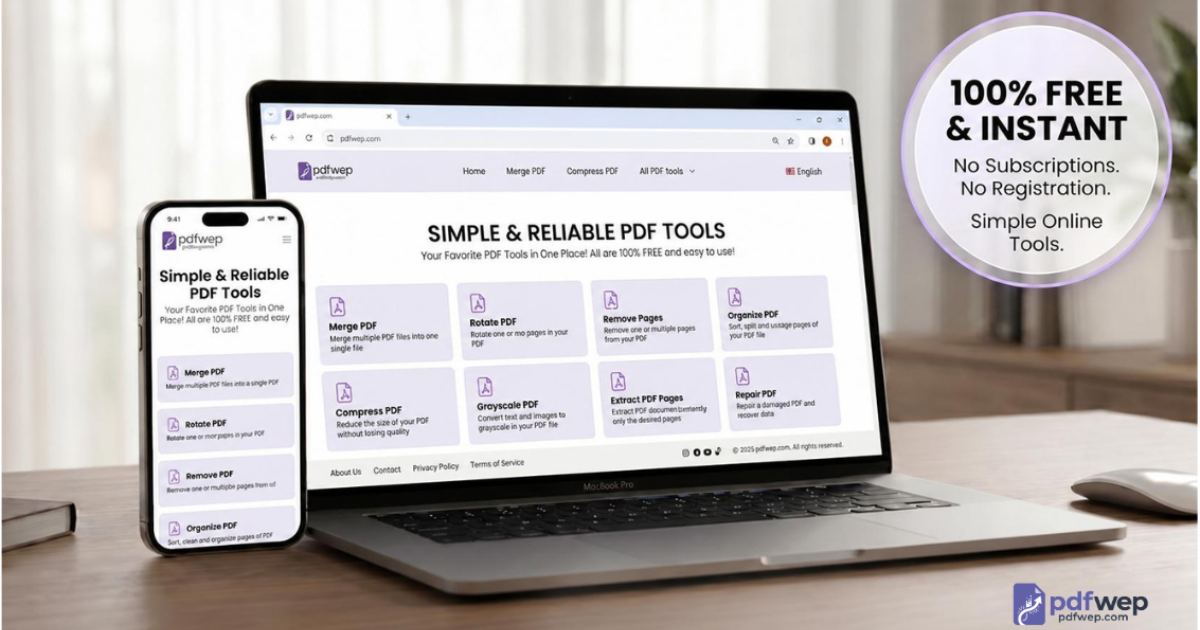
For years, the market has been dominated by heavyweight software ecosystems that require desktop installations, heavy system resources, and costly recurring subscriptions. But a significant shift is occurring. Users are experiencing “subscription fatigue,” leading to the rise of streamlined, web-based micro-tools that prioritize instant accessibility, speed, and strict data privacy. A prime example of this new wave of lean utility design is pdfwep, a platform engineered to deliver essential document modifications entirely in the browser, completely free of charge.
The Hidden Cost of Subscription Creep in Essential Utilities
Every digital entrepreneur and remote worker understands the annoyance of subscription creep. You need to perform a simple, quick task—such as merging three project reports into a single file or compressing a heavy design presentation to fit an email attachment limit—only to find that every major web utility demands your email address, forces a registration process, or locks the download button behind a premium paywall.
This creates immense administrative friction. It slows down workflows and exposes user data to unnecessary tracking. The core philosophy behind platforms like pdfwep is to eliminate this friction entirely. By offering comprehensive free online PDF tools with no subscription models and no registration barriers, creators can execute critical file adjustments in seconds and immediately return to their primary development goals.
Maximizing Digital Agility Through Dedicated Document Suites
Optimizing your file management isn’t just about saving a few dollars; it is about building an agile digital workflow. When utilizing streamlined web-based frameworks, professionals can enhance their operational output in three key areas:
1. Unified Presentation via Strategic Merging
Sending a client or investor a scattered thread of separate documents looks unorganized. Combining proposals, financial spreadsheets, and visual mockups into a single, cohesive PDF ensures a professional, polished presentation that is easy to navigate on any device.
2. Seamless Data Transmission via Intelligent Compression
High-resolution graphics and media-rich layouts can easily inflate file sizes, causing them to fail when sent via email, Slack, or WhatsApp. Utilizing advanced cloud compression reduces heavy documents into light, agile files while preserving the crisp typographic clarity required for professional reading.
3. Complete Structural Agility
Business materials are dynamic and constantly updating. Having the ability to remove outdated pages from an operational manual, rotate misaligned document scans on the fly, or quickly re-organize the layout sequence gives independent operators the flexibility they need to keep their materials accurate and up to date.
Security and Speed: The Pillars of Modern Web Utilities
The greatest concern users face when utilizing cloud-based document utilities is data security. In an era of strict data regulations, uploading sensitive financial contracts or legal documents to unverified web platforms is a high risk.
To address this, modern platforms leverage browser-first processing and strict server-purging protocols. When a document is processed on pdfwep, the file is handled with maximum optimization and completely erased from the secure cloud infrastructure shortly after execution. This dual commitment to maximum speed and uncompromised privacy represents the future of web utility architecture.
As digital workspaces continue to decentralize, the tools we use must become lighter, faster, and more respectful of user autonomy. By embracing lean, value-first utilities, independent creators and businesses can eliminate administrative bottlenecks and focus entirely on building their core products.