Key Takeaways
- SD-WAN decouples control mechanisms from hardware, increasing agility and network performance.
- It cuts connectivity costs and improves application delivery by utilizing broadband and LTE networks.
- Streamlined cloud integration supports hybrid and multi-cloud strategies, which are essential for digital evolution.
- Built-in advanced security features provide proactive defense in dynamic enterprise environments.
In the era of digital acceleration, enterprises are pressured to upgrade their connectivity strategies to meet evolving business demands. Software-Defined Wide Area Networking (SD-WAN) is at the forefront of this change, enabling organizations to steer their networks into the future with enhanced performance, flexibility, and security. As more companies explore modern solutions, SD-WAN companies have emerged as key partners in making digital transformation seamless and effective.
The move to SD-WAN is not just a technological upgrade but a foundational step towards aligning IT infrastructure with core business goals. SD-WAN decouples network management from hardware, enabling a scalable, cloud-ready approach that supports agility and efficiency. With this capability, enterprises can maximize the value of their digital investments and respond faster to new challenges.
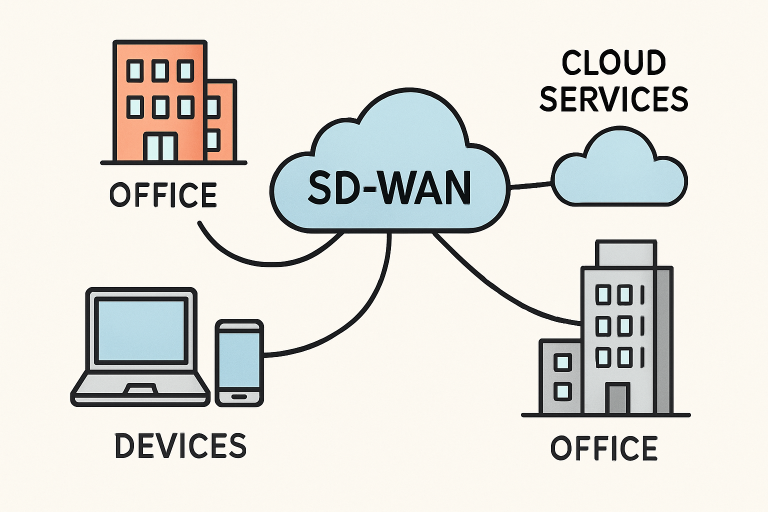
As companies become more distributed and reliant on digital tools, the challenges of network complexity and reliability grow. SD-WAN provides a consolidated, software-driven approach that empowers IT teams to manage networks spanning multiple sites and cloud services with minimal manual intervention. This simplification is invaluable for organizations battling with legacy systems and fragmented connectivity.
Modern SD-WAN solutions are designed to support enterprises leveraging cloud computing, edge computing, and mobile workforces. By eliminating the barriers of traditional WAN architectures, organizations can innovate, scale, and secure their data and applications more effectively. For perspectives on global trends impacting IT infrastructure, refer to resources from McKinsey & Company.
Enhancing Network Agility and Performance
Legacy architectures often pose operational bottlenecks due to rigid configurations and hardware dependencies. SD-WAN counters these limitations by centralizing control in a management portal that orchestrates real-time updates, monitoring, and policy enforcement. This allows for rapid provisioning of new branches, rolling out new applications, and responding to shifts in user or traffic patterns, all without extensive site visits or manual configuration.
Additionally, SD-WAN offers advanced analytics and reporting tools that give network administrators actionable insights into performance trends and emerging issues. These real-time diagnostics help IT teams optimize the user experience by proactively identifying bottlenecks or security threats, adjusting routing policies, and ensuring application availability. With such granular visibility, organizations can make data-driven decisions to align network behavior with dynamic business requirements, a crucial step for supporting mission-critical operations in highly competitive markets.
Cost-Effective Connectivity Solutions
Affordability is a key driver of SD-WAN adoption. Traditional Multi-Protocol Label Switching (MPLS) circuits are not only costly but also slow to deploy and maintain. With SD-WAN, enterprises can confidently introduce cost-effective broadband and LTE connections, striking a balance between performance and budget. Intelligent traffic steering enables organizations to allocate premium circuits to mission-critical applications while leveraging lower-cost links for routine workloads, significantly lowering the total cost of ownership.
By integrating a variety of transport options, SD-WAN supports network diversity and resilience, enabling enterprises to avoid costly downtime by quickly rerouting traffic in the event of disruptions on a particular link. Furthermore, the scalability of SD-WAN enables new locations or users to be added without major capital investments, making it an attractive choice for both established corporations and rapidly growing businesses. These operational efficiencies directly improve profit margins and enable businesses to redirect IT budgets toward innovation and strategic initiatives.
Seamless Cloud Integration
The surge in cloud adoption demands direct, secure, and optimized access to cloud services and SaaS applications. SD-WAN provides cloud on-ramp capabilities, enabling traffic to bypass data center bottlenecks and access applications hosted in public or private clouds with improved speed and reliability. This adaptability supports hybrid and multi-cloud environments underpinning digital transformation initiatives across industries. For a broader understanding of the cloud’s impact on businesses, visit CIO.com.
Additionally, cloud-centric SD-WAN architectures facilitate application-aware routing, which recognizes and prioritizes traffic for critical cloud services over other, less time-sensitive connections. This is particularly beneficial for organizations with remote branches or a distributed workforce that rely heavily on SaaS platforms such as Microsoft 365, Salesforce, or Google Workspace. These capabilities help enhance user productivity, reduce latency issues, and ensure business continuity, even as enterprise IT landscapes become more fragmented and cloud-dependent.
Robust Security Features
As attack surfaces expand in distributed networks, security remains central to SD-WAN’s value proposition. Most SD-WAN solutions incorporate next-generation firewalls, end-to-end encryption, and zero-trust access policies directly within the platform. These integrated safeguards ensure that sensitive data is protected regardless of where or how users connect, simplifying compliance and risk management in complex digital environments.
In addition, many SD-WAN vendors are now embedding advanced cybersecurity tools powered by artificial intelligence and machine learning to detect anomalies and enforce security policies automatically across the entire network. This proactive threat mitigation ensures businesses are equipped to respond to sophisticated attacks without compromising performance. Regulatory compliance is also streamlined, as organizations can implement consistent, auditable security protocols enterprise-wide, ensuring compliance with industry-specific data protection obligations.
Real-World Applications
One example involves a European industrial manufacturer that accelerated its M&A activities by deploying SD-WAN. The organization streamlined the integration of newly acquired branches, secured all endpoints, and ensured consistent performance during migration to a cloud-first model. SD-WAN enabled this transformation by replacing legacy hardware with flexible, centrally managed overlays, removing integration barriers, and providing the scalability necessary for future expansions.
SD-WAN also benefits organizations in the healthcare, retail, and financial sectors, where a secure, reliable, and compliant communication infrastructure is essential. From supporting telemedicine initiatives and secure payment systems to enabling omnichannel retail strategies, SD-WAN’s adaptability ensures industry players can maintain high service standards across increasingly digital customer journeys. By simplifying network management and reducing operational risks, SD-WAN empowers organizations to focus on innovation and core business growth rather than network maintenance.
Future Outlook
The global SD-WAN market is projected to continue its robust expansion, especially as enterprises intensify digital transformation strategies and require more secure, resilient, and efficient network solutions. The evolution of SD-WAN will likely intersect with advances in artificial intelligence and automation, promising even greater network insights and automated responsiveness for enterprise IT leaders.
Emerging trends such as secure access service edge (SASE) and the integration of network-as-a-service (NaaS) models are expected further to amplify SD-WAN’s benefits in the coming years. These developments are set to offer organizations unprecedented levels of flexibility, security, and operational simplicity, paving the way for smarter, more responsive enterprise connectivity landscapes. As the digital landscape continues to evolve, agile, software-centric networking will be a key enabler of long-term business transformation.
Conclusion
SD-WAN is rapidly becoming foundational for modern enterprises aiming to improve agility, reduce operational costs, and safeguard their expanding digital footprint. By enabling smarter, software-driven network architectures, SD-WAN equips businesses to face future challenges and seize opportunities in an increasingly complex digital ecosystem.
Enterprises that invest in SD-WAN today are better equipped for tomorrow’s demands, embracing digital transformation not as a one-time shift but as an ongoing journey toward enhanced competitiveness, customer satisfaction, and sustainable growth. Organizations looking to maximize the impact of their digital initiatives should evaluate SD-WAN as a cornerstone technology, leveraging its full suite of benefits to drive innovation and secure operational success well into the future.