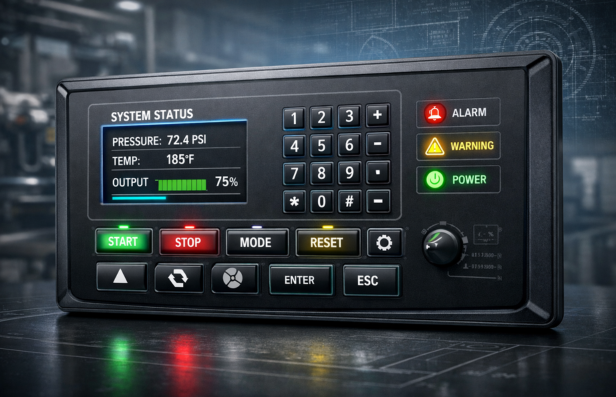
Human Machine Interface systems serve as the control layer between operators and machines. In industrial, medical, transportation, and laboratory environments, interface clarity and durability directly influence safety, efficiency, and usability.
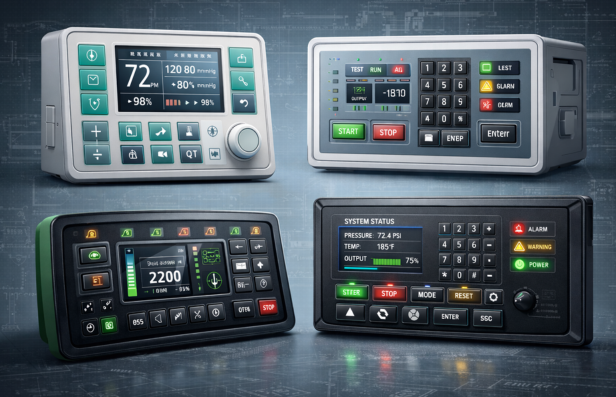
Graphic overlays play a critical role in optimizing Human Machine Interface performance. While often perceived as aesthetic elements, graphic overlays are engineered components that improve visibility, durability, environmental protection, and user interaction reliability.
In high-demand environments, interface failure is not just inconvenient. It can compromise productivity and safety. Properly designed graphic overlays enhance both functional performance and user experience.
What Is a Graphic Overlay?
A graphic overlay is the top printed layer of a control interface that provides visual communication, environmental protection, and user interaction guidance.
It typically includes:
- Printed symbols and legends
- Branding and color coding
- Transparent display windows
- Button outlines
- Protective surface coatings
Graphic overlays are commonly integrated into membrane switches and control panels, forming the visible and tactile interface surface.
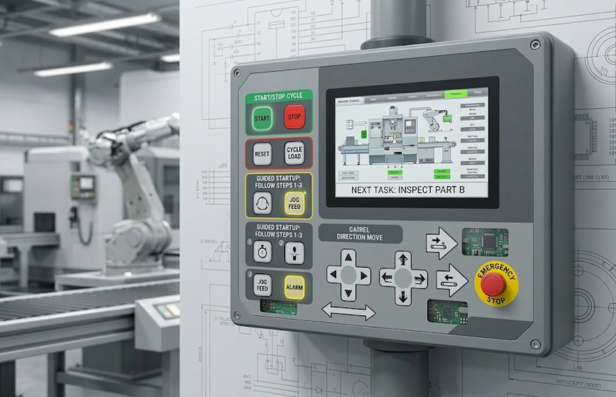
The Role of Graphic Overlays in Human-Machine Interface Systems
In an HMI system, clarity and precision are essential. Operators rely on visual cues to perform tasks quickly and accurately.
Graphic overlays improve Human Machine Interface performance by:
- Enhancing visual clarity
- Protecting internal circuitry
- Guiding user interaction
- Improving durability
- Supporting environmental sealing
Rather than being decorative elements, overlays serve as engineered interface layers.
Visual Clarity and Operator Accuracy
In high-reliability environments, labeling precision reduces user error.
Graphic overlays improve visibility through:
- High-contrast color schemes
- UV stable inks
- Consistent iconography
- Backlit compatibility
- Glare reduction coatings
Clear legends and well-defined button zones allow operators to identify controls quickly.
Poor labeling increases cognitive load. Optimized overlays reduce hesitation and improve operational speed.
Environmental Protection and Surface Durability
Industrial interfaces are exposed to harsh conditions. Overlays act as the first line of defense.
They can be engineered to resist:
- Moisture and humidity
- Dust and airborne particles
- Chemical exposure
- Abrasion and wear
- UV degradation
Protective coatings, such as hard coats, enhance scratch resistance. Material selection, such as polyester or polycarbonate, influences durability and optical clarity.
By sealing the interface surface, graphic overlays protect internal HMI electronics from contamination.
Tactile Guidance and User Interaction
Graphic overlays can improve physical interaction quality.
Tactile features may include:
- Embossed key areas
- Textured surfaces
- Selective gloss or matte finishes
- Integrated metal domes for feedback
These features improve finger positioning and actuation confidence.
In industrial environments where operators may wear gloves, tactile guidance becomes even more important.
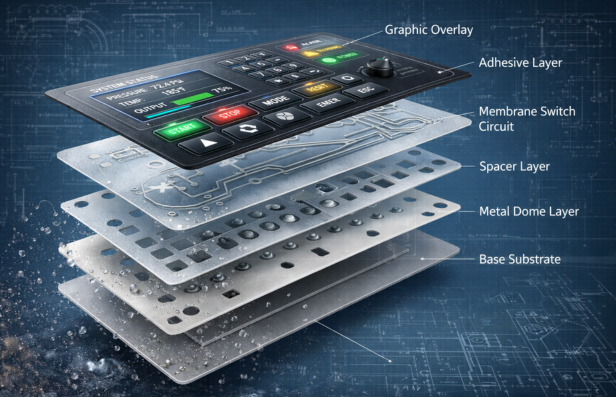
Integration with Membrane Switch Technology
Graphic overlays are frequently integrated with membrane switches to form a complete interface system.
Benefits of this integration include:
- Unified surface design
- Reduced part count
- Improved sealing
- Simplified assembly
- Enhanced electrical reliability
Because the overlay and circuit layers are designed together, alignment and functionality are optimized from the start.
This integrated approach supports scalable manufacturing and long-term performance consistency.
Backlighting and Display Optimization
Modern HMI systems often require visibility in low-light environments.
Graphic overlays support backlighting performance through:
- Light diffusion layers
- Transparent display windows
- Controlled opacity regions
- LED-compatible ink systems
Proper light management ensures:
- Even illumination
- Minimal light bleed
- Clear readability
Backlit overlays improve safety in industrial equipment, medical devices, and transportation systems.
Design Engineering Considerations
Optimizing graphic overlays for HMI performance requires engineering discipline.
Critical design factors include:
- Material selection based on environmental exposure
- Ink compatibility with substrates
- Adhesive selection for long-term bonding
- Dimensional stability under temperature changes
- Optical clarity for display windows
- Surface finish selection for glare control
Overlay thickness must balance flexibility with durability. Excess rigidity can affect membrane switch actuation performance.
Reliability in High-Performance Applications
In aerospace, medical, and industrial systems, interface reliability is essential.
Graphic overlays improve system reliability by:
- Protecting internal circuits
- Reducing contamination risk
- Improving operator accuracy
- Supporting IP-rated enclosure designs
- Maintaining legibility over long lifecycle periods
Overlays that fade, crack, or delaminate can compromise usability. High-quality materials and manufacturing processes prevent these failures.
In healthcare and medical device environments, reliable interface surfaces are especially critical because operators depend on clear and durable HMIs for patient monitoring and device control. Learn more about how HMI technology is transforming modern healthcare.
Comparison with Alternative Interface Surfaces
Some systems use direct printing on rigid panels or glass surfaces. However, graphic overlays offer unique advantages.
Compared to direct panel printing:
- Overlays provide replaceable interface layers
- Offer enhanced sealing
- Improve tactile customization
Compared to glass interfaces:
- Overlays are lighter
- More impact-resistant
- Easier to customize
- More cost-effective for industrial use
For many industrial systems, engineered overlays deliver a better balance between durability and usability.
Why Graphic Overlays Remain Critical in Modern Industrial Design
Industrial design trends focus on integration, clarity, and reliability.
Graphic overlays support these goals by:
- Enhancing Human-Machine Interface performance
- Supporting environmental resistance
- Improving operator efficiency
- Enabling scalable production
- Integrating seamlessly with membrane switch assemblies
As machinery becomes more advanced, the need for intuitive and durable interface surfaces continues to grow.
Graphic overlays are not optional aesthetic layers. They are engineered interface components that directly influence performance, safety, and user experience.
Frequently Asked Questions (FAQs)
Q. What is the purpose of a graphic overlay in an HMI system?
A graphic overlay provides visual labeling, environmental protection, and tactile guidance for control interfaces.
Q. Are graphic overlays durable?
Yes. When engineered correctly, they resist moisture, chemicals, abrasion, and UV exposure.
Q. Can graphic overlays support backlighting?
Yes. They can be designed with light diffusion layers and transparent windows for LED backlighting.
Q. What materials are used for graphic overlays?
Common materials include polyester and polycarbonate, selected based on environmental and durability requirements.
Q. Do graphic overlays improve reliability?
Yes. By sealing and protecting internal circuits, overlays contribute to long-term system stability.