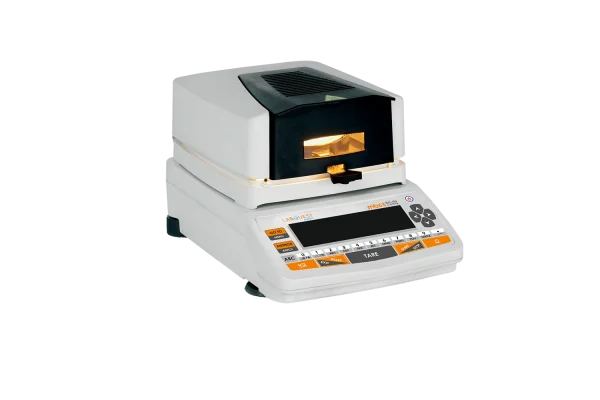
Food safety regulations require rigorous moisture content control of raw materials, processing, and end products. Too much moisture promotes microbial activity, impacts texture, and reduces shelf life, while too little may result in product deterioration and weight variability. Knowing everything there is to know about the function of a moisture analyser is crucial to meeting food industry regulations by providing accurate, repeatable moisture determination of a wide variety of food products in both small-scale and large-scale industries.
Why is Moisture Measurement Critical for Food Safety?
The moisture content of food impacts multiple factors, which include but are not limited to:
- Microbial Contamination: Excess moisture supports bacteria, yeast, and mould growth, increasing foodborne illness risks.
- Shelf Life & Stability: Accurate moisture control extends product freshness and prevents spoilage.
- Textural Consistency: Ensures uniform product texture in baked goods, dairy, and snacks.
- Packaging & Weight Compliance: Adhering to regulatory weight requirements prevents legal penalties.
- Processing Efficiency: Optimised moisture content helps in drying, mixing, and thermal processing efficiency.
Regulatory agencies such as FSSAI, FDA, and EFSA impose strict limits on moisture, which necessitates industries to embrace moisture analysers for stable compliance and quality assurance.
Moisture Analysers: How They Work
A moisture analyser from Borosil Scientific, for example, uses the loss-on-drying (LOD) technique, wherein the equipment weighs a sample, heats it up, and measures moisture loss according to the difference in weight. The exact steps through which it does that are as follows:
Key Process Steps:
- Sample Preparation: A pre-weighed sample (e.g., dairy, grains, processed food) is placed in the analyser.
- Halogen Heating: Controlled halogen drying technology ensures uniform moisture removal.
- Real-Time Monitoring: The graphical LED display allows users to track moisture content changes.
- Auto-Shutdown: Once the sample reaches the target dryness level, the analyser halts the process.
- Data Storage & Export: Test results are stored for compliance documentation and analysis.
Comparison Between Moisture Analyser vs Traditional Oven Drying
| Feature | Moisture Analyser | Oven Drying Method |
| Time Efficiency | Analysis in minutes | Requires hours for drying |
| Accuracy | ±0.10% repeatability | Prone to manual errors |
| Ease of Use | Automated operation | Labour-intensive |
| Data Storage | 1000 results stored | No automated record-keeping |
| Energy Efficiency | Auto shut-off saves energy | Continuous heating required |
Industry Applications of Moisture Analysers
1. Dairy Industry
- Provides compliance with moisture limits in milk powder, cheese, and butter.
- Maintains consistency in texture and taste.
- Prevents bacterial contamination due to excess moisture.
2. Processed & Packaged Foods
- Moisture consistency prevents textural defects in snacks, baked goods, and cereals.
- Helps maintain packaged weight accuracy.
- Offers extended shelf life stability.
3. Meat & Poultry Processing
- Determines fat-to-moisture ratio for compliance.
- Controls moisture levels to prevent microbial contamination.
- Supports quality assurance in frozen meat storage.
4. Beverage Industry
- Provides solubility control in instant coffee, tea, and powdered beverages.
- Prevents lumping or moisture-induced degradation.
- Maintains consistent flavour profiles.
5. Grains, Cereals, & Oil Seeds
- Ensures compliance with export moisture limits.
- Prevents mould formation in bulk grain storage.
- Optimises pricing decisions based on moisture content.
Key Features of a High-Performance Moisture Analyser
Some of the most common features of a high-performance moisture analyser are as follows:
1. Halogen Heating for Rapid, Even Drying
- Reduces drying time compared to infrared or convection ovens.
- Ensures uniform moisture removal for accurate results.
2. Programmable Drying Control
- Temperature ranges 30°C to 175°C, adjustable in 1°C increments.
- Auto shut-off prevents over-drying and sample degradation.
3. High-Precision Weighing System
- Max sample weight: 60g
- Readability: 0.001g
- Provides ultra-precise moisture quantification for food applications.
4. Advanced User Interface & Data Logging
- Graphical display with LED Backlight
- Memory storage for 40 methods and 1000 test results.
- GLP/GMP-compliant print format ensures regulatory traceability.
5. Connectivity & Export Features
- USB & Ethernet ports allow seamless data transfer.
- Easy access to printer for quick printing
Best Practices for Using a Moisture Analyser
Sample Preparation & Handling
- Ensure uniform sample distribution on the heating plate.
- Use pre-determined sample weights to maintain accuracy.
Calibration & Verification
- Regularly calibrate weighing and heating components.
- Use certified reference materials for standardisation.
Cleaning & Maintenance
- Wipe down the heating chamber to prevent cross-contamination.
- Regularly check and replace worn seals and heating elements.
Data Logging & Compliance
- Store batch-wise moisture records for traceability.
- Print test results to comply with audit requirements.
Conclusion
A moisture analyser is an important piece of equipment in food safety that maintains regulatory compliance, product consistency, and microbial risk reduction. With halogen heating technology, computerised data logging, and high-precision weighing, the moisture analysers from leading brands like Borosil Scientific surpass conventional drying technology in speed and accuracy. Sectors demanding real-time control of moisture, like dairy, meat, grains, beverages, and processed foods, gain substantially through these sophisticated solutions for moisture analysis.
Investing in a high-performance moisture analyser assures better food quality, maximised processing, and longer product shelf life while reducing waste and regulatory non-compliance risks. With increasingly stringent food industry standards, embracing advanced moisture analysis technology is crucial to delivering consistent, accurate, and reproducible results.