
Restaurant owners today face a pressing dilemma: how to manage operational costs while meeting growing customer expectations for environmental responsibility. Single-use tableware remains essential for many food service operations, but the traditional plastic options clash with sustainability values that increasingly influence dining choices. Wholesale purchasing presents a compelling solution to the affordability challenge, offering significant per-unit savings that can transform budget management. Yet finding suppliers who deliver genuinely eco-friendly disposable tableware in bulk quantities, at prices that make business sense, proves surprisingly difficult. Many restaurant operators struggle to identify trustworthy sources that won’t force them to choose between their bottom line and their environmental commitments. This article provides a practical roadmap for navigating the wholesale market for sustainable disposable tableware. You’ll discover how to identify reliable suppliers, evaluate product quality and environmental credentials, and secure bulk purchasing agreements that support both your financial goals and your commitment to reducing environmental impact.
Why Wholesale is the Smart Choice for Disposable Tableware
Purchasing disposable tableware wholesale fundamentally transforms your restaurant’s cost structure. The per-unit savings become substantial when ordering in bulk—often reducing costs by 30-50% compared to retail purchasing. A case of 1,000 compostable plates might cost $0.12 per unit wholesale versus $0.25 retail, translating to $130 in savings on a single item. Over a year of operations, these margins compound dramatically across plates, cups, cutlery, and containers.

Beyond immediate cost reduction, wholesale buying provides critical inventory stability. Running out of essential disposables during peak service hours creates operational chaos and forces emergency purchases at premium prices. Maintaining adequate stock through planned wholesale orders eliminates this risk entirely. You gain predictable supply chains and can focus on service rather than scrambling for last-minute solutions.
Consistency represents another overlooked advantage. When you establish a relationship with a single wholesale supplier, every shipment delivers identical products. Your customers experience the same quality plate whether they visit in January or July. This uniformity extends to your brand presentation—if you’ve invested in custom-printed items, wholesale ordering ensures your branding remains consistent across thousands of units. Staff training becomes simpler too, as employees work with familiar products rather than adapting to whatever substitutes were available at retail stores. The operational efficiency gained through wholesale purchasing creates a foundation for sustainable growth while keeping your environmental commitments financially viable.
Navigating the World of Eco-Friendly Disposable Tableware
Eco-friendly tableware earns its designation through materials that break down naturally or derive from renewable resources, minimizing long-term environmental impact. Unlike conventional plastics that persist for centuries, these alternatives integrate back into natural systems within months under proper conditions. The distinction matters because your purchasing decisions directly influence waste streams and environmental outcomes.
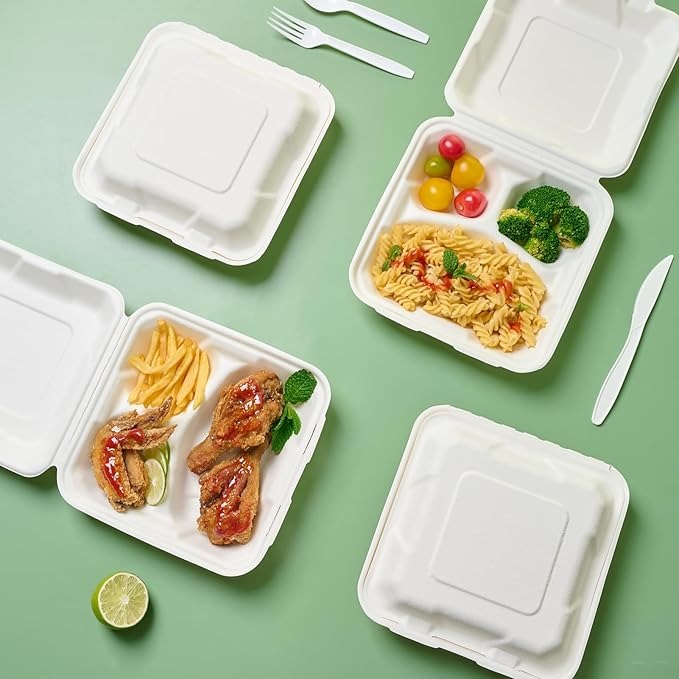
Compostable materials lead the sustainable category. PLA (polylactic acid) comes from fermented plant starches like corn, creating clear cups and containers that resemble traditional plastic but decompose in commercial composting facilities. Bagasse, the fibrous residue left after sugarcane processing, transforms into sturdy plates and bowls with natural heat resistance. Palm leaf products use naturally fallen sheaths, requiring no trees to be cut, and deliver an attractive rustic aesthetic. Biodegradable options break down through natural processes but may take longer than compostables, while recycled-content items give second life to existing materials.
Certifications provide essential verification. BPI (Biodegradable Products Institute) certification confirms products meet ASTM D6400 standards for commercial composting. These third-party validations prevent greenwashing and ensure your investment delivers genuine environmental benefits. Without proper certification, “eco-friendly” claims may prove meaningless.
Durability concerns often deter restaurant owners from making the switch, but modern eco-friendly tableware performs remarkably well. Quality bagasse plates handle hot, greasy foods without softening, while PLA cups maintain structural integrity with cold beverages for hours. Heat resistance varies by material—bagasse excels with hot items up to 200°F, while PLA works best for cold applications. Matching material to use case ensures performance meets expectations.

Choosing sustainable disposables strengthens your market position. Today’s diners actively seek restaurants demonstrating environmental responsibility, with surveys showing 73% of consumers willing to pay more for sustainable packaging. Your tableware becomes a visible statement of values, differentiating your establishment and building customer loyalty. This alignment between operations and consumer expectations transforms a practical necessity into a competitive advantage.
Material Deep Dive: From PLA to Bagasse
PLA excels for cold beverages, salads, and desserts, offering crystal clarity and smooth surfaces. Its limitations include poor heat tolerance—hot liquids above 120°F cause warping—and it requires commercial composting facilities rather than backyard composting. The material costs moderately, typically 15-25% more than conventional plastic wholesale.
Bagasse delivers exceptional versatility, handling both hot and cold foods with grease resistance that outperforms paper products. Its fibrous texture provides structural strength for heavy entrees and saucy dishes. The natural tan color appeals to rustic or health-focused branding. Bagasse composts in both commercial and home systems, offering disposal flexibility. Cost-wise, it sits in the mid-range, often price-competitive with quality paper goods.
Palm leaf products bring unique visual appeal with their natural grain patterns, making them ideal for upscale presentations or special events. They handle heat exceptionally well and work across food types, though their irregular surfaces may not suit all applications. Limited availability can affect pricing and lead times, making them better suited for specialty use rather than everyday operations. Bamboo alternatives offer similar aesthetics with more consistent supply chains, providing strength that rivals traditional plastics while composting readily. Each material serves specific operational needs—your menu, service style, and customer base should guide selection.
Your Step-by-Step Guide to Sourcing Bulk Disposable Tableware
Begin by calculating your actual volume requirements. Track your current usage for two weeks across all disposable items—plates, cups, cutlery, containers. Multiply by 26 to project annual needs, then add 15% buffer for growth and seasonal spikes. This data becomes your negotiating foundation. Simultaneously, establish your budget parameters by determining what percentage of revenue you can allocate to disposables, typically 2-4% for most operations.
Research suppliers through multiple channels. Online B2B marketplaces like Alibaba and ThomasNet connect you with manufacturers globally, while regional distributors offer faster shipping and smaller MOQs. Search for “compostable tableware wholesale” combined with your location for local options. Examine each supplier’s certifications, years in business, and customer reviews. Suppliers like Jolly Chef, for instance, offer BPI-certified product lines with transparent sourcing information that simplifies the vetting process. Contact 5-7 candidates to compare offerings.
Request samples before committing to bulk orders. Test products under real service conditions—load plates with your heaviest, hottest dishes, fill cups with beverages at service temperature, and leave them for the duration of a typical meal. Evaluate structural integrity, grease resistance, and any warping. Have staff handle samples to assess practicality during busy service.
Clarify MOQ requirements and logistics details. Minimum orders vary dramatically—some suppliers require full container loads (20,000+ units), while distributors may accept pallet quantities (5,000 units). Calculate your storage capacity before committing. Discuss shipping costs, delivery schedules, and whether freight is included. Understand lead times, typically 2-4 weeks domestic, 6-10 weeks international.
Build relationships by starting with a modest trial order, then scaling up after confirming quality and reliability. Communicate regularly about your needs and growth plans. Reliable suppliers become partners who alert you to material shortages, offer early access to new products, and accommodate urgent requests when necessary.
Key Questions to Ask Your Wholesale Supplier
Where do raw materials originate, and what certifications verify their eco-friendly claims? Request documentation for BPI, FSC, or other relevant certifications. What are typical lead times from order to delivery, and how do they handle delays? Understanding their supply chain prevents service disruptions. Do they offer customization options like printing your logo, and what are associated costs and MOQs? Can you mix different products within a single order to meet MOQ thresholds while diversifying your inventory? What is their policy on defective products—will they replace damaged goods, and who covers return shipping? How do payment terms work—net 30, deposits required, or payment on delivery? Do they provide volume discounts at specific quantity tiers, and what are those breakpoints? Finally, ask for references from similar-sized restaurants who can speak to their experience with reliability and service quality.
Balancing Affordability with Quality in Your Purchase
Securing the best price requires strategic negotiation rather than simply accepting quoted rates. When placing orders above standard MOQs, request tiered pricing—suppliers often reduce per-unit costs at 10,000, 25,000, and 50,000 unit thresholds. Committing to regular delivery schedules, such as monthly shipments over six months, provides suppliers with predictable revenue they’ll reward with discounts of 5-15%. Mixed pallets let you meet MOQ requirements while diversifying inventory, combining plates, cups, and cutlery in a single order rather than overbuying individual items.
The cheapest option frequently becomes the most expensive through hidden costs. Flimsy plates that collapse under hot food generate customer complaints and damage your reputation. Products lacking genuine certifications may fail composting requirements, forcing disposal in regular waste streams and negating environmental claims. Unreliable suppliers cause stockouts that force emergency retail purchases at triple the cost. Calculate Total Cost of Ownership by factoring in product failure rates, customer satisfaction impact, and alignment with your sustainability messaging.
Quality eco-friendly disposables enhance the dining experience, making customers perceive your food as premium and your business as responsible. This perception justifies higher menu prices and builds loyalty that drives repeat visits. The modest premium for certified compostable tableware—typically $0.02-0.04 per unit over conventional options—becomes insignificant when weighed against increased customer lifetime value and reduced reputational risk. Affordable doesn’t mean cheap; it means finding the optimal intersection of cost, performance, and values that supports sustainable profitability.
Making Sustainable Wholesale Purchasing Work for Your Business
Wholesale purchasing transforms eco-friendly disposable tableware from a premium expense into an operationally sound decision. The substantial per-unit savings—often 30-50% below retail—make sustainable choices financially accessible while maintaining the quality your customers expect. Understanding material differences between PLA, bagasse, and alternative options ensures you select products that perform reliably under your specific service conditions. Following a systematic sourcing process—calculating volume needs, vetting suppliers thoroughly, testing samples rigorously, and negotiating strategically—protects you from costly mistakes and establishes partnerships that support long-term success. The investment in certified eco-friendly disposables extends beyond immediate cost considerations; it strengthens your brand reputation, attracts environmentally conscious diners, and positions your restaurant as a responsible community member. As consumer expectations continue shifting toward sustainability, your choice of tableware becomes a competitive differentiator rather than merely an operational necessity. By committing to affordable, eco-friendly wholesale solutions today, you build operational resilience and environmental stewardship that will define successful food service businesses tomorrow. The path forward is clear: strategic bulk purchasing makes sustainability both achievable and profitable.