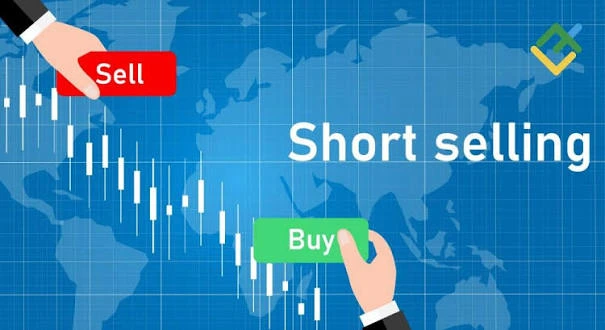
Most investors enter the stock market with the expectation that share prices will rise over time. They purchase stocks at a certain price and aim to sell them later at a higher value. However, stock market trading also offers a strategy that allows traders to potentially benefit when share prices decline. This approach is known as short selling.
Understanding what is short selling can help traders recognise different market strategies and the risks associated with them. Although short selling creates opportunities during falling markets, it requires careful planning, market knowledge, and effective risk management.
What Is Short Selling in the Stock Market?
Short selling in the stock market refers to selling shares that a trader does not own at the time of the transaction, with the expectation that their price will fall.
Unlike traditional investing, where shares are purchased first and sold later, short selling reverses this process. A trader sells shares at the current market price and aims to buy them back at a lower price.
The difference between the selling price and the repurchase price determines the trader’s profit or loss, before accounting for transaction costs.
For example, if a trader expects a company’s share price to decline from ₹500 to ₹450, they may sell the shares first and purchase them later at the reduced price.
However, if the stock price increases instead, the trader will face a loss.
How Does Short Selling Work?
Understanding how short selling works involves a few important steps.
1. Identifying a Stock
The trader identifies a stock that may experience a price decline. This expectation may be based on company performance, market trends, financial announcements, or technical indicators.
2. Selling the Shares
The trader sells the shares at the prevailing market price. In an intraday equity short sale, the trader aims to buy back the shares during the same trading session. For a delivery-based short sale, borrowing arrangements may be required.
3. Waiting for a Price Movement
After selling, the trader monitors the stock’s price. If the market moves as expected, the shares become available at a lower price.
4. Buying Back the Shares
The trader purchases the same quantity of shares to close the short position. If the buying price is lower than the selling price, the trader earns a gross profit.
5. Calculating the Profit or Loss
The final outcome depends on the price difference, trading quantity, brokerage charges, taxes, and other applicable expenses.
Example of Short Selling
Consider a trader who expects the share price of Company ABC to decline.
The shares are currently trading at ₹800 each. The trader short sells 10 shares at this price, creating a total selling value of ₹8,000.
Later, the share price falls to ₹750. The trader purchases 10 shares for ₹7,500 to close the position.
The gross profit is:
₹8,000 − ₹7,500 = ₹500
However, suppose the share price increases to ₹850 instead. The trader would need ₹8,500 to repurchase the shares, resulting in a gross loss of ₹500.
This example demonstrates how short selling trading depends on the direction of stock price movements. Actual profits or losses will also reflect applicable trading costs.
What Is the Role of Short Selling in Stock Market Trading?
Short selling serves several purposes beyond attempting to earn profits from falling share prices.
Price Discovery
Short selling allows traders to express negative views about stocks they consider overvalued. This can help market prices reflect both positive and negative information about a company.
Market Liquidity
Short sellers may contribute additional trading activity by placing sell orders. Under suitable market conditions, this can support liquidity and help other participants execute transactions.
Portfolio Hedging
Experienced investors may use short positions to reduce exposure to certain market risks. For example, an investor holding shares in a particular sector may use an appropriate short position to offset part of the potential losses during a market decline.
However, hedging does not eliminate risk and may introduce additional costs.
Trading Opportunities During Market Declines
Traditional stock investors generally benefit when their holdings increase in value. Short selling provides traders with a way to participate when they anticipate downward price movements.
This makes it a different trading approach, although it does not guarantee profitable outcomes.
What Are the Risks of Short Selling?
Despite its potential uses, short selling in stocks involves considerable risks that traders should understand.
Potentially Unlimited Losses
When an investor purchases a stock, the maximum loss is generally limited to the amount invested. In short selling, a stock’s price can theoretically continue rising without an upper limit.
As a result, potential losses on an uncovered short position are theoretically unlimited.
Sudden Price Movements
Unexpected company announcements, positive earnings results, or changes in market sentiment can cause share prices to increase rapidly.
Such movements may force short sellers to close their positions at unfavourable prices.
Short Squeeze
A short squeeze occurs when a rising stock price forces several short sellers to repurchase shares to limit their losses. This additional buying activity can push prices even higher.
Margin and Transaction Costs
Certain short-selling methods require traders to maintain margins or pay borrowing fees. Brokerage charges, taxes, and other trading expenses can also reduce overall profitability.
Liquidity and Settlement Risks
Low liquidity may make it difficult to repurchase shares at the desired price. Failure to meet applicable settlement obligations can result in additional costs or penalties.
Is Short Selling Allowed in India?
Yes, short selling in India is permitted under the framework established by the Securities and Exchange Board of India (SEBI).
Both retail and institutional investors may participate in short selling, subject to applicable regulations.
Retail traders commonly take short positions in the equity cash market through intraday trading, where the position is closed within the same trading session.
For delivery-based short selling, the Securities Lending and Borrowing (SLB) mechanism enables eligible securities to be borrowed to meet settlement obligations. Futures contracts also offer a separate method of taking short market exposure.
However, naked short selling is prohibited in India, and traders must meet their applicable delivery obligations. SEBI also specifies disclosure requirements and restrictions for institutional investors.
Traders should review the latest exchange regulations, eligible securities, and their broker’s trading policies before participating.
Is Short Selling Suitable for Beginners?
Short selling requires a strong understanding of market movements, trading rules, and risk management.
Beginners may find it challenging because share prices can move unexpectedly, and losses may exceed the amount initially committed to a position.
Before considering short selling, traders should understand the trading mechanism, applicable margin requirements, transaction costs, and the consequences of failing to close a position.
A disciplined approach and awareness of the potential risks are essential.
Conclusion
Understanding what is short selling provides a broader perspective on how stock market trading operates. Unlike conventional investing, short selling allows traders to take positions based on expectations of falling share prices.
It can contribute to price discovery, market liquidity, and portfolio risk management. However, significant price fluctuations, potentially unlimited losses, and settlement requirements make it a high-risk trading strategy.
Traders should carefully evaluate their financial position, market knowledge, and risk tolerance before using short-selling strategies.