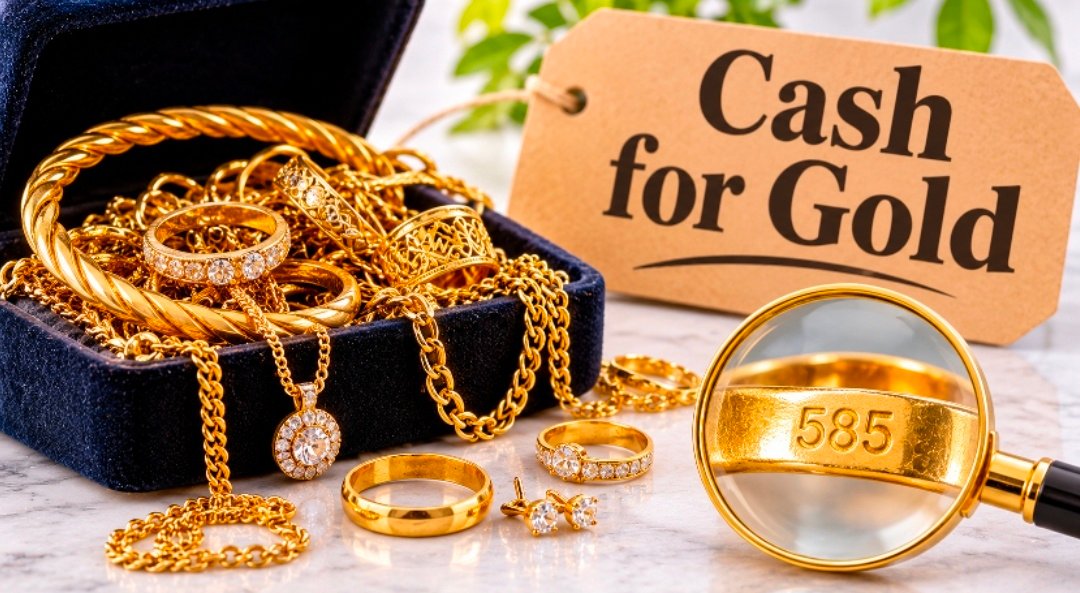
This is the basic principle behind cash for gold. Instead of assessing jewellery primarily for its design or resale appeal, the focus is generally on the precious metal contained within each piece.
Old Jewellery Doesn’t Mean Worthless Jewellery
Gold doesn’t suddenly lose its precious metal content because a piece of jewellery becomes old or damaged.
Fashion can change dramatically. A necklace that was popular in the 1980s may have little appeal today, but if it contains 18-carat gold, that gold remains present regardless of the design.
The same applies to broken jewellery. Missing clasps, bent rings and snapped chains may make jewellery difficult or impossible to wear, but these problems don’t necessarily matter when the gold is destined to be melted and refined.
This is one reason cash for gold can be particularly relevant for jewellery that would otherwise remain unused in a drawer.
What Do Those Numbers on Jewellery Mean?
Look closely at an old piece of jewellery and you may discover a tiny number stamped somewhere inconspicuous.
A marking of 375 generally indicates 9-carat gold, while 585 is associated with 14-carat and 750 with 18-carat gold. These numbers describe how much pure gold is contained within the metal.
Hallmarks provide useful information, but they aren’t the only consideration. Jewellery can be tested to establish whether it is gold and determine its purity.
For anyone curious about the history and purpose of these tiny markings, the Goldsmiths’ Company Assay Office guide to hallmarking explains why precious metal jewellery has been hallmarked for centuries.
Should You Polish or Repair Jewellery First?
Generally, there is little reason to spend money repairing jewellery that you intend to sell solely for its gold content.
If a cash for gold merchant intends to melt and refine the item, polishing scratches or replacing a broken clasp doesn’t increase the amount of gold it contains.
The important factors are generally what the item is made from, its purity and how much gold it contains.
Be Careful With Valuable Gemstones
There is an important exception when jewellery contains potentially valuable stones.
Cash for gold merchants are primarily interested in the gold they can melt and refine. If you have jewellery containing a substantial diamond, sapphire, ruby, emerald or another potentially expensive gemstone, consider taking it to a jeweller first.
The complete piece or gemstone could potentially have value beyond the gold itself.
Small inexpensive stones, on the other hand, may simply be removed or excluded from the gold weight during an assessment.
Don’t Forget White and Rose Gold
When searching through old jewellery, don’t limit yourself to traditional yellow pieces.
White gold and rose gold contain gold too. Their different appearances come from the other metals used in the alloy.
The next time you clean out an old jewellery box, take another look before dismissing damaged or unfashionable pieces. Cash for gold is ultimately about the precious metal contained within jewellery, and an item doesn’t need to be beautiful, fashionable or even wearable for the gold inside it to retain value.
For more latest stories and updates, visit VA Magazine.