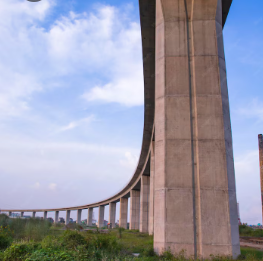
Every time you drive across a massive flyover, a suspension bridge, or an elevated metro viaduct, the concrete and steel beneath your tires are constantly in motion.
Bridges are not completely static structures. They expand under scorching summer heat, contract during freezing winters, bend under the weight of bumper-to-bumper freight traffic, and sway against powerful crosswinds. If a bridge deck were anchored rigidly to its concrete piers without room to move, these natural physical forces would crack the concrete, shear steel girders, and lead to catastrophic structural failure.
So, how do engineers let a multi-thousand-ton bridge deck shift, slide, and rotate smoothly without compromising safety?
The answer lies in a specialized engineering marvel: the pot ptfe bearing manufacturers in india . Let’s break down what these critical bridge components do, why they are indispensable in modern infrastructure, and how they keep our transport networks standing strong.
What Exactly Is a Pot-PTFE Bearing?
To understand how a Pot-PTFE bearing works, think of it as a heavy-duty mechanical joint positioned right between the top of a bridge pier (the support pillar) and the bridge superstructure (the road deck).
A standard Pot-PTFE bearing combines three core components into a single compact unit:
- The “Pot” and Elastomeric Pad: A shallow, high-strength steel cylinder (the “pot”) houses a precision-molded elastomeric rubber pad. When the bridge places vertical weight onto the pad, the rubber is trapped inside the pot under high hydrostatic pressure. In this confined state, the rubber acts almost like an incompressible liquid, absorbing massive vertical loads while allowing the bridge deck to tilt or rotate in any direction.
- The PTFE Sliding Sheet: PTFE (polytetrafluoroethylene), often recognized as Teflon, is bonded to the top surface. PTFE is famous for having one of the lowest coefficients of friction of any solid material.
- The Mirror-Polished Stainless Steel Plate: A smooth stainless steel slider glides effortlessly over the PTFE sheet, allowing the bridge deck to expand, contract, and slide horizontally with virtually zero resistance.
By combining the rotating power of a confined elastomer with the smooth sliding action of PTFE on stainless steel, the bearing manages multi-directional movement effortlessly.
Primary Types of Pot Bearings
Depending on how a bridge span is designed to move, structural engineers deploy three primary configurations:
| Bearing Configuration | Permitted Movements | Best Structural Role |
| Fixed Pot Bearing | Rotates along any axis; prevents all horizontal sliding. | Anchors the bridge deck at a fixed reference point while absorbing rotation and vertical loads. |
| Guided Sliding Pot Bearing | Rotates freely; allows sliding along one axis (longitudinal or transverse) via steel guide keys. | Accommodates thermal expansion along the bridge length while restricting side-to-side sway. |
| Free Sliding Pot Bearing | Rotates freely; allows multidirectional horizontal sliding across both axes. | Used on wide, curved bridges or seismic zones requiring unrestricted planar movement. |
Key Advantages of Pot-PTFE Bearings in Modern Infrastructure
Why do civil engineers and bridge designers consistently specify Pot-PTFE bearings over traditional mechanical roller or rocker bearings?
1. Immense Load-Bearing Capacity in a Compact Footprint
Because the internal elastomer pad is completely confined inside a rigid steel base, it cannot bulge out under extreme compression. This allows Pot-PTFE bearings to safely support thousands of tonnes of vertical force while taking up significantly less vertical space than bulky traditional steel assemblies.
2. Multi-Directional Rotation
Unlike older pin bearings that can only tilt along a single axis, the hydrostatic behavior of the confined rubber pad accommodates complex three-dimensional rotations. This makes them ideal for modern architectural bridge designs featuring curved decks, skewed alignments, and complex interchange ramps.
3. Ultra-Low Sliding Resistance
The interface between virgin PTFE sheets and mirror-finish stainless steel creates an exceptionally slick surface. As temperatures rise and fall throughout the day, the bridge deck slides silently and smoothly, preventing dangerous horizontal shear stresses from transferring down into the concrete piers.
4. Exceptional Durability and Minimal Maintenance
Corrosion-resistant steel housings, self-lubricating PTFE dimples, and elastomeric dust seals protect the internal components against rain, road salts, automotive exhaust, and debris. This gives high-grade bearings a service life of decades with minimal routine maintenance.
Real-World Applications Across Infrastructure
Pot-PTFE bearings serve as the unsung heroes across a wide variety of civil engineering sectors:
- High-Speed Rail & Metro Viaducts: Rapid acceleration and braking of heavy passenger trains generate intense longitudinal forces. Pot-PTFE bearings absorb dynamic braking shocks while keeping tracks perfectly aligned.
- Highway Flyovers & Elevated Corridors: Multi-lane city flyovers experience continuous stop-and-go traffic and massive temperature variations, requiring reliable rotational and sliding capability.
- Long-Span River & Sea Bridges: Long continuous bridges experience substantial thermal expansion over several kilometers. Free and guided sliding bearings allow spans to breathe without warping.
- Seismic-Prone Roadways: In earthquake-active regions, flexible bearing assemblies absorb sudden lateral shifts, preventing the superstructure from unseating from its piers.
Why Quality Manufacturing Standards Matter
A bridge is only as reliable as the bearings holding it up. Replacing a failed bearing requires complex hydraulic jacking of the entire road deck, an expensive, time-consuming process that snarls public traffic.
To ensure safety and reliability, established pot PTFE bearing manufacturers in India manufacture these assemblies using high-grade structural steel, certified virgin PTFE, and lab-tested elastomeric compounds. Certified fabrication adhering to strict IRC (Indian Roads Congress) and international BS/AASHTO standards ensures that every bearing can withstand severe climatic cycles, heavy axle loads, and decades of relentless continuous use.
Investing in certified, precision-engineered Pot-PTFE bearings guarantees structural longevity, low lifetime maintenance costs, and a safe, smooth journey for millions of commuters every day.