You’ve probably heard the term PRP therapy floating around — maybe from a friend, maybe scrolling through something online — and wondered what it actually means in practice. Fair question. Here’s the short version.
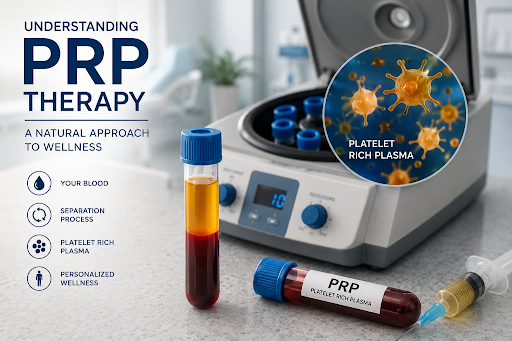
PRP is short for Platelet Rich Plasma therapy. It begins with a blood draw, nothing more involved than a standard blood test. From there, the sample gets spun in a centrifuge — a machine that separates blood into its individual components using speed alone. What’s left afterward is a plasma concentrate, rich in platelets, ready to be used in the wellness visit itself.
Why do people ask about this? Because PRP has found its way into a lot of wellness settings lately. Some people turn to it while working toward an active lifestyle. Others are focused on healthy movement or just want an approach that uses the body’s own resources rather than something synthetic. That’s really the appeal — it’s drawn from you, processed, and used on you.
Understanding the Basics of PRP
To understand what is PRP therapy, it helps to know a little about platelets. Platelets are a natural part of your blood. They play an important role in your body’s normal biological processes.
The platelet rich plasma contains a higher concentration of these platelets than regular blood. This concentrated plasma is prepared using a simple process after a small blood sample is collected.
Since the plasma comes from your own body, many people appreciate this personalized approach. It works with your body’s own biological materials instead of using synthetic substances.
How Does the PRP Process Work?
Once people understand what happens step by step, they usually feel a lot more at ease about the whole thing. Here’s what a typical visit looks like from start to finish.
Step 1: Blood Collection
It starts simply — a healthcare professional draws a small blood sample. If you’ve ever had routine bloodwork done, this will feel familiar.
Step 2: Plasma Separation
Next, that sample goes into a centrifuge. The machine spins the blood at high speed, which causes it to separate into layers, allowing the platelet rich plasma to be drawn off from the rest of the blood components.
Step 3: Preparation
From there, the medical team takes over, carefully preparing the concentrated plasma so it’s ready for use.
Step 4: Wellness Visit
Finally, the prepared PRP is used as part of the wellness procedure, tailored to the person’s specific goals and the provider’s recommendations.
What makes this appealing to a lot of people is timing — the whole thing typically happens in one scheduled appointment. No multiple trips, no long waiting periods between steps. Just one visit, start to finish.
Why Are More People Interested in PRP?
Interest in PRP has continued to grow over the past several years. People are becoming more aware of wellness options that use the body’s own natural resources.
Some of the reasons people ask what is PRP therapy include:
- It uses your own blood.
- It follows a personalized approach.
- It is commonly included in modern regenerative wellness programs.
- It can support a variety of wellness goals depending on individual needs.
- Many active adults explore it as part of their overall wellness plan.
Every person’s goals are different. A qualified healthcare provider can explain whether this option fits your individual situation.
Where Is PRP Commonly Used?
PRP is used in several areas of wellness and regenerative medicine. Depending on individual goals, healthcare providers may include it in personalized wellness plans.
Some common areas where PRP is often discussed include:
Joint Wellness
Many active adults explore PRP as part of their overall approach to maintaining comfortable movement and supporting an active lifestyle.
Hair Wellness
PRP is also widely known in hair wellness programs. Individuals experiencing thinning hair often ask about this option during consultations.
Skin Wellness
Some wellness clinics include PRP in skin focused services that support a refreshed and healthy appearance using the body’s own biological resources.
Active Lifestyle Support
Athletes and fitness enthusiasts often look for wellness options that fit into their long term health routines. PRP has become one of the topics they frequently research when learning about regenerative wellness.
Who May Consider PRP?
People come to PRP for all kinds of reasons. Some are chasing an active lifestyle and want their body performing at its best. Others are simply drawn to the idea of using their own biological material rather than something manufactured elsewhere. Because everyone’s situation looks different, sitting down with a qualified healthcare provider first is a smart move.
During that initial consultation, expect a real conversation — your health history, your day-to-day lifestyle, what you’re actually hoping to get out of this. It’s this back-and-forth that helps the provider figure out whether PRP makes sense for you specifically, rather than just assuming it’s a one-size-fits-all fix.
So if you’ve been curious about what PRP therapy actually is, the best next step isn’t more googling — it’s talking to someone who does this for a living. An experienced provider can walk you through exactly where it might fit into your broader wellness picture.
Questions to Ask During Your Consultation
Walking into your first appointment with a mental list of questions isn’t overkill — it’s just smart. And any provider worth their salt won’t just tolerate the questions, they’ll actually want you to ask them. Here’s a starting point:
- What actually happens during the appointment?
- Walk me through how the platelet rich plasma gets prepared.
- Is this really the right fit for what I want to accomplish?
- Anything I need to do beforehand — diet, medications, timing?
- What’s recovery like, and is there anything to watch for afterward?
Honestly, the confidence part isn’t complicated. It just comes down to talking — really talking — with whoever’s treating you, before things get underway.
Frequently Asked Questions
1. What is PRP therapy, in plain terms?
PRP therapy, put simply, draws on plasma rich in platelets — taken from a small sample of your own blood. That plasma gets separated out and prepared, then used during your scheduled wellness visit.
2. How exactly is the plasma prepared?
It starts with a small blood draw, which then goes into a centrifuge — a machine that spins the sample fast enough to separate the platelet rich plasma from everything else in the blood. Once separated, it’s prepped and ready for the procedure.
3. Why do people actually choose PRP?
A lot of it comes down to using your own biological material instead of something external. It also tends to appeal to people who want a plan built around their specific goals, not a generic template.
4. Do I really need a consultation first?
Yes — and it’s not just a formality. This is where a qualified provider reviews your health history, talks through what you’re hoping to achieve, and figures out whether PRP is genuinely a good fit for you.
5. Where can I go to learn more?
If you’re still curious and want real answers instead of more searching, scheduling a consultation with Premier Wellness Florida is a solid next step
Conclusion
So — PRP therapy. A blood draw, a spin in a centrifuge, and plasma that’s uniquely yours going back into your own wellness plan. That’s really it at the core.What keeps pulling people toward it isn’t the mechanics though. It’s the idea of working with your own body instead of introducing something foreign to it. Joint comfort, hair thinning, skin concerns, staying active as you get older — the reasons vary a lot, but the instinct behind them is pretty similar.
Nobody’s wellness path looks exactly like anyone else’s. Which is honestly the whole reason a real conversation with a provider matters more than another hour of reading articles like this one.If you’re still weighing whether PRP fits into your goals, Premier Wellness Florida can walk you through it directly — no more guessing required.