A recent study by the Illuminating Engineering Society found that businesses upgrading their lighting systems experienced up to a 20% increase in customer dwell time and a measurable boost in sales conversions. Yet for most business owners, lighting remains an afterthought—a utility expense rather than a strategic asset. The reality is that every commercial space faces a fundamental tension: the need to control operational costs while simultaneously creating environments that attract and retain customers. Energy bills consume a significant portion of overhead, and outdated lighting systems silently drain profits through inefficiency and frequent maintenance demands. This guide bridges that gap by offering a comprehensive approach to commercial lighting that serves both the bottom line and the customer experience. Whether you operate a warehouse relying on industrial lighting or a retail storefront seeking ambiance, the principles here apply. We’ll walk through the cost-benefit analysis of LED upgrades, including high bay solutions for large spaces, explore how lighting psychology drives purchasing behavior, and provide practical frameworks for implementation that deliver measurable business impact.
The Financial Imperative: Cost-Benefit Analysis of LED Lighting Upgrades
For business owners evaluating capital improvements, few upgrades offer the clarity of return that LED lighting provides. The financial case begins with understanding the gap between upfront costs and long-term operational savings—a gap that typically closes within 18 to 36 months depending on facility size and usage patterns. Traditional lighting systems, particularly metal halide and fluorescent fixtures common in commercial and industrial settings, consume significantly more energy per lumen of output while demanding frequent bulb replacements and ballast repairs. LED technology fundamentally changes this equation by delivering more light per watt, generating less waste heat, and operating reliably for 50,000 to 100,000 hours before replacement becomes necessary. For large commercial spaces with high ceilings—warehouses, distribution centers, big-box retail floors—LED high bay lights represent the most impactful single upgrade available, often reducing lighting-related energy consumption by 40 to 60 percent compared to legacy systems. Beyond direct energy savings, the maintenance reduction alone justifies serious consideration: fewer ladder rentals, fewer disruptions to operations, and fewer replacement parts in inventory. The structured approach below helps you move from general awareness to a specific, defensible projection of what an LED upgrade means for your facility.
Understanding LED High Bay Lights: Efficiency for Industrial and Commercial Spaces
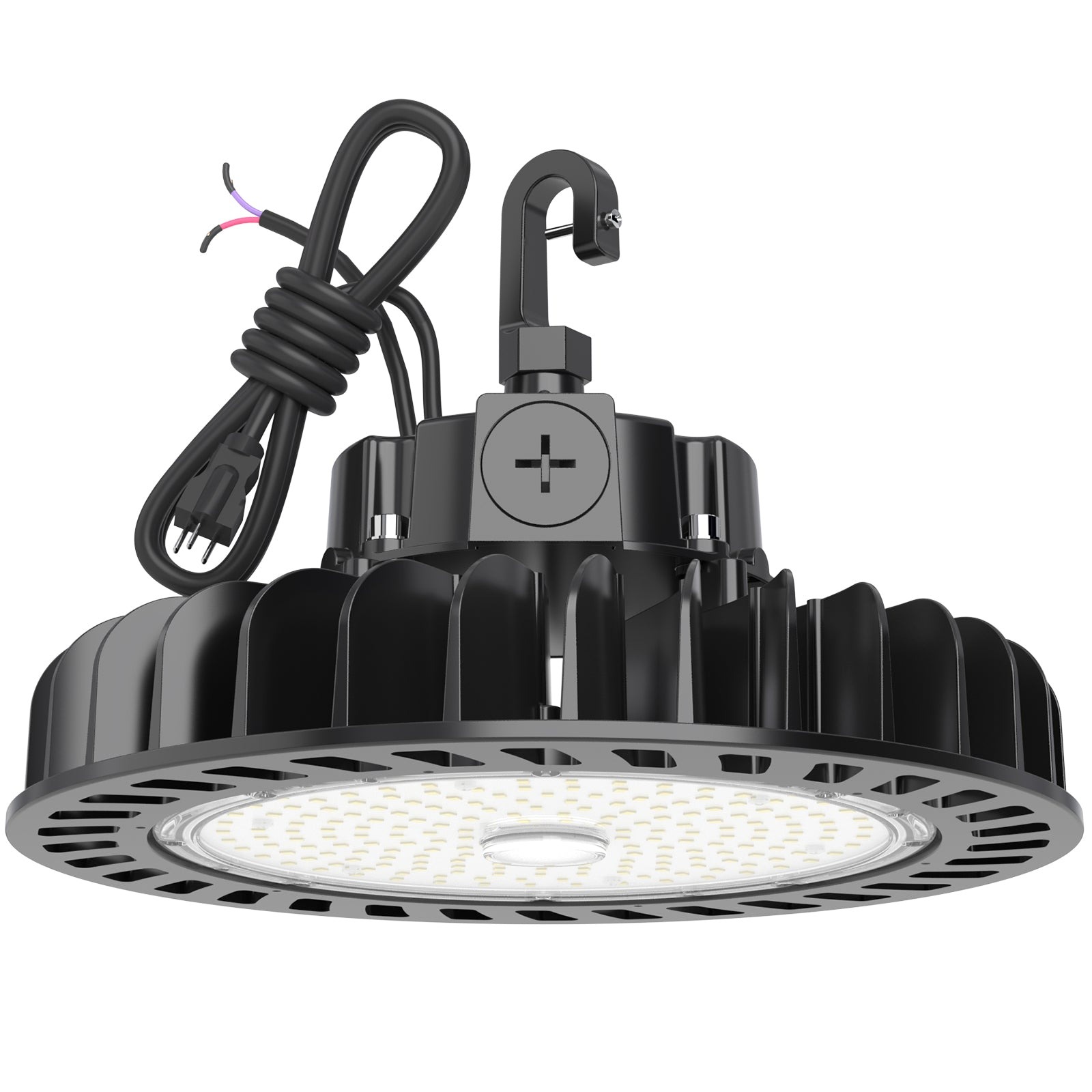
LED high bay lights are fixtures specifically engineered for spaces with ceiling heights of 15 feet or more, making them essential for warehouses, manufacturing floors, gymnasiums, and large retail environments. Unlike traditional high-intensity discharge lamps that waste energy radiating heat in all directions and require lengthy warm-up periods, LED high bay fixtures deliver instant-on illumination directed precisely where it’s needed through advanced optical lens designs. This directional capability means less light is lost to ceilings and upper walls, translating directly to lower wattage requirements for the same usable brightness at floor level. The thermal advantage is equally significant—LED high bays convert a far greater percentage of electricity into visible light rather than heat, reducing the load on HVAC systems during warmer months. Light distribution patterns can be tailored through reflector choices, offering narrow beams for high-rack aisle illumination or wide floods for open floor coverage. Manufacturers like Hyperlite have developed high bay fixtures that maintain consistent lumen output throughout their rated life, ensuring your space never gradually dims into inadequacy without you noticing—a marked improvement over 400-watt metal halide fixtures that degrade in output by 30 percent within two years.
Step-by-Step ROI Calculation: A Practical Guide for Business Owners
Calculating your specific return on investment requires gathering four categories of data and running them through a straightforward framework. First, document your current state: count existing fixtures, note their wattage, and determine daily operating hours. Multiply total wattage by hours of operation and your utility rate per kilowatt-hour to establish your current annual lighting energy cost. Second, identify the LED replacement specifications—a 150-watt LED high bay typically replaces a 400-watt metal halide, so recalculate annual energy cost using the reduced wattage. The difference between these two figures is your annual energy savings. Third, factor in maintenance: estimate how often you currently replace bulbs and ballasts, including labor costs for each instance, then compare against the LED’s rated lifespan to determine maintenance savings per year. Fourth, total your investment costs—fixtures, installation labor, and any necessary electrical modifications—then divide by your combined annual savings to find your payback period in months. A 50,000-square-foot warehouse running lights 16 hours daily might find that replacing 80 metal halide fixtures with LED high bays saves $25,000 to $35,000 annually in energy and maintenance combined, delivering full payback in under two years. Build a simple spreadsheet with these variables, and update it with actual quotes from suppliers and electricians to move from estimate to actionable business case.
Lighting as a Strategic Tool: Impact on Customer Experience and Sales
While the financial case for LED upgrades is compelling on its own, treating lighting purely as a cost-reduction exercise misses its most powerful application. Lighting shapes how people feel in a space, how long they stay, and ultimately whether they buy. Research from the Journal of Consumer Psychology demonstrates that lighting conditions directly influence perceived product quality, willingness to pay, and emotional arousal—factors that translate into measurable revenue differences between otherwise identical retail environments. The connection between industrial lighting principles and customer-facing spaces is more direct than most business owners realize. The same precision in light placement that keeps a warehouse floor safe and productive can be applied to guide a customer’s eye toward a featured display or create a sense of intimacy in a restaurant dining area. What separates high-performing commercial spaces from mediocre ones often isn’t the merchandise or the service—it’s the environmental cues that lighting provides before a single word is exchanged between staff and customer. The sections below explore the psychological mechanisms at work and the practical systems that give you control over these effects without requiring a design degree.
The Psychology of Lighting in Retail and Commercial Environments
Color temperature—measured in Kelvin—fundamentally alters how customers perceive your space and products. Warm tones in the 2700K to 3000K range create feelings of comfort and relaxation, making them ideal for hospitality venues, boutique retail, and any environment where you want people to slow down and linger. Cooler temperatures between 4000K and 5000K signal alertness and clarity, which explains why grocery stores and electronics retailers favor them to encourage purposeful browsing and decision-making. Brightness levels interact with color temperature to compound these effects. A study conducted across multiple apparel retailers found that moderately bright environments with warm lighting increased average transaction values by 12 percent compared to flat, uniformly lit spaces. Contrast plays an equally critical role—the ratio between accent lighting on products and ambient background illumination draws the eye naturally, functioning as a silent salesperson directing attention to high-margin items. Vertical illumination on walls and displays makes spaces feel larger and more inviting, while pools of focused light create perceived zones of exclusivity. Brand perception shifts measurably under different lighting conditions as well; luxury positioning demands lower ambient levels with precise accent work, while value-oriented brands benefit from bright, even coverage that communicates transparency and accessibility. Understanding these principles means you can engineer emotional responses that align with your brand promise and sales objectives.
Implementing Flexible Lighting Solutions for Dynamic Business Needs
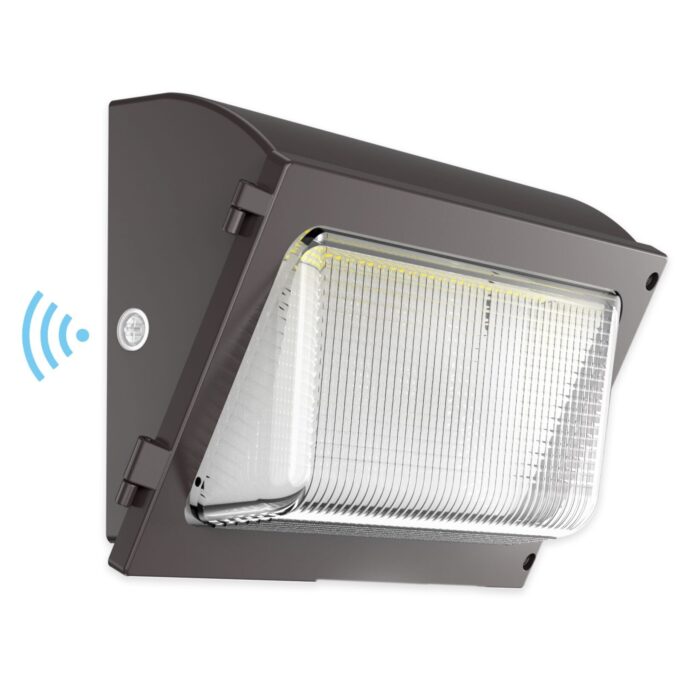
Static lighting systems lock you into a single mood regardless of time of day, season, or event—a limitation that costs opportunity. Dimmable LED drivers allow you to shift intensity throughout the day, brightening during peak hours to energize shoppers and softening in the evening to create a more relaxed atmosphere for dining or browsing. Smart lighting controls take this further by enabling scheduled scenes that activate automatically, eliminating the need for staff to remember manual adjustments. Zone-based control divides your space into independently addressable areas, so a bookstore can maintain bright task lighting in the stacks while creating warm, dim ambiance in the café section simultaneously. Tunable white fixtures offer the ability to adjust color temperature on demand, letting a single space serve as a high-energy morning coffee shop and an intimate evening wine bar without changing a single bulb. Occupancy and daylight sensors add intelligence by reducing output in unoccupied zones and compensating for natural light streaming through windows, which simultaneously enhances comfort and reduces energy waste. For business owners planning implementation, start by identifying two or three zones where customer behavior differs—entrance areas, product displays, and checkout counters respond particularly well to differentiated lighting. Install controls in phases, beginning with the highest-traffic zones where the impact on customer experience will be most visible, then expand as you observe results and refine your approach based on actual sales data and customer feedback patterns.
Practical Applications: Integrating Commercial Lighting for Maximum Impact
The principles of cost efficiency and psychological impact converge when you apply them to specific commercial environments. Moving from theory to implementation requires understanding how different business types demand different lighting strategies—and how industrial lighting concepts translate seamlessly into customer-facing contexts. A warehouse operator and a boutique hotel owner face different challenges, yet both benefit from the same foundational thinking: place the right amount of light exactly where it serves a purpose, eliminate waste, and design for adaptability. The scenarios below illustrate how businesses across sectors have integrated these principles to achieve measurable improvements in safety, productivity, and revenue.
Key Commercial Lighting Applications for Retail and Business Sectors
Accent lighting transforms product displays from passive shelving into active selling tools. A jewelry retailer directing narrow-beam LED spotlights onto glass cases creates sparkle and perceived value that flat overhead fluorescents never achieve. Task lighting in office environments—desk-level illumination calibrated to 4000K—reduces eye strain and improves employee focus during detail-oriented work, directly impacting productivity metrics. Ambient lighting establishes the baseline emotional tone of any space; a law firm’s reception area benefits from even, moderate illumination that communicates professionalism, while a spa requires dim, diffused warmth that signals relaxation before a client speaks to anyone. In hospitality, restaurants layering these three approaches—ambient washes on walls, task lighting at service stations, and accent pendants over tables—consistently report higher guest satisfaction scores and longer average visits that correlate with increased beverage and dessert orders. Each application ties back to the same dual consideration: what does this light cost to operate, and what behavior does it encourage? When you audit your space with both questions in mind, every fixture becomes either justified or marked for replacement.
Leveraging Industrial Lighting Principles in Commercial Spaces
Industrial lighting prioritizes durability, high lumen output, and energy efficiency under demanding conditions—qualities that serve commercial environments equally well when adapted thoughtfully. The robust construction that allows an LED high bay to withstand vibration and temperature fluctuations in a manufacturing plant also means longer service life in a high-traffic retail ceiling where maintenance access is disruptive and expensive. High-output fixtures designed for 30-foot warehouse ceilings can be specified at lower wattages for 20-foot retail spaces, delivering the same quality of illumination with even greater energy savings. When selecting fixtures for commercial applications, prioritize IP ratings appropriate to your environment, choose drivers rated for the temperature range your ceiling experiences, and select beam angles based on mounting height and desired coverage overlap. Layout planning borrowed from industrial practice—calculating spacing-to-mounting-height ratios to ensure uniform coverage without dark spots—eliminates the guesswork that leads to over-lit or under-lit zones in stores and offices. Pair this engineering discipline with the aesthetic considerations of color rendering index values above 80 for accurate product color representation, and you achieve spaces that feel intentionally designed rather than merely illuminated. The result is a commercial environment built on industrial reliability that delivers the visual sophistication customers expect.
Turning Lighting Strategy Into Measurable Business Results
Commercial lighting sits at the intersection of two forces that define business success: operational efficiency and customer experience. The financial case for LED upgrades—particularly high bay solutions for large spaces—delivers payback periods measured in months rather than years, with compounding savings from reduced energy consumption and near-elimination of maintenance disruptions. But the greater opportunity lies in treating lighting as a strategic tool rather than a utility line item. When you understand how color temperature influences purchasing behavior, how contrast directs attention to high-margin products, and how flexible controls let a single space serve multiple purposes throughout the day, lighting becomes one of the highest-leverage investments available to any commercial operation. Industrial lighting principles—durability, precision, efficiency—provide the engineering foundation, while psychological insights guide the application toward revenue generation. The path forward is straightforward: audit your current fixtures with both cost and customer behavior in mind, calculate your specific ROI using the framework outlined above, and implement in phases starting with the zones where impact will be most immediate and visible. Every day spent under outdated lighting is a day of unnecessary expense and missed opportunity. Begin your assessment this week, and let the numbers guide your timeline for transformation.