Every year, thousands of house fires claim lives that working smoke alarms could have saved. Yet one of the most common reasons these life-saving devices fail is entirely preventable: dead or missing batteries. A smoke alarm with a depleted battery is no better than having no alarm at all, leaving you and your household completely vulnerable during those critical first minutes of a fire.
For renters especially, smoke alarm maintenance can feel like a gray area. Who’s responsible — you or your landlord? The honest answer is that your safety ultimately depends on you taking an active role, regardless of what the lease says. Understanding how your smoke alarm works and keeping its smoke alarm battery fresh is one of the simplest, most impactful steps you can take to protect your home.
This article walks you through everything renters need to know about smoke alarm battery maintenance — from understanding the different detector types and which batteries they use, to knowing exactly how often replacements are needed and how to do it correctly. Small, consistent habits around battery upkeep can mean the difference between a close call and a tragedy.
Understanding Smoke Detector Types and Their Batteries
Ionization vs. Photoelectric Smoke Alarms
Smoke detectors aren’t all built the same, and understanding the difference can help you make smarter decisions about your rental’s safety setup. Ionization alarms use a small amount of radioactive material to detect rapid, flaming fires — the kind that spread quickly and produce less visible smoke early on. Photoelectric alarms, by contrast, use a light beam to detect the dense, smoldering smoke typical of slow-burning fires that often start in walls or furniture. Both types draw on their batteries consistently, but ionization models tend to trigger more frequent low-battery chirps because their internal sensing chambers require a steady, uninterrupted current to function accurately.
Battery Options: From AA-Powered to Long-Life Models
Most standard smoke alarms found in rental units run on 9-volt or AA batteries, with AA-powered smoke alarms becoming increasingly common due to their wider availability and lower cost. AA batteries are easy to find at any convenience or hardware store, making midnight replacements far less stressful. Beyond standard alkaline options, lithium AA batteries offer a longer shelf life and perform more reliably in temperature-fluctuating environments like garages or older buildings with poor insulation. Some newer alarm models — including units from fire safety brands like X-Sense — come with sealed, non-replaceable 10-year lithium batteries built directly into the unit, a convenient option that eliminates the need for routine swaps. However, renters should confirm with their landlord before replacing an entire unit. For most day-to-day situations, keeping a fresh pack of AA alkaline or lithium batteries on hand covers the majority of smoke alarm models you’re likely to encounter in a rental home.
How Often to Change Smoke Alarm Batteries: A Guide for Renters
Standard Recommendations for Battery Change Frequency
The National Fire Protection Association (NFPA) recommends replacing smoke alarm batteries at least once a year, with many fire safety organizations suggesting every six months as a more cautious benchmark. A practical approach many households follow is tying battery changes to daylight saving time — when you change your clocks in spring and fall, you change your batteries too. This built-in reminder removes the guesswork entirely. For renters moving into a new unit, replace the batteries immediately regardless of when the previous tenant last did it. You have no way of knowing the battery’s age or condition, and the few dollars spent on fresh batteries is a worthwhile investment in peace of mind from day one.

Factors That Impact Battery Lifespan in Rentals
Battery lifespan isn’t purely a function of time — your environment plays a significant role. Rental units in older buildings often have poor insulation, exposing smoke alarms to wider temperature swings that accelerate battery drain. High humidity environments, such as apartments near coastlines or units with inadequate ventilation, can corrode battery contacts and reduce performance well before the one-year mark. Alarms installed near kitchens also tend to chirp more frequently due to cooking-related false triggers, each alert drawing down battery reserves faster than normal. If your alarm chirps more than a few times a month from false triggers, check the battery level proactively rather than waiting for the scheduled replacement window. Keeping a small log — even a sticky note inside a kitchen cabinet — noting the date of each battery change helps renters stay ahead of these variables. Tracking changes takes less than ten seconds and eliminates the uncertainty of wondering whether the battery is six months old or eighteen.
Step-by-Step Guide to Replacing Your Smoke Alarm Battery
Preparation: Safety and Tools Needed
Before touching your smoke alarm, gather everything you need to complete the job in one go. You’ll need a fresh AA battery (or 9-volt, depending on your model), a stable step stool or ladder if the alarm is ceiling-mounted, and a clean cloth for wiping down the unit while you have it open. If your smoke alarm is hardwired into the home’s electrical system — common in newer rental buildings — locate your circuit breaker and switch off power to that circuit before starting. Hardwired alarms still use a backup battery, but cutting power first prevents accidental triggers and protects you from any electrical surprises. Wearing thin latex or nitrile gloves is optional but worth considering, since skin oils can accelerate corrosion on battery contacts over time.
Detailed Replacement Process for AA-Powered Smoke Alarms
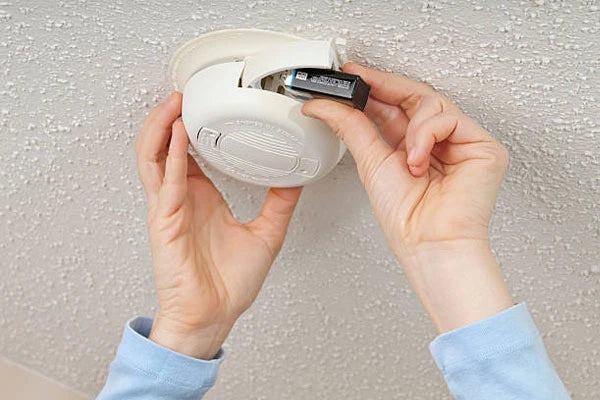
Start by positioning your ladder directly beneath the alarm so you’re working at a comfortable, stable height — never stretch or lean to reach it. Most ceiling-mounted alarms detach by rotating the outer cover counterclockwise about a quarter turn; wall-mounted units typically have a release tab on the side. Once the cover is off or the unit is unclipped from its mounting bracket, locate the battery compartment, which is usually on the back of the detector or inside the front panel. Slide the compartment open, note which direction the old battery is oriented, then remove it. Take a moment to inspect the metal contacts inside — if you see white or greenish residue, gently clean it with a dry cotton swab before inserting the new battery. Slide the fresh AA battery in, matching the positive and negative terminals to the diagram printed inside the compartment. Close the cover firmly until it clicks, then reattach the unit to its bracket.
Once reassembled, press and hold the test button for three to five seconds. A loud, continuous beep confirms the alarm is functioning correctly. If you hear a weak chirp or nothing at all, double-check that the battery is seated properly and the contacts are making full connection. For hardwired units, restore power at the breaker before testing. Write the replacement date on a small piece of masking tape and stick it inside the battery compartment — a simple habit that removes all guesswork the next time maintenance is due.
Maximizing Battery Lifespan and Alarm Efficiency
Best Practices for Maintaining Smoke Alarms
Getting the most out of your smoke alarm batteries starts with where and how you store replacements. Keep spare batteries in a cool, dry drawer rather than in a garage or bathroom cabinet where temperature swings and moisture can degrade them before they’re ever used. Avoid the common habit of leaving a partially drained battery in the alarm “until it dies” — once you hear the low-battery chirp, replace it that same day. Positioning matters too: alarms installed directly above cooking surfaces or heating vents experience more frequent false triggers and temperature stress, both of which drain batteries faster. If your alarm is poorly placed, ask your landlord about relocating it to a more suitable spot, such as a hallway adjacent to the kitchen rather than directly over the stove.
Regular Testing and Landlord Communication
Testing your smoke alarm monthly takes less than ten seconds — press and hold the test button until the alarm sounds, then release. If the beep sounds weak or delayed, replace the battery immediately rather than waiting for the scheduled change. Beyond personal testing, renters have a shared responsibility with landlords to keep detectors functional. Document your battery replacements and test results in a simple notes app or a paper log, and share relevant findings with your landlord in writing if an alarm appears faulty beyond a battery issue. Many lease agreements place detector maintenance obligations on landlords, but a malfunctioning unit affects your safety directly. Proactive communication — rather than waiting for a problem to escalate — keeps both parties informed and ensures nothing falls through the cracks when it matters most.
Simple Battery Habits That Keep Renters Safe
Keeping your smoke alarm batteries fresh is one of the most straightforward safety habits you can build as a renter — and one of the most consequential. Throughout this guide, we’ve covered the key distinctions between ionization and photoelectric detectors, the battery types that power them, and why AA alkaline or lithium options remain the most practical choice for most rental units. We’ve also established that annual replacement is the minimum standard, with every six months being the smarter, safer target, especially in environments prone to humidity, temperature swings, or frequent false triggers.
The step-by-step replacement process is simpler than most people expect. With a fresh battery, a stable step stool, and five minutes of your time, you can restore full functionality to a device designed to give you and your household the critical early warning needed to escape safely. Pairing that with monthly test-button checks and a quick log of your replacement dates removes all uncertainty about whether your alarm is actually ready when it counts.
Don’t wait for a chirp to take action. Check your smoke alarm battery today, stock a spare set in a cool dry drawer, and set a calendar reminder for your next scheduled swap. Your safety as a renter isn’t just your landlord’s responsibility — it’s yours too. A small, consistent investment in battery maintenance is one of the simplest ways to protect everything and everyone in your home.